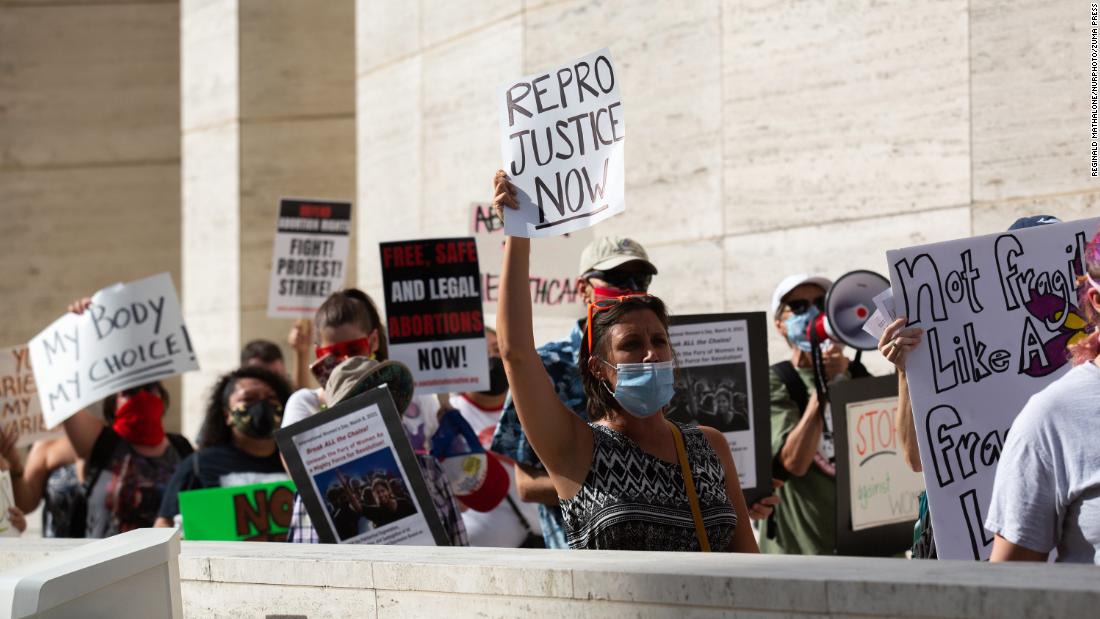
My general understanding of the game moves being played is that the court was supposed to find it unconstitutional the first time and block it from ever happening. This is a common tactic of the right, to make bloody red meat laws they never actually intend to have go through. They get to seem hard line to their frothing rage base without the hassle of ACTUALLY doing any of the things they say they want.
Only this time something went wildly wrong. The right wingers who have been doing this for decades forgot that they'd pushed through total amateurs to make up the supreme court super majority. They forgot to tell their own people that they wanted to lose. So the noobs on the court stuck it on a shadow docket and handed the right the victory they always claimed they wanted.
The interesting question is if they'll have the play book sorted out by the time it gets contested back to the supreme court. On the one hand, there's decades of outrage machine that usually operates with all parties moving in perfect lockstep. On the other hand, there's the fresh morons who have by now realized that the lifetime appointments that were handed to them mean that they don't have to publicly lick the boots of power when told. ...and on the other other hand are all the outright lunatics whispering in whatever ear they can catch.
It's going to be a flaming train wreck from start to finish. What remains to be seen is what cargo the flaming train wreck is carrying, and who it runs over on the way.
I have to say, I'm thoroughly confused by the US legal system, which seems massively confusing even before taking into account there's both the state and the federal system to worry about.
Generally, over here things start in the lower courts and work their way up. While proceedings can be fast-tracked, as they were several times during the run-up to Brexit, they have to start off in the lower courts and make their way up the appeals system from there.
So I don't find it particularly surprising that the US Supreme Court wouldn't hear this case direct because, were there a similar situation here, everything would be put pretty much on hold while the matter was argued before various different courts, with cases on differing points probably being joined at the appellate stage, and only then would they reach our Supreme Court (and possibly the ECHR, too).
That, as far as I can see, is what's happening in Texas -- a local judge has already issued a temporary restraining order, preventing people suing Planned Parenthood, under this law, and that will presumably be made permanent after oral arguments in a week or so, and then it'll go through the state and federal appeals system, along with any other parallel cases and any actions brought by the Justice Department.
So the law has, if I correctly understand the situation (and I'm not sure I do), been temporarily suspended, just as it would have been had the Supreme Court granted the application, only by a different procedure.
The other thing I don't understand, and I hope we don't get to see demonstrated in practice, is how "changing Roe vs Wade" might work.
Roe vs Wade, as I understand it, interprets the Fourteenth Amendment in a way that creates a constitutionally-protected general right to privacy under certain circumstances, and further interprets this right to privacy to mean that a woman has the right to make her own decisions about her own body without the state interfering save under certain, very limited, circumstances.
What, in practice, would changing or overturning Roe vs Wade mean? In effect, the court would be saying, "Our predecessors were mistaken back in 1973 when they decided the Fourteenth Amendment means such-and-such. It doesn't. This is what it actually means, and here are the reasons why."
Well, OK, they could say that, but what would follow? For the last 50 years the Fourteenth Amendment hasn't meant what we thought it did, and here is what it actually does mean?
That creates legal and constitutional chaos, since no one will know what appellate court decisions based on Roe vs Wade mean any more, many of which will be in areas not apparently related to women's reproductive rights, and really isn't the sort of lunacy I would associate with any kind of legal conservative. I just don't see how it could happen.
ETA: It occurs to me that everyone, and particularly legal conservatives, should, in fact, be very reluctant to advance the proposition that rights that people had thought they enjoyed because of the decision of one supreme court can then be unilaterally removed by another court, simply because the newer judges disagree with their predecessors.
Quite apart from the fact that rights already recognised in law should only be removable by proper legislative process, there are a lot of First and Second Amendment decisions dating back over the last thirty or forty years that conservatives really would not want reopening.


 www.alamy.com


/cloudfront-us-east-2.images.arcpublishing.com/reuters/RVBPJHLFDROQBMQV7YHT3YO32E.jpg)
 www.reuters.com





 www.cnn.com
 ,also, 🪛