Nature involves Science, too! (Nobody Cares...)

Dakota Tebaldi

Well-known member
VVO Supporter 🍦🎈👾❤
Joined
Sep 19, 2018
Messages
9,935
Location
Ohio
Joined SLU
02-22-2008
SLU Posts
16791
TIL.

The largest star in the known universe is Stephenson 2-18. In dry scientific measurements, it has a radius 2150 times of the sun. The distance comparisons are fun. If you started driving from the center at 100 mph it would take 1000 years to reach the edge. It would fill the orbit of Saturn.

That's big.
Man, imagine what that star's gonna look like when it goes out...
 
  • 1Wow!
Reactions: Govi

Free

It's all in my head.
VVO Supporter 🍦🎈👾❤
Joined
Sep 22, 2018
Messages
43,235
Location
Moonbase Caligula
SL Rez
2008
Joined SLU
2009
SLU Posts
55565
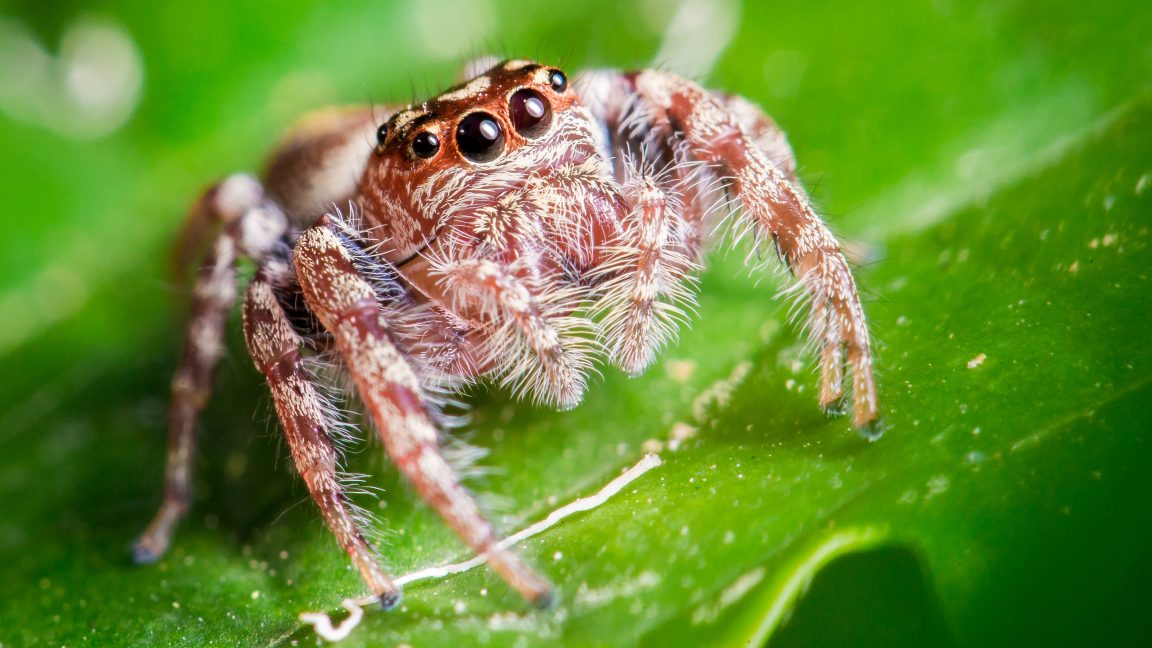
Our sleep is marked by cycles of distinct brain activity. The most well-known of these is probably rapid eye movement, or REM sleep, which is characterized by loss of muscle control leading to twitching and paralysis, along with its eponymous eye movements. REM sleep is widespread in vertebrates, appearing in many mammals and birds; similar periods have also been observed in lizards.

Figuring out what might be going on beyond vertebrates can get a bit challenging, however, as identifying what constitutes sleep isn't always clear, and many animals don't have eyes that move in the same way as those of vertebrates. (Flies, for example, must move their entire head to reorient their eyes.) But an international team of researchers identified a group of jumping spiders that can reorient internal portions of their eyes during what appears to be sleep.
And according to this team, the spiders experience all the hallmarks of REM sleep, with periods of rapid eye movements associated with muscle twitching.
 

Khamon

Folk Harpist
Joined
Sep 23, 2018
Messages
3,138
Location
Alabama
SL Rez
2003
Joined SLU
2007
It’s like real life Minecraft up in there!
 
  • 1Like
Reactions: Sid

Free

It's all in my head.
VVO Supporter 🍦🎈👾❤
Joined
Sep 22, 2018
Messages
43,235
Location
Moonbase Caligula
SL Rez
2008
Joined SLU
2009
SLU Posts
55565
Everyone from the US agency devoted to studying weather, oceans, and the atmosphere—the National Ocean and Atmospheric Administration—to the most highly regarded hurricane professionals predicted a season with above-normal to well above-normal activity.

For example, NOAA’s outlook for the 2022 Atlantic hurricane season, which runs from June 1 to November 30, predicted a 65 percent chance of an above-normal season, a 25 percent chance of a near-normal season and a 10 percent chance of a below-normal season. The primary factor behind these predictions was an expectation that La Niña would persist in the Pacific Ocean, leading to atmospheric conditions in the tropical Atlantic more favorable to storm formation and intensification. La Niña has persisted, but the storms still have not come in bunches.
 
  • 1Scared
  • 1Thanks
Reactions: Govi and Isabeau