Nature involves Science, too! (Nobody Cares...)

Kamilah Hauptmann

Shitpost Sommelier
Joined
Sep 20, 2018
Messages
15,038
Location
Cat Country (Can't Stop Here)
SL Rez
2005
Joined SLU
Reluctantly
Also comments, he’d just climbed a cliff. Without a wingsuit it was a straight line down.

Hunkering behind that rock was about his only option.
 
  • 1Like
  • 1Agree
Reactions: Govi and Beebo Brink

Lexxi

meow
Joined
Sep 26, 2018
Messages
1,331
SL Rez
2007
Joined SLU
12-14-2007
SLU Posts
6381
I didn't dig to deep into timeline of person who posted that again on December 22 2022. Possible it was related to the end of the year "repost of interesting stories" type of thing.

Anyway - video taker lived: British tourists survive avalanche in Tian Shan mountains of Kyrgyzstan

Regarding some responses I saw in the Twitter thread, the "of course he lived, we have the video": We also have the photographs of Mt Saint Helen erupting - which killed the photographer who took the photos. So just because we have something doesn't mean the person taking the photos/making the video lived.


ETA: Knew this is the thread/forum/place I'd seen that video before.
 
Last edited:

Argent Stonecutter

Emergency Mustelid Hologram
Joined
Sep 20, 2018
Messages
7,436
Location
Coonspiracy Central, Noonkkot
SL Rez
2005
Joined SLU
Sep 2009
SLU Posts
20780

Free

*censored*
VVO Supporter 🍦🎈👾❤
Joined
Sep 22, 2018
Messages
42,228
Location
Moonbase Caligula
SL Rez
2008
Joined SLU
2009
SLU Posts
55565
Young jumping spiders dangle by a thread through the night, in a box, in a lab. Every so often, their legs curl and their spinnerets twitch—and the retinas of their eyes, visible through their translucent exoskeletons, shift back and forth.

“What these spiders are doing seems to be resembling—very closely—REM sleep,” says Daniela Rössler, a behavioral ecologist at the University of Konstanz in Germany. During REM (which stands for rapid eye movement), a sleeping animal’s eyes dart about unpredictably, among other features.

In people, REM is when most dreaming happens, particularly the most vivid dreams. Which leads to an intriguing question. If spiders have REM sleep, might dreams also unfold in their poppy-seed-size brains?
 

Free

*censored*
VVO Supporter 🍦🎈👾❤
Joined
Sep 22, 2018
Messages
42,228
Location
Moonbase Caligula
SL Rez
2008
Joined SLU
2009
SLU Posts
55565
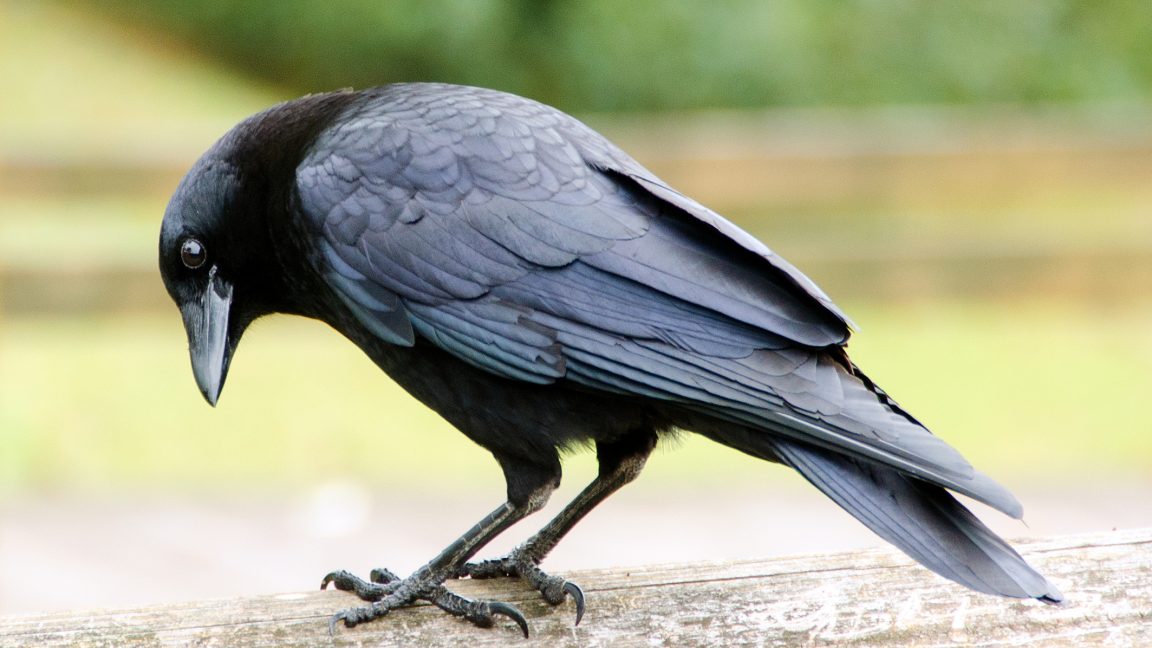
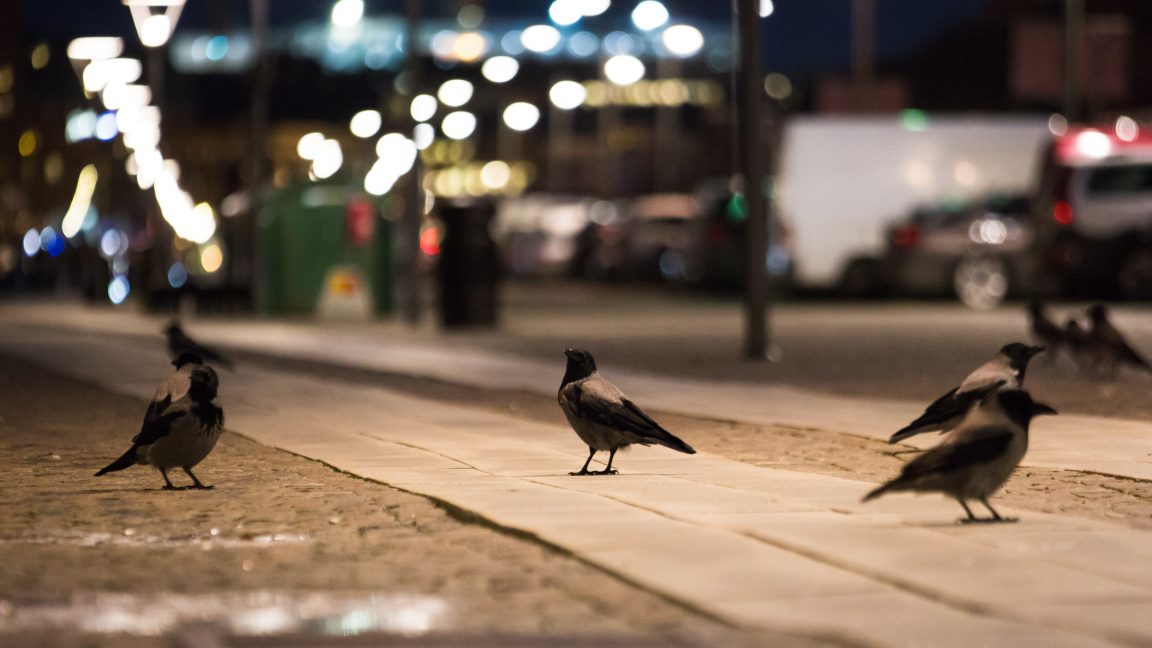
More "them crows be smart" news.

Whether playing tricks, mimicking speech, or holding “funerals,” crows and ravens (collectively known as corvids) have captured the public’s attention due to their unexpected intelligence. Thanks to results from a new Current Biology study, our understanding of their capabilities only continues to grow, as researchers from the University of Tübingen found for the first time that crows can perform statistical reasoning. These results can help scientists better understand the evolution of intelligence (and may give us a better appreciation of what’s going on in our backyard).
 

Argent Stonecutter

Emergency Mustelid Hologram
Joined
Sep 20, 2018
Messages
7,436
Location
Coonspiracy Central, Noonkkot
SL Rez
2005
Joined SLU
Sep 2009
SLU Posts
20780
I don't see the "pink" they're talking about, it's all bottle green to me.
 
  • 1Agree
Reactions: Innula Zenovka

Free

*censored*
VVO Supporter 🍦🎈👾❤
Joined
Sep 22, 2018
Messages
42,228
Location
Moonbase Caligula
SL Rez
2008
Joined SLU
2009
SLU Posts
55565
"A thirsty crow wanted water from a pitcher, so he filled it with pebbles to raise the water level to drink," summarizes a famous Aesop Fable. While this tale is thousands of years old, animal behaviorists still use this challenge to study corvids (which include crows, ravens, jays, and magpies) and their use of tools. In a recent Nature Communications study, researchers from a collaboration of universities across Washington, Florida, and Utah used radioactive tracers within the brains of several American crows to see which parts of their brains were active when they used stones to obtain food from the bottom of a water-filled tube.

Their results indicate that the motor learning and tactile control centers were activated in the brains of the more proficient crows, while the sensory and higher-order processing centers lit up in the brains of less proficient crows. These results suggest that competence with tools is linked to certain memories and muscle control, which the researchers claimed is similar to a ski jumper visualizing the course before jumping.
The researchers also found that out of their avian test subjects, female crows were especially proficient at tool usage, succeeding in the challenge quickly. “[A] follow-up question is whether female crows actually have more need for creative thinking relative to male crows,” elaborates Loma Pendergraft, the study’s first author and a graduate student at the University of Washington, who wants to understand if the caregiving and less dominant role of female crows gives them a higher capacity for tool use.
 
  • 2Interesting
Reactions: Govi and Isabeau

Free

*censored*
VVO Supporter 🍦🎈👾❤
Joined
Sep 22, 2018
Messages
42,228
Location
Moonbase Caligula
SL Rez
2008
Joined SLU
2009
SLU Posts
55565
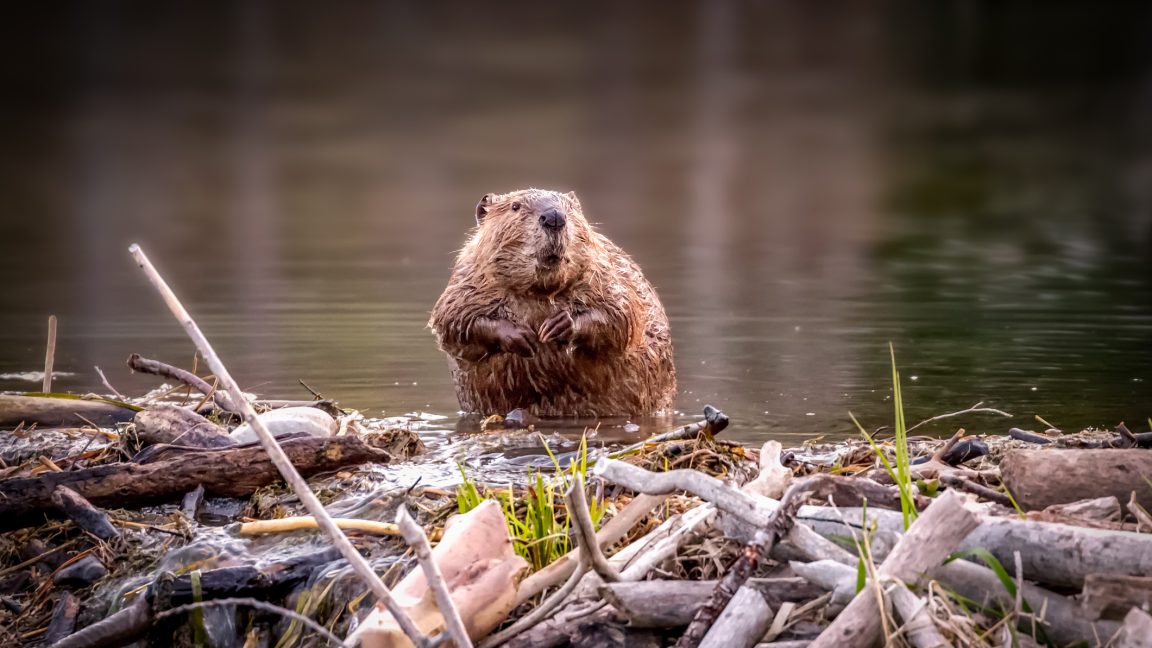
For the first time in four centuries, it’s good to be a beaver. Long persecuted for their pelts and reviled as pests, the dam-building rodents are today hailed by scientists as ecological saviors. Their ponds and wetlands store water in the face of drought, filter out pollutants, furnish habitat for endangered species, and fight wildfires. In California, Castor canadensis is so prized that the state recently committed millions to its restoration.

While beavers’ benefits are indisputable, however, our knowledge remains riddled with gaps. We don’t know how many are out there, or which direction their populations are trending, or which watersheds most desperately need a beaver infusion. Few states have systematically surveyed them; moreover, many beaver ponds are tucked into remote streams far from human settlements, where they’re near-impossible to count. “There’s so much we don’t understand about beavers, in part because we don’t have a baseline of where they are,” says Emily Fairfax, a beaver researcher at the University of Minnesota.
But that’s starting to change.