

Brexit.
- Thread starter Sid
- Start date


Kamilah Hauptmann
Shitpost Sommelier
- Joined
- Sep 20, 2018
- Messages
- 15,127
- Location
- Cat Country (Can't Stop Here)

- SL Rez
- 2005
- Joined SLU
- Reluctantly
I, a Leopard, am alright with eating the face of my own family:
Leave voters are happy for family members to lose their jobs over Brexit
Poll finds Leave voters believe "significant economic damage" is a price worth paying for Brexit.
amp.businessinsider.com
Awkward Christmas coming up.A further 39% of all Leave voters would also be willing for their own family members to lose their jobs as a price for Brexit, with just 38% opposed.


Roxanne Blue
Una Mujer Fantastica
- Joined
- Sep 21, 2018
- Messages
- 430
- Location
- Edge of the Earth
- SL Rez
- 2009
- Joined SLU
- June 2009
- SLU Posts
- 6577
Should make for an exciting season of The Great British Baking Show. The final could be a Game of Thrones theme.I, a Leopard, am alright with eating the face of my own family:
Leave voters are happy for family members to lose their jobs over Brexit
Poll finds Leave voters believe "significant economic damage" is a price worth paying for Brexit.amp.businessinsider.com
Awkward Christmas coming up.
Red Wedding Show Stopper?


Bartholomew Gallacher
Well-known member
- Joined
- Sep 26, 2018
- Messages
- 6,911

- SL Rez
- 2002
Farage's new career after he's quitting the European Parliament:


Luisa Land
Well-known member
- Joined
- Sep 21, 2018
- Messages
- 354
- Location
- EU.. Germany
- SL Rez
- 2002
Today was the last meeting of the EU-Parliament with the british MPs, who due to Brexit have to leave the Parliament.
It was partly emotional.. with some tears from MEPs
At the end the parliament sang Auld Lang Syne, a traditional Scottish folk song of farewel
It was partly emotional.. with some tears from MEPs
At the end the parliament sang Auld Lang Syne, a traditional Scottish folk song of farewel


Isabeau
Merdeuse
- Joined
- Sep 20, 2018
- Messages
- 9,383
- Location
- Montréal

- SL Rez
- 2007
That song always gets to me.
Contrast that to this, so crass (loved McGuinness' reply):
Contrast that to this, so crass (loved McGuinness' reply):


- Joined
- Sep 20, 2018
- Messages
- 23,984

- SLU Posts
- 18459
Keir Starmer, Labour's shadow EU secretary and leading contender in the Labour leadership elections, writing on the eve of our departure from the EU

 www.theguardian.com
Now Labour must end the leave-remain divide. Another future is possible | Keir Starmer
After Brexit, this Labour generation can summon the spirit of the postwar era to help rebuild our country, says Labour party leadership candidate Keir Starmer
www.theguardian.com

Kara Spengler
Queer OccupyE9 Sluni-Goon, any/all pronouns
- Joined
- Sep 20, 2018
- Messages
- 6,140
- Location
- SL: November RL: DC
- SL Rez
- 2007
- Joined SLU
- December, 2008
- SLU Posts
- 23289
That is a joke, right?Brexit day 50p coin unveiled by Chancellor Sajid Javid
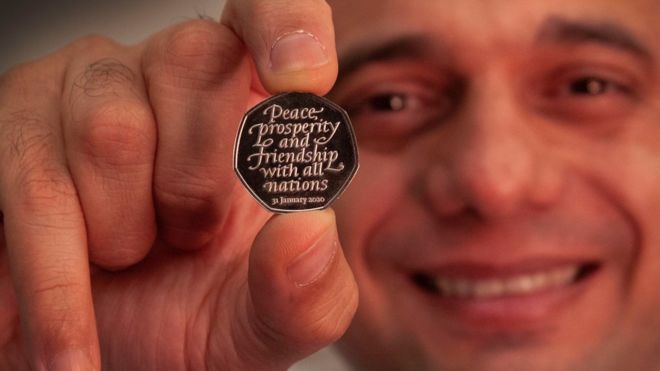
Commemorative Brexit 50p coin unveiled
Kara Spengler
Queer OccupyE9 Sluni-Goon, any/all pronouns
- Joined
- Sep 20, 2018
- Messages
- 6,140
- Location
- SL: November RL: DC
- SL Rez
- 2007
- Joined SLU
- December, 2008
- SLU Posts
- 23289


Kara Spengler
Queer OccupyE9 Sluni-Goon, any/all pronouns
- Joined
- Sep 20, 2018
- Messages
- 6,140
- Location
- SL: November RL: DC
- SL Rez
- 2007
- Joined SLU
- December, 2008
- SLU Posts
- 23289
Luisa Land
Well-known member
- Joined
- Sep 21, 2018
- Messages
- 354
- Location
- EU.. Germany
- SL Rez
- 2002

(S+) Tory-Politiker über den Brexit: "Wir haben es hier mit Gefühlen, boshaften Gefühlen zu tun"
Der britische Tory-Politiker Michael Heseltine kämpfte jahrzehntelang gegen die EU-Gegner in seiner Partei. Am Ende haben sie gewonnen: Der Brexit kommt. Wie konnte das geschehen? Und kehren die Briten je zurück?
 www.spiegel.de
interesting interview wich Michael Hesseltine, since 60 years MP for the Torries,
was Minister in the government of Edward Heath and Thatcher, also served under John Mayor, fought under May and Johnson - now member of the House of Lords - active against Brexit..
At least interesting for me as a foreigner, cause I understand some aspects of the british recent development better now
the interview is much longer and partly behind a paywall..
I quote some passages from the beginning of the interview
SPIEGEL: What would you call what happened to your country?
Heseltine: A tragedy. A tragedy based on delusion.
....
Heseltine: I simply cannot live with the thought that the generation that follows me will idly watch how the great decisions of Europe will be taken in the future - in the Council chambers of the European Union, where there will be an empty chair. That is a denial of history. It is a denial of an honest analysis of where Britain's place in the world is and where it should be.
SPIEGEL: Where should it be?
Heseltine: I have not the slightest doubt that the only powerful position of this country is in the heart of Europe. I have experienced the post-war world intensively. The British Empire was coming to an end then, my country had to redefine its role as a world power. And in my view, the great achievement of the post-war Conservative governments was that they wisely guided Britain through this extraordinary transformation process. They replaced the Empire with the Commonwealth and led the country into a new community of destiny, Europe. That has been successful for us in many ways. Of course, it no longer had anything to do with power in the old sense, the forces shifted towards Europe. And many could not accept the psychology behind these post-war developments.
SPIEGEL: Could your old rival Margaret Thatcher accept them?
Heseltine: All the speeches Margaret made denied our European destiny -- but all her actions recognized it. Margaret made the only rational decision possible: We must build the European Union from within. She argued vehemently for the single market, and everyone knows that it has been of great benefit to Britain. But that was also the moment when the problems started.
SPIEGEL: What problems?
Heseltine: All of a sudden there were 400 amendments and regulations that had to be converted into legal text by the British parliament, and that at the end of the 1980s, when we were not doing particularly well economically. Every small businessman came home exhausted in the evening to find the next form to fill in, these were difficult to understand forms, complex, with endless boxes to check. And the politician Margaret Thatcher did not react to this by shouting to the person concerned: "I know it's not easy, but it serves a greater cause, it harmonises our economy and opens up new markets for us". Instead, she pointed her finger at Brussels: "They're to blame, foreigners, bureaucrats It's not our fault, they forced this on us."
SPIEGEL: The same scam Boris Johnson used to stir up people when he was Thatcher's favorite correspondent in Brussels.
Heseltine: He played the game, yes. The notion that foreigners really do rule our country met with open ears. The anti-immigration forces, which were very strong, did the rest. Euroscepticism flourished. And Margaret made it even stronger, despite the fact that she had created the circumstances that made this rejection possible.
Translated with www.DeepL.com/Translator (free version)
T
Kamilah Hauptmann
Shitpost Sommelier
- Joined
- Sep 20, 2018
- Messages
- 15,127
- Location
- Cat Country (Can't Stop Here)
- SL Rez
- 2005
- Joined SLU
- Reluctantly


Kara Spengler
Queer OccupyE9 Sluni-Goon, any/all pronouns
- Joined
- Sep 20, 2018
- Messages
- 6,140
- Location
- SL: November RL: DC
- SL Rez
- 2007
- Joined SLU
- December, 2008
- SLU Posts
- 23289
News clip of Farange and company leaving the EU chambers.
My reaction: "yeah, but yours flags probably burn and theirs do not"
My reaction: "yeah, but yours flags probably burn and theirs do not"

Ishina
Well-known member
- Joined
- Oct 11, 2018
- Messages
- 355
- SL Rez
- 2002
Well at least now that Farage has achieved his goal of getting us out of the EU he can live comfortably on the pension he'll get from the EU.

- Joined
- Sep 20, 2018
- Messages
- 23,984
- SLU Posts
- 18459

Boris Johnson is missing in action on his big Brexit day | John Crace
On the most significant day in British politics for a generation, the PM hides inside No 10
www.theguardian.com
Brexit was an ill-fitting carapace he had worn to get into power. He’d never really thought anyone would believe the lies he’d told. It was a game that had suddenly become all too real. The fun had stopped but he couldn’t. Now he was expected to take responsibility for what he had done, he just wanted to hide. The mask of denial and self-deception had momentarily slipped and the Supreme Showman was too ashamed to be seen.


- Joined
- Sep 22, 2018
- Messages
- 42,554
- Location
- Moonbase Caligula

- SL Rez
- 2008
- Joined SLU
- 2009
- SLU Posts
- 55565


- Joined
- Sep 20, 2018
- Messages
- 7,040

Negotiations will not start well. I'm afraid.
BoZo seems prepared to head towards a weak deal situation, with borders and tariffs.
It seems hard to grasp that the EU will not allow cherry picking.
 www.theguardian.com
BoZo seems prepared to head towards a weak deal situation, with borders and tariffs.
It seems hard to grasp that the EU will not allow cherry picking.
UK will refuse close alignment with EU rules, Johnson to say
Prime minister’s vision on future trading relationship will clash with that of EU leaders
www.theguardian.com

Beebo Brink
Climate Apocalypse Alarmist
- Joined
- Sep 20, 2018
- Messages
- 7,086

- SL Rez
- 2006
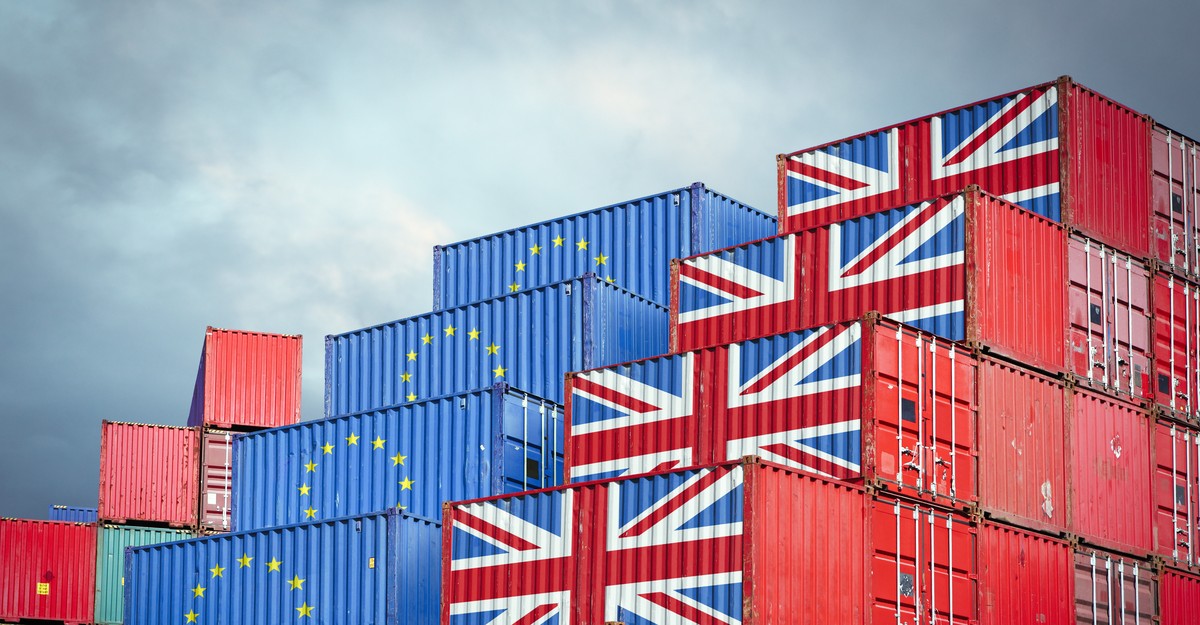
Why Britain Brexited
For decades, the country has struggled with the challenge facing the modern nation-state: how to balance control and influence.
 www.theatlantic.com

- Joined
- Sep 20, 2018
- Messages
- 23,984
- SLU Posts
- 18459
At the moment Johnson is simply telling his party what they want to hear, not least because he's having a bit of local difficulty over the decision to allow Huawei to supply components for 5G (which has certainly upset a lot of his supporters) and the impending announcement on the future of the hugely delayed and massively over-budget HS2 Rail schemeNegotiations will not start well. I'm afraid.
BoZo seems prepared to head towards a weak deal situation, with borders and tariffs.
It seems hard to grasp that the EU will not allow cherry picking.
UK will refuse close alignment with EU rules, Johnson to say
Prime minister’s vision on future trading relationship will clash with that of EU leaders
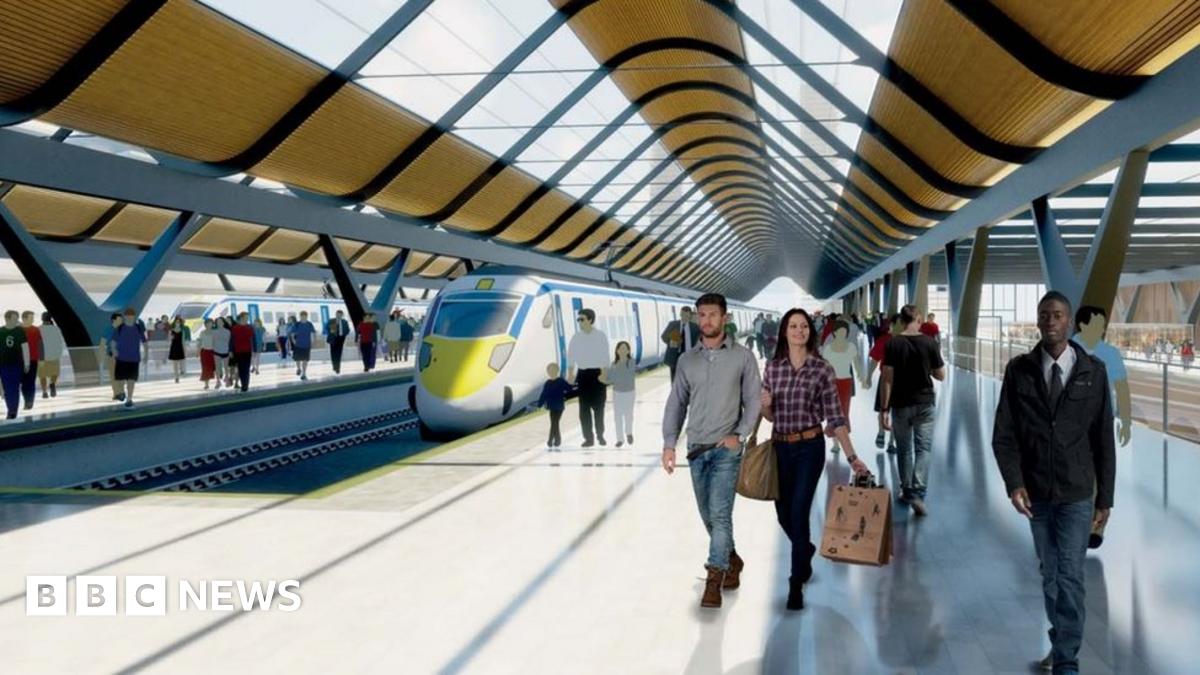
HS2: What is the route and why is the Manchester link scrapped?
The high-speed railway between London, the Midlands and North of England will be scaled back.
 www.bbc.co.uk
He'll make a decision about that next week and, whichever way it goes, it'll infuriate lots of Conservative MPs and supporters.
Remember, this is a man completely unencumbered by principles, be they political or moral, and apparently devoid of all shame, so he has no difficulty in making whatever pronouncements and promises suit him at the time, as the DUP found out the hard way.
I think that, once the negotiations actually start, he'll see sense sooner or later -- probably later, but that's better than never.
This time he has noone to blame when things go wrong -- he's got a huge majority so he can't blame remainers or parliament any more.
- Joined
- Sep 20, 2018
- Messages
- 7,040
Well, he can and will most likely blame the EU in the future, when it turns out that things ain't going as he believes they will at the moment.This time he has noone to blame when things go wrong -- he's got a huge majority so he can't blame remainers or parliament any more.