WTF Climate Change News

danielravennest

Well-known member
Joined
Sep 21, 2018
Messages
3,708
SLU Posts
9073
I don't have any answers, I'm not an expert in how ecosystems changes with climate change. I think even the experts will be struggling to come up with solutions.
The answer is straightforward, and something farmers are already dealing with. If climate zones shift, you either change what you plant in a given location, or breed/engineer plant varieties for the new conditions. With field crops, their life cycle is short enough to swap out what you plant from one year to the next. That could be planting something different, or planting a different variety of the same crop. For forests, you can't engineer varieties fast enough. Their life cycles are too long. So your only choice is to switch varieties of the same species, or plant different species.

The usual environment conditions, like soils and temperature, still apply when you do this. You have to find plants suited to the location and the new conditions. In some places there may not be anything that can grow. In former arctic zones things may be able to grow in the new conditions that couldn't before. But you can't make a blanket statement. It will depend on local details.
 
  • 1Thanks
  • 1Agree
Reactions: Beebo Brink and WolfEyes

Archer

Not a Robot
Joined
Sep 20, 2018
Messages
710
SL Rez
2007
Joined SLU
2007
One problem with that for smaller farmers is their customer base. They've spent decades building their markets, mostly regional. Not only do they have to start from scratch if they change what they grow, but their customers also have to find different suppliers, probably from further away. Things like hay and feed grains are a very tightly woven microeconomy in most areas.
 
  • 2Thanks
Reactions: Soen Eber and Govi

Beebo Brink

Climate Apocalypse Alarmist
Joined
Sep 20, 2018
Messages
7,254
SL Rez
2006
The answer is straightforward, and something farmers are already dealing with. If climate zones shift, you either change what you plant in a given location, or breed/engineer plant varieties for the new conditions.
:qft:

That's basically what is happening in areas that once were covered with pine forests. New growth of shrubs and bushes is taking the place of the trees that grew there before; those plants are better adapted to the new conditions. It's not what we're used to, but

The choices humans are facing over the next decades aare where to focus our limited resources to adapt and in what way. Managed retreat from coastal areas is another such effort -- remove human habitations and allow the land to return to marsh.
 
  • 1Like
Reactions: WolfEyes

Innula Zenovka

Nasty Brit
VVO Supporter 🍦🎈👾❤
Joined
Sep 20, 2018
Messages
24,428
SLU Posts
18459

Evernote link

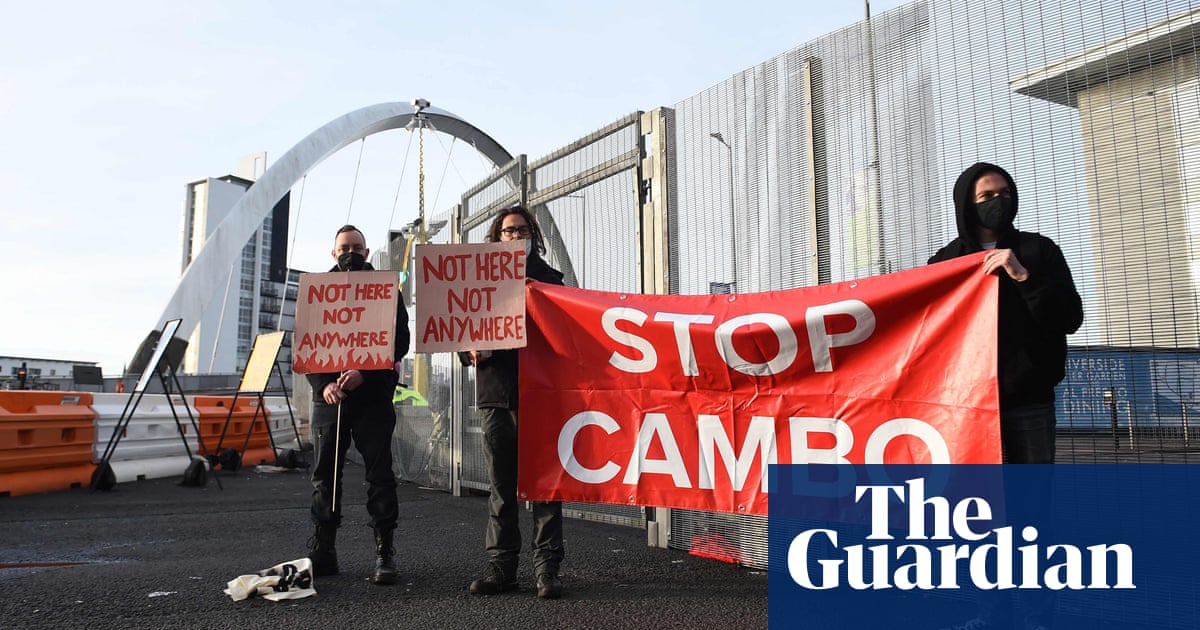
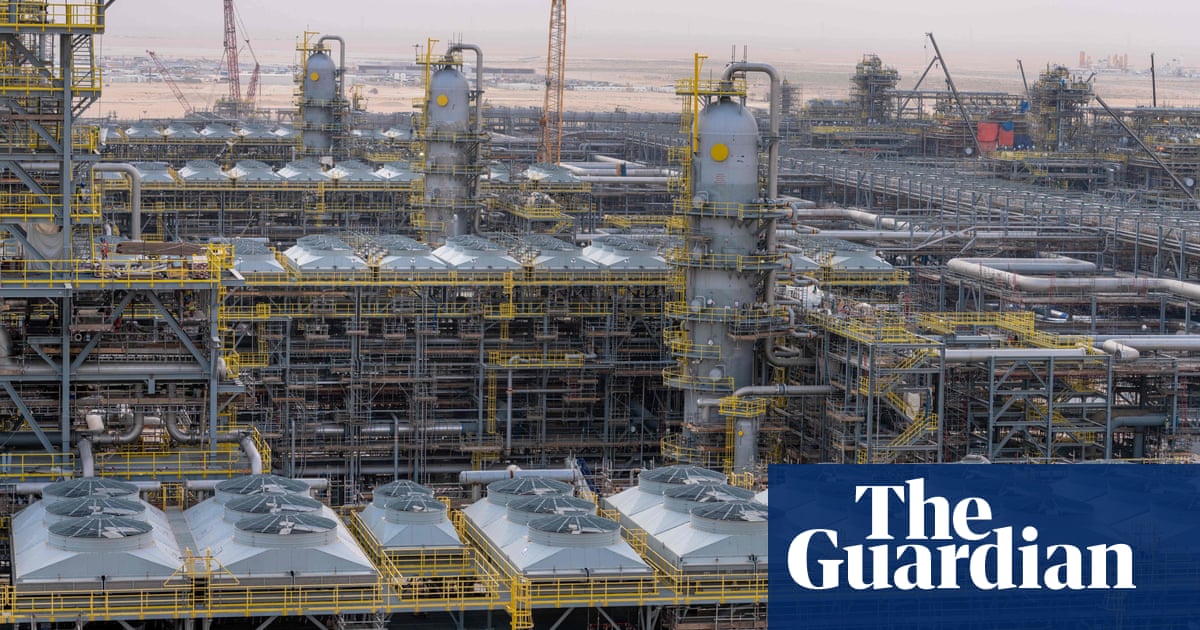
Shell’s retreat has cast doubt over the future of a project that could yield hundreds of millions of barrels of oil, and sources say it raises fresh doubts over the North Sea’s future large-scale oil projects too.

“This is a turning point,” said one industry source, who asked not to be named. “Companies will be thinking: if Shell can’t do it, can we? I just don’t see any truly large-scale projects being sanctioned in the North Sea any more. There will still be small developments around existing fields. But this is a death knell for major new projects in the UK.”

The Guardian understands that Shell scrapped the Cambo project after the government made clear it would need to meet certain “climate concessions” to win its approval. The company said publicly that the “economic case for investment” was not strong.
 
  • 1Like
Reactions: Ryanna Enfield

WolfEyes

Well known member no one knows
Joined
Sep 19, 2018
Messages
4,502
SL Rez
2004
Joined SLU
2009
That's kind of odd because on the west side of OR we are having below average temps, not above. East side is mostly desert/high plateau desert so not surprising they're having warmer than norm temps.

We don't usually get much in the way of snow here in winter but this year we are expecting more than usual. Like the freak storm that was my first ever White Christmas in 2008 that dumped 6 - 12 inches on Beaverton and then again, a few years later.

This is Knight Hall at Pacific U back in 2008. We're expecting it to be like this again this winter. I'm hoping for one more white Christmas.

 
  • 1Thanks
Reactions: Innula Zenovka

Soen Eber

Vatican mole
VVO Supporter 🍦🎈👾❤
Joined
Sep 20, 2018
Messages
4,062
If you read again you'll notice the article did mention there was some reseeding being planned. The lower marginal and south facing areas are gone forever but in others they plan to eliminate the scrublands and reseed, more for fire reasons than ecological I suppose. Because the brush out-compete the tree seedlings, they are the other driver in this just because they tend to grow faster - meaning the trees can only spread in the limited areas which are already well shaded (hence creating their own micro-climate). I'm not saying climate change isn't a major driver, but it's complicated. Forestry management leading to huge buildup of fuels with massive clear-cut burnouts are another.
 
Last edited:

danielravennest

Well-known member
Joined
Sep 21, 2018
Messages
3,708
SLU Posts
9073

All that heat that Beebo posted about above had to come from *somewhere*. Now we know. :p

But seriously, the blizzard warning is for the top of the Big Island, at 14,000 feet, where it snows regularly in winter (see photo). The high winds are because there is literally nothing in the way at that altitude for thousands of miles to slow it down. They aren't high enough to get jet stream winds, but they are about half that high. So winds are considerably stronger than close to sea-level.


WolfEyes

Well known member no one knows
Joined
Sep 19, 2018
Messages
4,502
SL Rez
2004
Joined SLU
2009
The ocean’s rarest mammal has a few final lessons to teach us (msn.com)

The most endangered marine mammal on Earth, a small porpoise called the vaquita, lives just off the coast of San Felipe, a small Mexican fishing town in Baja California. Thousands of these animals, which have distinctive black markings around their lips and eyes, once lived in the warm Gulf of California. But by the summer of 2018, scientists estimated that fewer than 19 remained in the entire world,