Yesterday, an artist on Twitter named
Nana ran an experiment to test a theory.
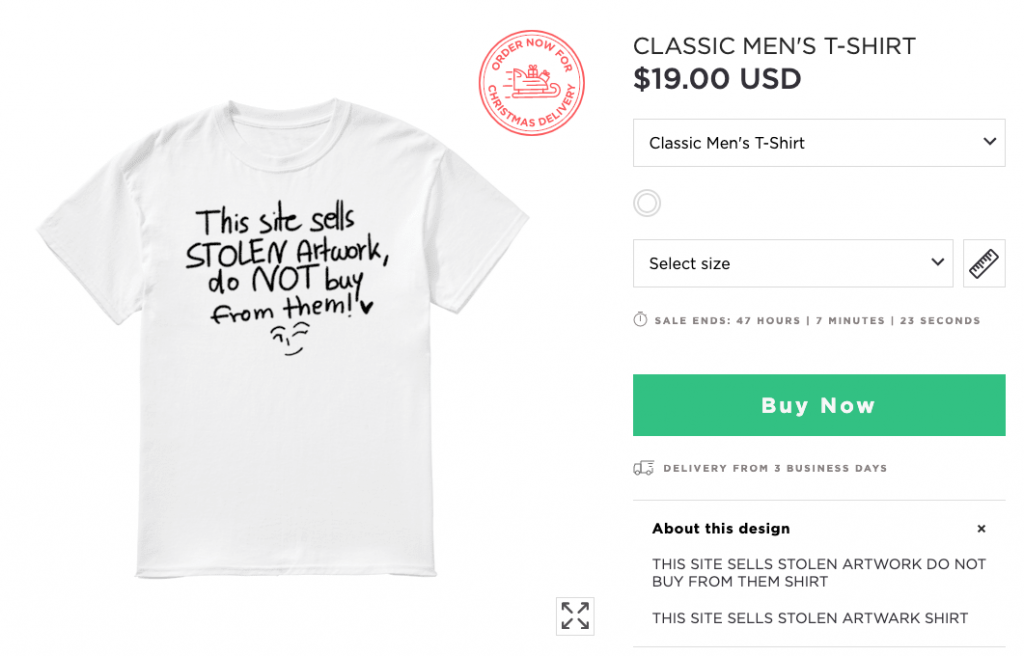
Their suspicion was that bots were actively looking on Twitter for phrases like “I want this on a shirt” or “This needs to be a t-shirt,” automatically scraping the quoted images, and instantly selling them without permission as print-on-demand t-shirts.
Dozens of Nana’s followers replied, and a few hours later, a Twitter bot replied with a link to the
newly-created t-shirt listing on Moteefe, a print-on-demand t-shirt service.
Several other t-shirt listings followed shortly after, with listings on questionable sites like
Toucan Style,
CopThis, and
many more.
Spinning up a print-on-demand stores is dead simple with platforms like GearBubble, Printly, Printful,
GearLaunch (who power Toucan Style), and many more — creating a storefront with thousands of theoretical product listings, but with merchandise only manufactured on demand through third-party printers who handles shipping and fulfillment with no inventory.
Many of them integrate with other providers, allowing these non-existent products to immediately appear on eBay, Amazon, Etsy, and other stores, but only manufactured when someone actually buys them.
The ease of listing products without manufacturing them is how we end up with
bizarre algorithmic t-shirts and entire stock photo libraries on phone cases. Even if they only generate one sale daily per 1,000 listings, that can still be a profitable business if you’re listing hundreds of thousands of items.
But whoever’s running these art theft bots found a much more profitable way of generating leads: by scanning Twitter for people specifically telling artists they’d buy a shirt with an illustration on it. The t-shirt scammers don’t have the rights to sell other people’s artwork, but they clearly don’t care.













:no_upscale()/cdn.vox-cdn.com/uploads/chorus_asset/file/9696725/chart.png)