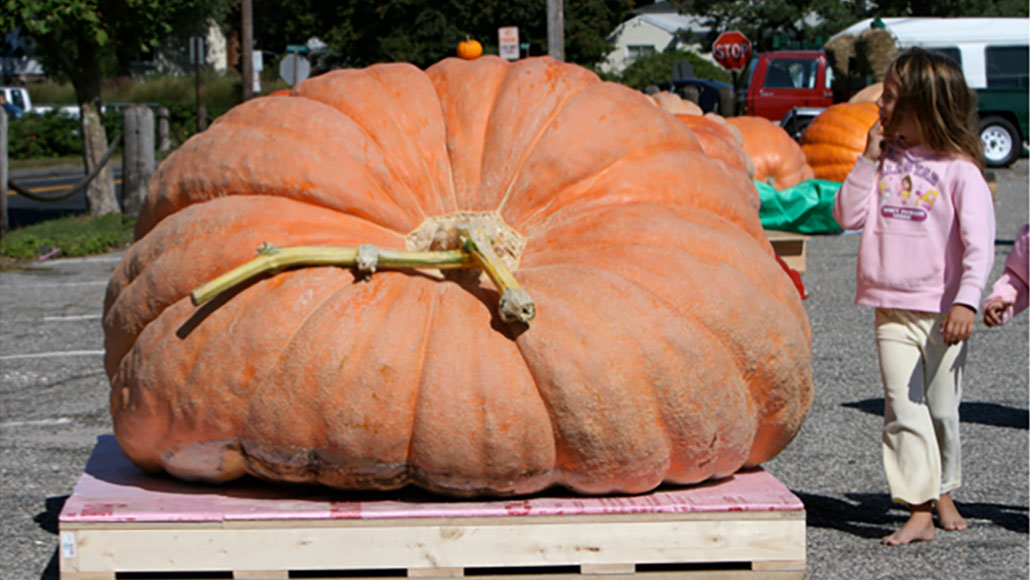
A pumpkin has to transport water, sugar and other nutrients to swell up the fruit. (Yes, a pumpkin is a fruit.) Water needs to move up from the roots. Sugars produced by photosynthesis in the leaves need to go down to the fruit and roots. To do this, plants use xylem and phloem. Xylems are vessels that transport water from roots to a plant’s stems, fruits and leaves. Phloems are vessels that transport sugars from leaves to the fruit and roots.
Giant pumpkins need a lot of water and sugar, and they need it fast. A typical giant pumpkin grows from seed to huge orange squash in only 120 to 160 days. At peak growth, it’s putting on 15 kilograms (33 pounds) every day. That’s like daily adding a two-year-old child to its mass. And all of that mass must move through the stem, Savage notes. Most of the time, the stem is so narrow that you can still easily get your hands around it.
To study how pumpkin stems transport so much food and water, she asked growers of giant pumpkins to donate small slivers of their competition fruits. She also got any pumpkins that burst before they could be judged.