Sovereignty
Well-known member
- Joined
- Mar 27, 2020
- Messages
- 754
- SL Rez
- 2007



Most explosive blow job I've ever seen.

You know how when an ice skater pulls their arms in, they spin faster? That's similar to how they will measure the sample mass. They spun the spacecraft earlier with no sample, then moved the robot arm, and timed how much the spin changed. Now they will repeat it with whatever they picked up, and see how much difference there is. A heavier arm with the sample will affect the spin more.The next major step is to find out how much of Bennu-stuff that Osiris-REx grabbed. If it's too little (less than 60 grams iirc) they'll do a second grab at a new location in January. If it's enough, they'll get ready to return the sample to Earth. (For this sci-fi-fangirl of many many years, that last was an amazing sentence to be able to write about reality.)

Didn't Cartman say that?The probe is on its final descent! This is super-interesting!


 arstechnica.com
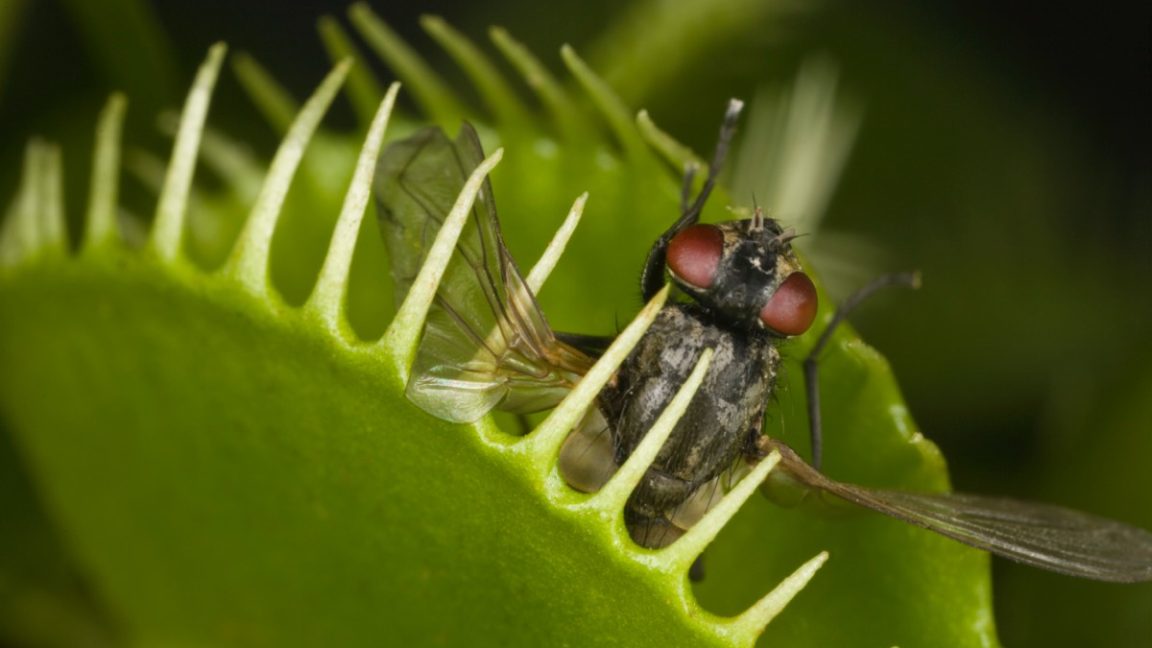
As part of their investigation, they genetically altered a flytrap so it glowed with a green fluorescence whenever it was "stimulated."Scientists are continuing to tease out the mechanisms by which the Venus flytrap can tell when it has captured a tasty insect as prey as opposed to an inedible object (or just a false alarm). There is evidence that the carnivorous plant has something akin to a short-term "memory," and a team of Japanese scientists has found evidence that the mechanism for this memory lies in changes in calcium concentrations in its leaves, according to a recent paper published in the journal Nature Plants.
[...]
Back in 2016, a team of German scientists discovered that the Venus flytrap can actually "count" the number of times something touches its hair-lined leaves—an ability that helps the plant distinguish between the presence of prey and a small nut or stone, or even a dead insect.


That's where I store my spare keys.Dutch scientists have discovered a new organ in the human body, a fourth pair of large salivary glands, tucked into the space where the nasal cavity meets the throat.
TOO MUCH OF A GOOD THING.Well it seems that NASA's OSIRIS REx probe managed to collect much more material than expected - so much that the excess has kept the "door" of the collector from closing all the way, allowing some of the material to leak out into space. It seems that any motion of the collector (or the whole probe) jars a tiny bit more of the sample material loose; so they've skipped some activities like tests and planned course-correction maneuvers while they work to get the sample stowed as quickly as possible while losing the least amount of material.

 www.nzherald.co.nz

Here is another video explaining the possible problems.Well it seems that NASA's OSIRIS REx probe managed to collect much more material than expected