


Bartholomew Gallacher
Well-known member
- Joined
- Sep 26, 2018
- Messages
- 7,046

- SL Rez
- 2002


 htsf.substack.com
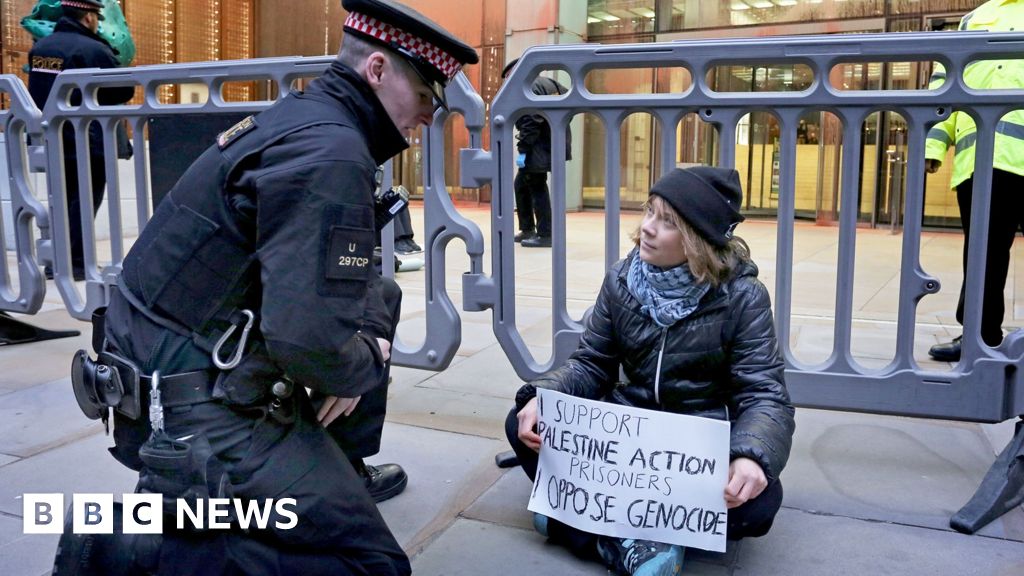
 www.bbc.com


Important insertion to the story:A person identified as “A” emailed the disgraced former British socialite Ghislaine Maxwell from the British royal family’s Scottish residence in 2001, asking whether she had “found me some new inappropriate friends,” according to newly released documents.
The email is part of a series of messages exchanged in 2001 and 2002 between Maxwell and someone using the email alias “The Invisible Man,” contained in a trove of files released Tuesday by the US Department of Justice (DOJ) related to the late convicted sex offender Jeffrey Epstein. The emails are signed “A.”
The writer is not explicitly identified as Andrew Mountbatten-Windsor, but the former prince was introduced to Epstein in 1999 by Maxwell, Epstein’s then-girlfriend and now a convicted sex offender. Epstein died by suicide in 2019 while awaiting trial on federal sex-trafficking charges.
Uh huh.None of the emails suggest any wrongdoing.


https://www.theguardian.com/uk-news/2025/dec/26/post-office-scandal-victims-exhibition-postal-museum-pr-stuntNichola Arch, a former post office operator who was wrongly accused of stealing £26,000 from the Post Office, also attended the meeting. She said: “While they’re taking money from the Post Office, they won’t win our trust, and nothing the museum will do will change that.”
About 3,200 compensation claims remain outstanding.


 bsky.app
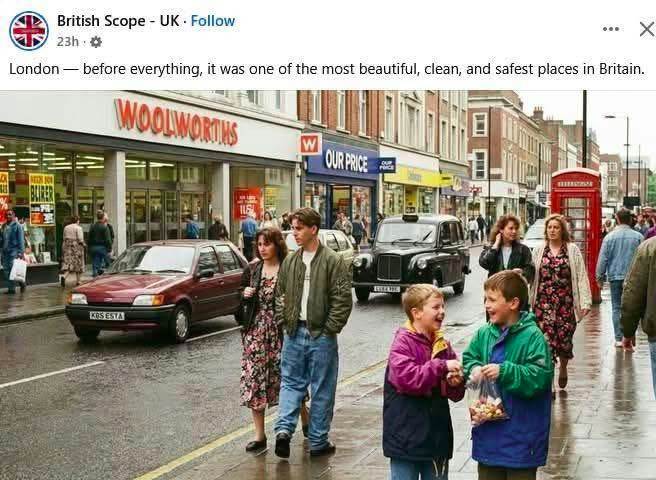
Obviously, Britain stopped being one of the "most beautiful, clean and safest places in Britain" after they stopped driving on the "correct" side of the road.

 www.thenational.scot
Tommy Robinson calls on United States to invade UK after Venezuela attack
TOMMY Robinson has called on Donald Trump to invade and “free” the UK from the “tyrannical dictator” Keir Starmer following the United…


 nickcohen.substack.com
Evernote Linkas things stand, the BBC won’t give a crime boss our money and they deserve our applause.


nonce
Posting in this thread because no one uses that word in the U.S.
I said we don't use it, not that I don't know what it means.nonce
noun
It's originally prison slang for a sex offender (rapists as well as pedophiles), and highly derogatory, of course. Out of interest, what is the US equivalent prison slang term? I'm guessing there must be one.I said we don't use it, not that I don't know what it means.


Dead man/woman walking.It's originally prison slang for a sex offender (rapists as well as pedophiles), and highly derogatory, of course. Out of interest, what is the US equivalent prison slang term? I'm guessing there must be one.


"Short-eyes" is one I've heard about, but I think there's a few.It's originally prison slang for a sex offender (rapists as well as pedophiles), and highly derogatory, of course. Out of interest, what is the US equivalent prison slang term? I'm guessing there must be one.


Child molesters are referred to as "chomo" around here. They tend to be extremely unpopular in prisons.It's originally prison slang for a sex offender (rapists as well as pedophiles), and highly derogatory, of course. Out of interest, what is the US equivalent prison slang term? I'm guessing there must be one.


I've seen 'chickenhawk' for rapist but that's taken on a different meaning in recent decades.Child molesters are referred to as "chomo" around here. They tend to be extremely unpopular in prisons.
As for sex offenders in general, I don't know how they're referred.
It's also thought to be related to "nancyboy," i.e. a homosexual. Showing how gays are always tied into this shit.It's originally prison slang for a sex offender (rapists as well as pedophiles), and highly derogatory, of course.
Along with the one Katheryne mentioned, I've heard of "diaper sniper."Out of interest, what is the US equivalent prison slang term? I'm guessing there must be one.


