

WTF Climate Change News
- Thread starter Beebo Brink
- Start date


Isabeau
Merdeuse
- Joined
- Sep 20, 2018
- Messages
- 9,385
- Location
- Montréal

- SL Rez
- 2007
We’ve just had a couple of days of hot and humid, feels like 35c, and I’m beat. I was only doing light physical work, often going up and down stairs, and had to change out of my soaking clothes a few times. At one point, it looked like I had peed myself lol
I’m just not built for this type of weather. I can’t imagine having to work in 49c temp
I’m just not built for this type of weather. I can’t imagine having to work in 49c temp

Isabeau
Merdeuse
- Joined
- Sep 20, 2018
- Messages
- 9,385
- Location
- Montréal
- SL Rez
- 2007
(When I want to covert quickly, I just multiply my Celsius by two, then add 32. It’s not precise, but it gives me an idea when folks speak in Fahrenheit)


Myradyl Muse
Mermaid Myradyl Muse
- Joined
- Feb 22, 2019
- Messages
- 468
- Location
- At Sea in the great Canadian North

- SL Rez
- 2003
Totally Canadian, nothing to see here(When I want to covert quickly, I just multiply my Celsius by two, then add 32. It’s not precise, but it gives me an idea when folks speak in Fahrenheit)
 . I do the same all the time, easier than all the fractions and decimals, bleh.
Kamilah Hauptmann
Shitpost Sommelier
- Joined
- Sep 20, 2018
- Messages
- 15,144
- Location
- Cat Country (Can't Stop Here)

- SL Rez
- 2005
- Joined SLU
- Reluctantly


Katheryne Helendale
🐱 Kitty Queen 🐱
- Joined
- Sep 20, 2018
- Messages
- 10,504
- Location
- Right... Behind... You...

- SL Rez
- 2007
- Joined SLU
- October 2009
- SLU Posts
- 65534
49°c would be insane. It was 40°c here yesterday, and I had to be out and about in a car with an air conditioner in dire need of servicing, and I realized that I wasn't ready for this shit yet.We’ve just had a couple of days of hot and humid, feels like 35c, and I’m beat. I was only doing light physical work, often going up and down stairs, and had to change out of my soaking clothes a few times. At one point, it looked like I had peed myself lol
I’m just not built for this type of weather. I can’t imagine having to work in 49c temp



- Joined
- Sep 22, 2018
- Messages
- 42,636
- Location
- Moonbase Caligula

- SL Rez
- 2008
- Joined SLU
- 2009
- SLU Posts
- 55565
More icebergs are changing life in the Arctic
The number of icebergs in the Arctic has increased significantly since the early 2000s. A new study, carried out by, among others, researchers from DTU Space, documents how the melting of large glaciers in Northeast Greenland and the Russian part of the Arctic is sending ever more icebergs into the ocean.
The icebergs transport surprisingly large amounts of rock and sediment from land and transport them several hundred kilometers into the sea. The stones sink to the bottom and change life on the seabed nearly 2,500 meters below the ocean surface. The hard surfaces on an otherwise soft seabed allow sponges, sea anemones, and other organisms to establish themselves.


- Joined
- Sep 20, 2018
- Messages
- 24,004

- SLU Posts
- 18459
Europe battles record-breaking heat: is this the new normal? - The Latest
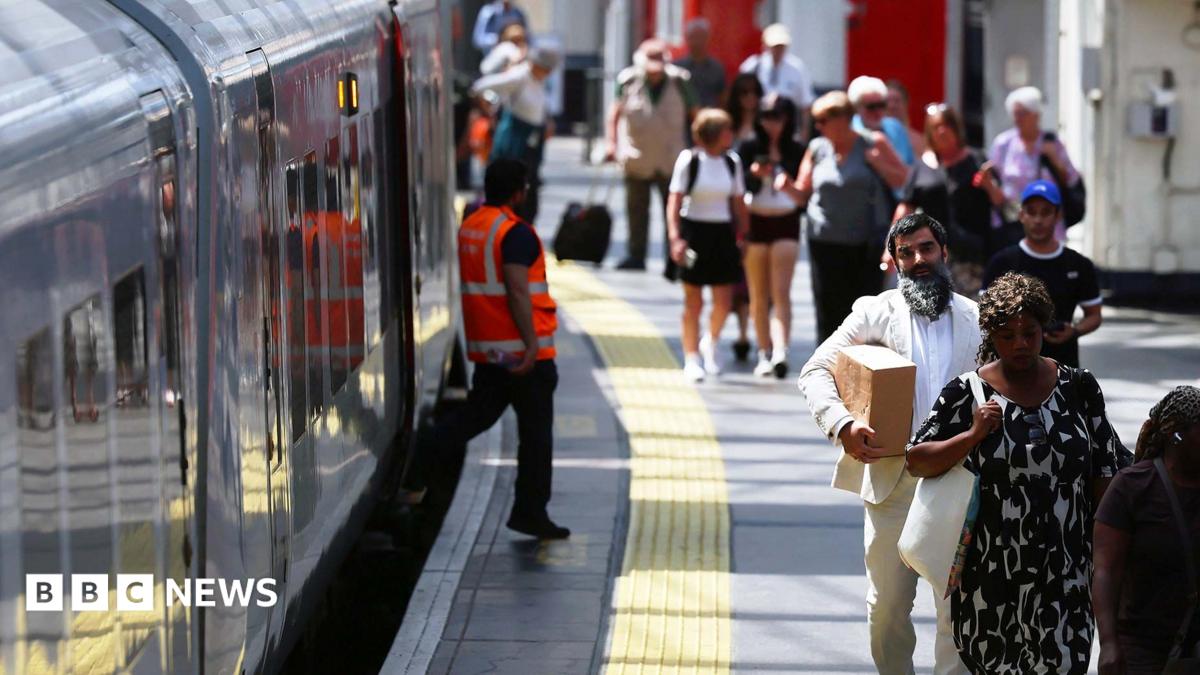
 www.bbc.co.uk
Passengers warned against non-essential rail travel on Wednesday - live updates
A rare red warning for extreme heat comes into force in parts of England and Wales from 09:00 BST tomorrow until 21:00 on Thursday.
www.bbc.co.uk

- Joined
- Sep 20, 2018
- Messages
- 1,582
- Location
- North of Surf City

- SL Rez
- 2004
- Joined SLU
- 27.05.2009
- SLU Posts
- 5294
If the Gulf Stream begins to fail to make its contribution to the temperateness of Europe, will Europe get colder, I wonder. The world wide set of major ocean currents are all threatened by global warming and I remember that the Gulf Stream and its benefits to Europe were always part of that potential-catastrophe discussion.Europe battles record-breaking heat: is this the new normal? - The Latest
Passengers warned against non-essential rail travel on Wednesday - live updates
A rare red warning for extreme heat comes into force in parts of England and Wales from 09:00 BST tomorrow until 21:00 on Thursday.
- Joined
- Sep 22, 2018
- Messages
- 42,636
- Location
- Moonbase Caligula
- SL Rez
- 2008
- Joined SLU
- 2009
- SLU Posts
- 55565


- Joined
- Sep 20, 2018
- Messages
- 7,093
- SL Rez
- 2006
When the Heat Steals Your Smile
tl:dr - excess dehydration leads to acidic mouth conditions that literally dissolve teeth.
tl:dr - excess dehydration leads to acidic mouth conditions that literally dissolve teeth.
Saliva is not just moisture. It’s a physiological fortress, a sophisticated system that most people take entirely for granted until it fails them. For anyone, but especially for people doing physically demanding work in extreme conditions, saliva performs three critical functions that are absolutely essential to tooth survival: It buffers acids from food and stomach reflux that would otherwise erode enamel; it holds calcium and phosphate minerals, which actively remineralize tooth enamel when microscopic damage occurs; and it contains enzymes and antibodies that fight bacteria, helping prevent infection and decay.
Without adequate saliva flow — and I mean genuinely adequate, not just the minimal amount needed to swallow — teeth begin to demineralize within weeks, a process that becomes increasingly difficult to reverse.
Heat stress triggers a biological cascade that is as predictable as it is brutal. When outdoor workers experience prolonged exposure to temperatures above 40°C day after day, their bodies are forced to prioritize cooling through perspiration over virtually every other function. This leads to fluid being diverted away from salivary glands and toward sweat production because the body’s survival calculus, the result of millions of years of evolutionary programming, is simple: prevent immediate heatstroke, worry about other problems later.
- Joined
- Sep 20, 2018
- Messages
- 7,093
- SL Rez
- 2006
- Joined
- Sep 22, 2018
- Messages
- 42,636
- Location
- Moonbase Caligula
- SL Rez
- 2008
- Joined SLU
- 2009
- SLU Posts
- 55565
Former NOAA Employees Revive Climate Site Shut by Trump Administration
A small group of former government workers has recreated a valuable climate-science website that had been shuttered last year under the Trump administration.
The new site, climate.us, is an effort by former staff members at the National Oceanic and Atmospheric Administration to present climate science previously housed at climate.gov, including data, reports, articles, and congressionally mandated national climate assessments.
The new site is effectively the “first full clone” of climate.gov, said Rebecca Lindsey, managing director of climate.us. It became fully active on Tuesday morning.
