Nobody Cares! (Science & Tech Edition)

Soen Eber

Vatican mole
VVO Supporter 🍦🎈👾❤
Joined
Sep 20, 2018
Messages
4,062
It's almost like it's not worth learning about the lives of important figures through history to avoid being hit by this sort of shit. But then we're just lying to ourselves.
Or we can do what Washington's aide did after the former president died: burn records of the founding fathers so they would always look upstanding.

But to be fair, it probably kept the early nation together by not exposing any dirty underwear. Cracks were already built into the system via slavery - as looking up the history of the 2nd amendment would verify (as a sop to the South to prevent slave rebellions).
 
Joined
Sep 19, 2018
Messages
6,768
Location
NJ suburb of Philadelphia
SL Rez
2003
SLU Posts
4494
All fusion means is we'll start running out of water sometime down the line. Mankind has a problem differentiating "nearly-infinite" with "infinite"
According to this guys' estimate that should happen around a billion years from now. On the other hand, the sun should die in 8 billion years so we're done for by then for sure (probably within 100 years I'd think but I digress).
 

danielravennest

Well-known member
Joined
Sep 21, 2018
Messages
3,708
SLU Posts
9073
All fusion means is we'll start running out of water sometime down the line. Mankind has a problem differentiating "nearly-infinite" with "infinite"
Only 0.0156% of terrestrial hydrogen is the Deuterium isotope used for fusion. The water loss would be fairly trivial. Meanwhile, the other, forgotten byproduct of fossil fuel burning is water. Natural gas is 4 H's per C, petroleum is 1.7 H's per C and coal is 1.0 H's per C. So we have been adding gigatons of water to the environment per year.
 
  • 1Thanks
Reactions: Soen Eber

danielravennest

Well-known member
Joined
Sep 21, 2018
Messages
3,708
SLU Posts
9073
According to this guys' estimate that should happen around a billion years from now. On the other hand, the sun should die in 8 billion years so we're done for by then for sure (probably within 100 years I'd think but I digress).
The real problem in 600-1000 million years is the Sun getting brighter. The Sun coverts hydrogen to helium, and the helium accumulates in the core where the fusion happens. It is estimated the core is now 64% helium, where it started with ~25%. Since helium is denser, the core contracts and heats up, increasing the fusion rate and thus the Sun's brightness by ~1% per 100 million years. In the future the Sun will be 6-10% brighter, raising the Earth's temperature by 4.5-7.5C. The water feedback effect raises the increase to 10.5-17.5C. Somewhere in that range we get a runaway greenhouse effect, where more water vapor allows more to evaporate and increase the temperature even more, until the oceans boil and life as we know it ends.

It turns out we can avoid the runaway greenhouse by building a few acres of sunshade every year forever, which is fairly trivial if we have significant space industry.
 
  • 1Thanks
Reactions: Essence Lumin

danielravennest

Well-known member
Joined
Sep 21, 2018
Messages
3,708
SLU Posts
9073
Once we send humans beyond the moon in some reasonable degree of safety...
Space systems engineering is my specialty. For early missions to Mars, radiation adds a 3% lifetime risk of cancer (not death). The Space Station is 20+ years old, and hasn't killed anyone yet. So depending what you call "reasonable safety", we are already below the death rate of people climbing Mt. Everest, which is a voluntary risk.

SpaceX intends to send "fleets" of ships to Mars at a time, not one. So a failure of any one ship doesn't have to mean they all die. They get redistributed across the remaining ones. In the longer term, there are "cycling" orbits that repeatedly go between Earth and Mars. We can build substantial habitats, with radiation shielding and artificial gravity, that travel that route. It doesn't matter how heavy they are, because they are not moving once placed in the right orbit. Those would be more comfortable and safer than smaller ships.

All of that won't happen for a while. It will be a step-by-step evolution. The first step beyond low orbit is supposed to be the "Lunar Gateway", a small station near the Moon that will assist in reaching the lunar surface and returning. Once on the Moon, the plan is to mine ice and other compounds from "cold traps" near the poles. Those craters never see the Sun, so they are very cold. When a comet or asteroid that has those compounds hits the Moon, some if it freezes out there before the rest of it escapes to space.
 

Soen Eber

Vatican mole
VVO Supporter 🍦🎈👾❤
Joined
Sep 20, 2018
Messages
4,062
Note to self: when starting missions to the outer planets, do not assign the artificially intelligent AI to perform psychological profiles of the crew.
 
Last edited:
  • 1LOL
Reactions: Govi

danielravennest

Well-known member
Joined
Sep 21, 2018
Messages
3,708
SLU Posts
9073
Forget metric vs imperial

Thread, inspired by the Mail


They couldn't find a unit that UK readers would be familiar with, like the size of a football (soccer) net? That's 7.3 meters, by the way. So the asteroid was 4/10ths of a football net, or 1.7 Boris Johnsons in size. Another familiar unit is 25% taller than a standard room ceiling. I assume most people in the UK have ceilings.
 

Ashiri

√(-1)
Joined
Sep 20, 2018
Messages
936
Location
RL: NZ
SL Rez
2007
SLU Posts
-1
Forget metric vs imperial

Thread, inspired by the Mail

Why do they do that? Has anyone enquired as to the state of mind in these writers that they use such odd ways of trying to obscure the size of the things they are writing about. And is it mostly British Tabloid s that do it?
(If they'd said it was the size of two cows, that be understandable though still imprecise)
 

Free

IZ ADMIN
Joined
Sep 21, 2018
Messages
43,702
Location
Moonbase Caligula
SL Rez
2008
Joined SLU
2009
SLU Posts
55565
Good news, everyone!

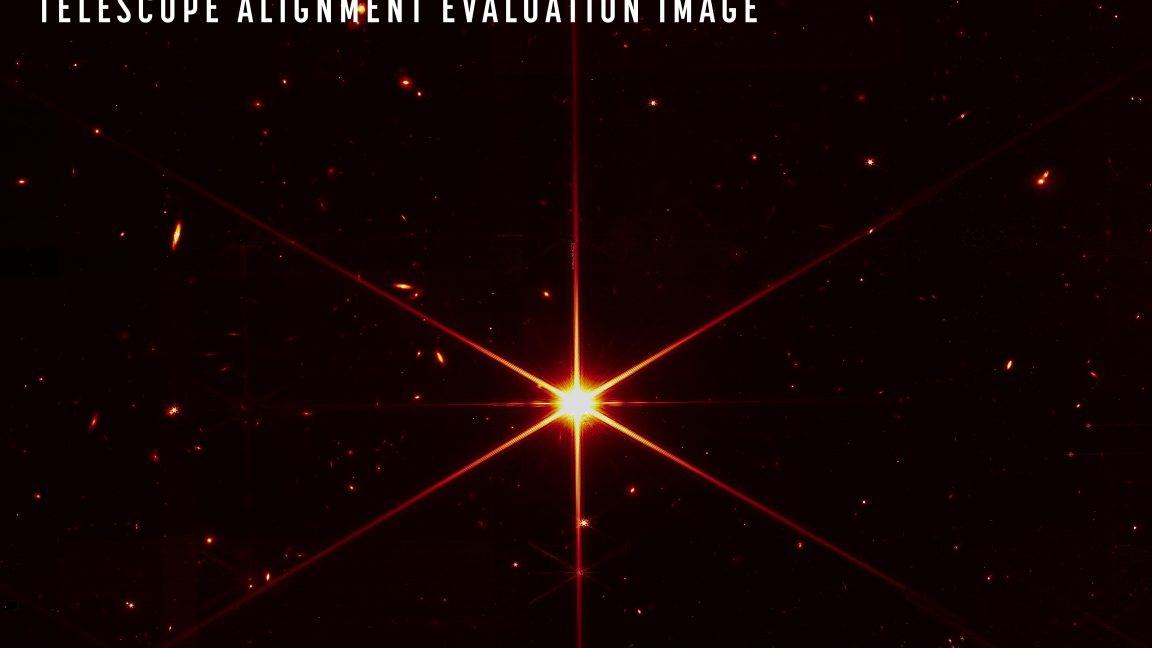
NASA announced that it has successfully completed two further steps to align the mirrors of the Webb telescope. The resulting performance indicates that Webb will meet or exceed its design goals. "So far, we're finding that the performance is as good [as] or better than our most optimistic projections," said Lee Feinberg, the Webb optical telescope element manager.

The announcement was accompanied by a spectacular image that showed a sharp focus on the target star and included many in-focus galaxies in the backdrop.


Original, pretty biggish, PNG of the image can be found here.
 

danielravennest

Well-known member
Joined
Sep 21, 2018
Messages
3,708
SLU Posts
9073
Good news, everyone!

Original, pretty biggish, PNG of the image can be found here.
When you are making a telescope on Earth, you use an optical bench to test the shape of the mirror and fine tune it. I found out recently in one of the articles about the mirror alignment process that Webb has a built-in bench among the science instruments. That's how they will do the final alignment, and then periodic tweaks if needed later on. When I read that, I went "Oh, duh, makes perfect sense". Launch is a rough ride, so you want to be able to do the tests "in the field", so to speak, once it is in the final orbit and cooled down.

One of the instruments has been kept slightly warm with heaters until now, to make sure all the water vapor has had time to escape. They launched from a tropical rainforest on the coast of South America. They *tried* to keep moisture away from the telescope, but inevitably some would leak in between the shipping crate and sitting on the launch pad. That instrument will be looking for stuff like water vapor in planetary atmospheres, so they wanted it *all* gone. Now that the alignment has got this far, the heater will be turned off, and it can finish cooling down to an absurd temperature like 7 Kelvin. To do that they now use a cryocooler to chill it even more than the sunshade can do.
 
  • 2Thanks
Reactions: Marita and Govi