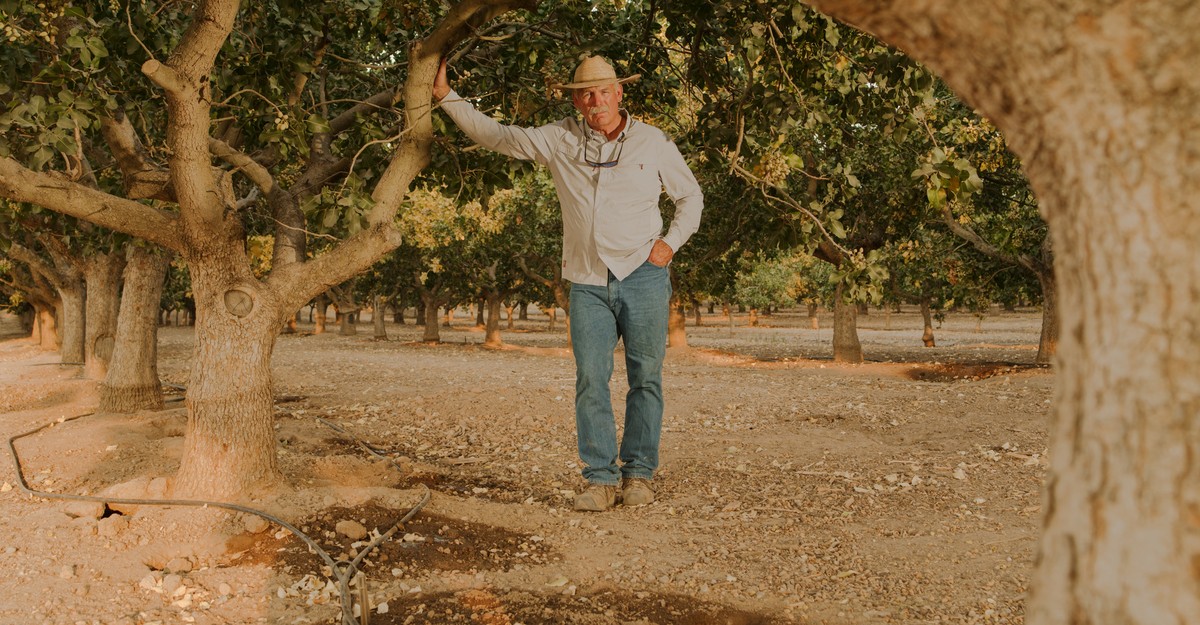
From the data on his devices, Angell calculated that the underground water table in Madera County, one of the most over-tapped in the West, had dropped an astounding 60 feet over late spring and summer. So many agricultural pumps were dipping their bowls into the same depleted resource that the aquifer was collapsing, a descent he had never witnessed. “I’m 62 years old. I’ve been doing this more than half my life, and I’ve never seen this. Not even close,” he said. “This is all brand new, and it’s shaken everything I believe in.”
When he took a closer look at the well’s steel casing, he could see six hairline fractures that started at the 280-foot level and ended at the 900-foot level. But what he encountered between those two depths confirmed a phenomenon sometimes found in clay soils but rarely in sandy loams such as this. The casing had been bent by a profound force; the steel was rippled like a crushed soda can. That force, he knew, was the downward pull of subsidence. As a consequence of too much water being sucked out of the aquifer, the earth itself was sinking, first by inches and then by feet, shearing off pumps, eating away at ditches, canals, and aqueduct, stealing gravity from California’s one-of-a-kind water-delivery system that counted on gravity to flow.