- Joined
- Sep 20, 2018
- Messages
- 24,428

- SLU Posts
- 18459

 www.theguardian.com
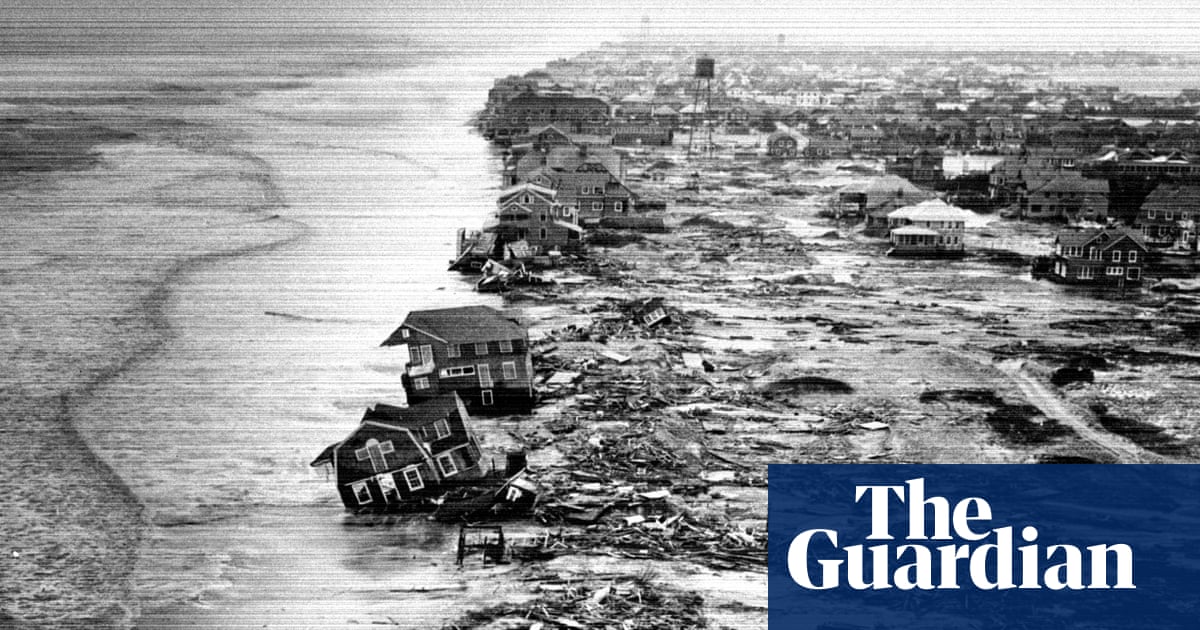
The untrained, unpaid and unsupervised volunteer directors of the nation’s more than 350,000 condo and homeowners’ associations, armed with limited financial resources, are expected to deal with the unprecedented infrastructure challenges that climate change poses to their communities. And there is no reason to believe that they are up to that task.
More than 20 percent of the U.S. population lives in property administered by condominium and homeowners’ associations, nonprofits run by volunteers elected by the owners. These directors and officers are responsible for an estimated $7 trillion worth of private property and infrastructure, including high-rise buildings, private streets, parks, pools, sewer and water systems, lakes, garages, and many other building systems and amenities.
In effect, condo and HOA developments are a huge experiment in privatization of local government functions, and sometimes the offloading of government responsibilities goes too far. We can expect a condo or HOA board to handle garbage collection, get the leaves and snow removed from private streets, and broadly live up to its responsibilities to residents. But when private communities took off in the 1960s, we didn’t even know what climate change was. We cannot realistically expect condo boards to prevent damage from sea level rise, more-frequent severe storms, extreme heat and drought, and other major changes in the environment — especially not in buildings that weren’t built to withstand such conditions.


 arstechnica.com
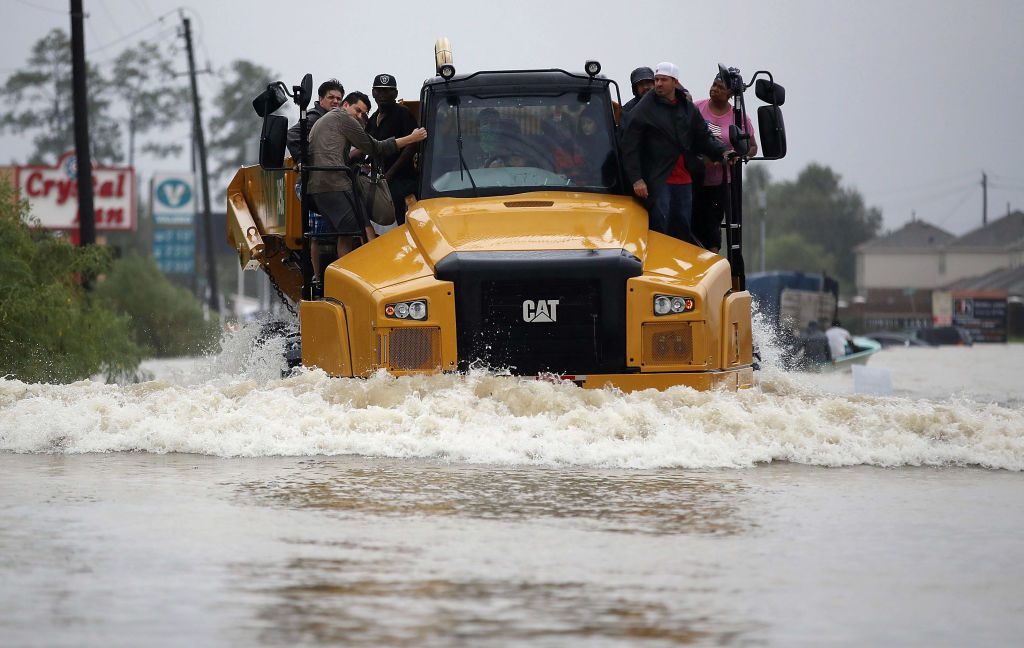
In 2014, the US Army Corps of Engineers partnered with the state to study Ike Dike-like alternatives for Galveston Bay. After many iterations, bills to establish a governing structure for the $26.2 billion barrier proposal, which the Corps developed alongside the Texas General Land Office, recently passed both the Texas House and Senate. In September, the Corps will deliver their recommendations to the US Congress, which will need to approve funding for the project.
No one can guess the barrier proposal's exact fate, given its enormous price tag. And as sea levels rise and storms intensify with global climate change, Houston is far from the only US coastal metropolitan region at serious risk. Multibillion-dollar coastal megaprojects already are underway or under consideration from San Francisco to Miami to New York City.
President Joe Biden’s new $2 trillion national infrastructure initiative specifically calls for projects on the country’s embattled coasts. The initiative for Houston, the fifth-largest US metro area and the vulnerable heart of the petrochemical industry, spotlights the tough decisions for coastal megaprojects, which must balance societal needs, engineering capabilities, environmental protections, and costs.
Meanwhile, the seas keep rising. “It’s a significant tension between the need to address these issues and do it quickly," said Carly Foster, a resilience expert at the global design consultancy Arcadis, "and also do it right."


I wonder if he has children and grandchildren?
Ken Croasdale, 82, researcher and engineer at Imperial Oil from 1968 to 1992
My personal view is that climate change is occurring. But the primary driver is population and consumption. When my grandfather was born, the world population was about 1.3 billion. When I was born it was 2.2 billion, and today it is 7.5 billion. The UN predicts a population of about 10 billion by 2055. In my opinion this is the primary driver of everything relating to our worsening environment.


This is why I live near Atlanta, at 1000 ft above sea level.As a country we could all too easily pour billions of dollars into projects to hold back the sea or raise roads and buildings, only to have sea level rise above those new levels within a few decades. The long-term solution is to retreat from the coast. We'll do it sooner or later, the only question is how much sunk-cost we'll abandon when the inevitable finally comes.


Yeah, pretty much - of course, last I check, even in a worse case scenario, my street, or at least house, will just be on an island.This is why I live near Atlanta, at 1000 ft above sea level.
Note that some parts of Houston are built on "expansive soil". This is clay-heavy soil that expands when wet, and shrinks when dry. So houses in that area are built on "raft" foundations, where the whole building rises and falls as a unit. Rather than just a flat slab, you have to build in ribs on the bottom so it won't crack if one part moves up more than another. The utility connections have to be flexible too.
Solutions like that are the only answer I see for the Florida coast in the longer run.
Much as I don't like some aspects of West Virginia (poor state, very red, very evangelical), I have to admit that my particular location is climate secure enough to make me reluctant to move. We're far from the ocean, not given to floods, mudslides or earthquakes. Storms and tornadoes veer away from the mountains behind us. We've had dry seasons, but nothing approaching the droughts out West. And our house has a basement carved out of rock. All in all, we could do much worse for a place to shelter from the events to come.This is why I live near Atlanta, at 1000 ft above sea level.
 www.theguardian.com


Strange. I'd never heard of the guy until now, yet I've been saying what he has said for decades. No one ever listens to me either.I wonder if he has children and grandchildren?
Strange. I'd never heard of the guy until now, yet I've been saying what he has said for decades. No one ever listens to me either.

I learned long ago that mentioning overpopulation was like throwing a grenade in the middle of the room. People go ballistic at the suggestion that one of the solutions to climate change is to stop having children. So I'm curious about the personal life of this man who openly acknowledges that the pressures of population growth have driven our overconsumption and endangered the planet. Did he decide not to have children? Or did he procreate and contribute, knowingly, to the problem?
The answer intrigues me. The majority of people are deeply invested in having children -- it's woven into our social, cultural and biological DNA, into our economy. Attempts to curb population growth in China required the full force of an authoritarian government; this draconian edict -- condemned throughout the Western world -- wasn't entirely successful and had unintended consequences, such as the gender disparity, that are de-stabilizing society. They're already rolling back some of it because de-population is also de-stabilizing. The short-term needs are overwhelming long-term consequences. Again. As they always do.
I don't have children, so I can view the debate somewhat dispassionately. But I chose not to have children for reasons completely divorced from their contribution to climate change or ecological damage. It was a personal decision, not a self-sacrifice. I can't in good conscience scold people for making a different choice, even if it sends us all to perdition. Humans are going to human, and that means babies.
I don't think there's going to be any chance of us repeating our industrial/technological achievements again. We needed coal and oil to make that jump and we've pretty much used up all the easily accessible reservoirs. Current mining and oil drilling is far more complex and difficult than driving a spike in the ground. It takes considerable effort to get to the reserves that still exist because they're so deep in the ground.We are our own worst enemy and we will be the downfall of our kind. The only question is, will there be enough of us left to start over so history can repeat itself once again. Or will at least some of those who survive be smart enough to not repeat the same mistakes.
The answer to the question "how do we try to reverse global warming?" isn't "have fewer children," though. It's "reduce our carbon footprint and our emissions of greenhouse gasses," which in turn leads on to specific questions about all the different measures different sectors of different economies in different countries need to take.
I learned long ago that mentioning overpopulation was like throwing a grenade in the middle of the room. People go ballistic at the suggestion that one of the solutions to climate change is to stop having children. So I'm curious about the personal life of this man who openly acknowledges that the pressures of population growth have driven our overconsumption and endangered the planet. Did he decide not to have children? Or did he procreate and contribute, knowingly, to the problem?
The answer intrigues me. The majority of people are deeply invested in having children -- it's woven into our social, cultural and biological DNA, into our economy. Attempts to curb population growth in China required the full force of an authoritarian government; this draconian edict -- condemned throughout the Western world -- wasn't entirely successful and had unintended consequences, such as the gender disparity, that are de-stabilizing society. They're already rolling back some of it because de-population is also de-stabilizing. The short-term needs are overwhelming long-term consequences. Again. As they always do.
I don't have children, so I can view the debate somewhat dispassionately. But I chose not to have children for reasons completely divorced from their contribution to climate change or ecological damage. It was a personal decision, not a self-sacrifice. I can't in good conscience scold people for making a different choice, even if it sends us all to perdition. Humans are going to human, and that means babies.
I don't disagree. If we can't manage to reach the level of space flight we need in order to obtain resources needed for making the leap to colonize an uninhabited planet/moon, we won't need those resources because there won't be any getting off the planet toI don't think there's going to be any chance of us repeating our industrial/technological achievements again. We needed coal and oil to make that jump and we've pretty much used up all the easily accessible reservoirs. Current mining and oil drilling is far more complex and difficult than driving a spike in the ground. It takes considerable effort to get to the reserves that still exist because they're so deep in the ground.
If we experience an interruption in current levels of technology -- which I think may very well happen -- that first step or two in the ladder has been removed. It's possible that remnants of human civilization will be rebuilt, but I can't see them getting too deep in a 2nd round of the industrial age.
We're far more dependent on climate conditions than we like to admit. The human species is at least 250,000 years old and it's only in the last few hundred years that we've fought our way to a highly developed science-based technology. Why is that? Because we were in survival mode for several hundred thousand years of an ice age. And that's exactly where we're headed again with excess heat.
It's not an either/or. We need both, since either one by itself doesn't accomplish our final goals. If we had reduced our population in the 1950s-70s, that would have reduced our current carbon footprint significantly compared to today, but we would still have upwards growth because humans like nice things. More and more nice things. We would just postpone the inevitable.The answer to the question "how do we try to reverse global warming?" isn't "have fewer children," though. It's "reduce our carbon footprint and our emissions of greenhouse gasses" ...
I'm sure that, as a statement of a general fact, reducing population growth would help reduce global warming, but I'm finding it difficult to turn that into something specific.It's not an either/or. We need both, since either one by itself doesn't accomplish our final goals. If we had reduced our population in the 1950s-70s, that would have reduced our current carbon footprint significantly compared to today, but we would still have upwards growth because humans like nice things. More and more nice things. We would just postpone the inevitable.
Similarly, focusing only on reduced footprint isn't enough. Population growth is still a factor because the degree to which that footprint has to shrink continues to get more onerous if there are new people being added all the time. We are under constant pressure to reduce each individual footprint even more every year to compensate for the growth. Bringing population growth to 0% would still be nothing more than treading water, but at least it would be a start in the right direction.
More to the point, however, reducing our carbon footprint now doesn't do diddly-squat for reversing global warming. At best, and this is only speculation, reducing our carbon footprint will keep us from accumulating even higher levels of CO2 in the atmosphere. There's growing evidence that we've crossed tipping points where melting permafrost will continue to emit greenhouse gases, as will burning forests, no matter what we do.
The only theoretical way to reverse global warming is to remove carbon/methane from the atmosphere. We do not currently have any way to do that, so there's no reversal on the horizon yet.