Brenda Archer
Well-known member
- Joined
- Sep 21, 2018
- Messages
- 2,135
- Location
- Arizona

- SL Rez
- 2005
- Joined SLU
- Sept 2007
- SLU Posts
- 12005


I'm a little muddy with regards to the situation as well, but this is what I understand of it: While it's true that various pharmacies and doctors were abusing the drugs and violating all sorts of laws and regulations regarding prescriptions, Purdue Pharma did not do due diligence in reporting the unusual volume of orders for the drug - instead, they encouraged it. Further, Purdue misled prescribing physicians about the drug's addictive qualities, leading to further over-prescriptions. So there's a lot of blame to go around, but I think it was Purdue's reckless irresponsible quest for profit that is at the root of it.I can quite see suing particular doctors and clinics for their irresponsible prescribing practices. I'm just less clear about why it is argued the Sackler family (whether all adult living family members or particular individuals) should be held responsible for what sounds like the prescribing doctors' malpractice.

This is horrible and I don’t have words, I wish she could get help. This country has become a nightmare.I sure haven't followed all the specifics of everything here. My understanding is Big pharma way over prescribed opioids and painkillers. And now my friend who has gone through major surgery and is in excruciating pain actually needs pain pills and can't get them. She screams in her apartment from the pain. But there is nothing she can do


Isn't he in prison now?Money talks. (^_^)



Well, yes. And this isn't even the worst thing wrong with our health care system.When the system of medical care and regulation allows this kind of thing to happen, the problem is wider than simply unscrupulous, or even criminal, individuals. There's also something wrong with the health care system that allows it to happen.


Change in prescription habits after federal rescheduling of hydrocodone combination products
...
Statistical analysis of the number of prescriptions received for each medication illustrated a 17% increase in tramadol, 597% increase in Tylenol #3, and 1056% increase in Tylenol #4 after federal rescheduling of hydrocodone combination products.
...
With the significant rise in alternative prescriptions, there was only a slight change in the quantity of morphine equivalents prescribed before and after the federal rescheduling.

 www.ncbi.nlm.nih.gov
I have to wonder at this, it looks like transferring money from one product to another.Doctors are going back to Tylenol 3/4 (with codeine) -- according to this site prescriptions for T#4 have gone up over 1000% (which is what I'm now on because Tramadol was meh.)
Change in prescription habits after federal rescheduling of hydrocodone combination products
Nationally, health care providers wrote 259 million prescriptions for narcotic analgesics in 2012, or roughly one bottle of narcotics per US adult (). In an effort to combat this ever-growing problem, the Drug Enforcement Administration changed the schedule ...
The rescheduling didn't really change much overall. "...there was only a slight change in the quantity of morphine equivalents prescribed before and after the federal rescheduling. "I have to wonder at this, it looks like transferring money from one product to another.
I had hydrocodone after surgery and I hated it. It certainly didn’t make me high (as some say it does to them). But I had Tylenol with codeine (T3) during a particularly awful ear infection and got higher than a kite (and I’ve heard others say the same). So I’m not sure what the Puritans hope to accomplish by moving people from hydrocodone to codeine.
And Tylenol is not the safest.
The Controlled Substances Act requires drug companies to control against diversion, and to design and operate systems to identify “suspicious orders,” defined as “orders of unusual size, orders deviating substantially from a normal pattern, and orders of unusual frequency.” The companies are supposed to report such orders to the DEA and refrain from shipping them unless they can determine the drugs are unlikely to be diverted to the black market. The plaintiffs, in the filing, allege that the companies ignored red flags and failed at every level.
At Cardinal Health, one of the nation’s largest drug distributors, then-CEO Kerry Clark in January 2008 wrote in an email to Cardinal senior officials that the company’s “results-oriented culture” was perhaps “leading to ill-advised or shortsighted decisions,” the filing contends.
On Aug. 31, 2011, McKesson Corp.’s then-director of regulatory affairs, David B. Gustin, told his colleagues he was concerned about the “number of accounts we have that have large gaps between the amount of Oxy or Hydro they are allowed to buy (their threshold) and the amount they really need,” according to the filing, which cites Gustin’s statements. “This increases the ‘opportunity’ for diversion by exposing more product for introduction into the pipeline than may be being used for legitimate purposes.”
According to the filing, he had earlier noted to his colleagues that they “need to get out visiting more customers and away from our laptops or the company is going to end up paying the price . . . big time.”
The Post has previously reported that Kristine Atwell, who managed distribution of controlled substances for the company’s warehouse in Jupiter, Fla., sent an email on Jan. 10, 2011, to corporate headquarters urging that some of the stores be required to justify their large quantity of orders.
“I ran a query to see how many bottles we have sent to store #3836 and we have shipped them 3271 bottles between 12/1/10 and 1/10/11,” Atwell wrote. “I don’t know how they can even house this many bottle to be honest. How do we go about checking the validity of these orders?”
A bottle sent by a wholesaler generally contains 100 pills.
Walgreens never checked, the DEA said. Between April 2010 and February 2012, the Jupiter distribution center sent 13.7 million oxycodone doses to six Florida stores, records show, many times the norm, the DEA said.


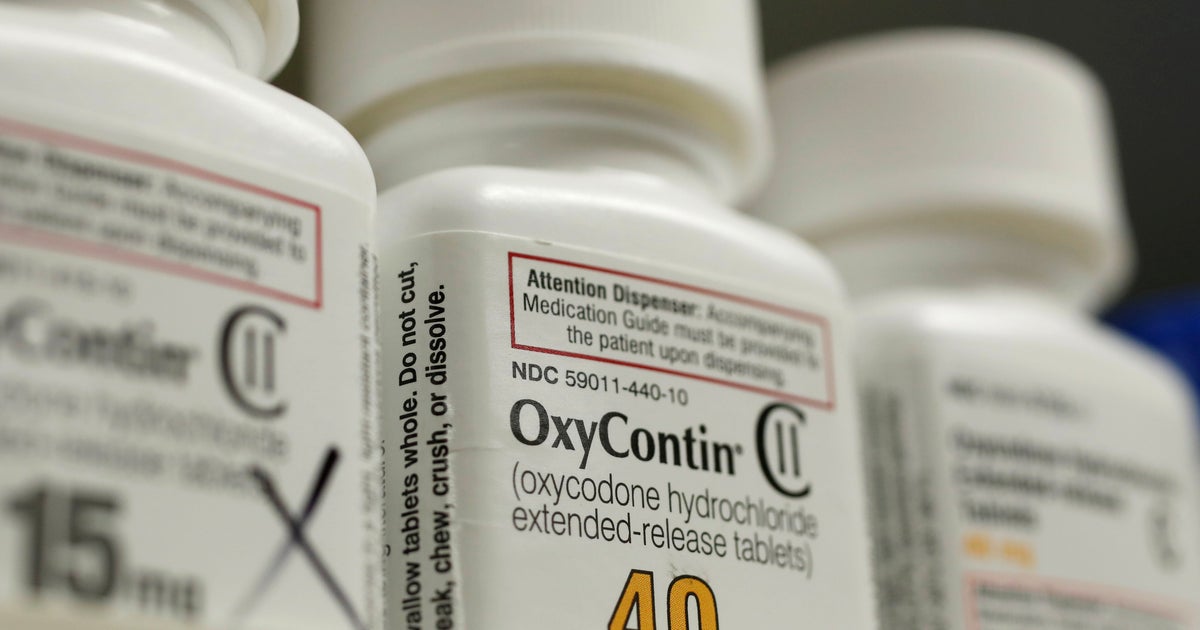


Any bets that they will receive a fine (if any) which is a mere pittance of what they sacked away in offshore accounts? They also will claim bankruptcy to avoid any other means of fines/punishments. This is what I was talking about in another post when I mentioned how businesses are able to avoid the same penalties as individuals.They seem nice:
New York Accuses Purdue Pharma Family Of Secretly Siphoning Off Fortune
The Sacklers, the family behind OxyContin, allegedly wired around a billion dollars to their own bank accounts while defending their role in the opioid crisis.www.huffpost.com


Related to this, I was wondering the other day how common it is for billionaires to overestimate their ability to intimidate millionaires. If you have no resources to fight a big lawsuit, you are very vulnerable in America. But once you have a certain critical mass of money, having LOTS AND LOTS of extra cash may not help you very much if you are obviously in the wrong on a lawsuit. The Sackler family is getting desperate, because they know on some level that their enemies are right.I'm glad they're not letting themselves be silenced.