Also: Was this specific bicycle event one that had people start at different times? Or did everyone start at the same time? If everyone started at the same time, well, isn't it kind of on the bicyclist to pay attention to the number of people in front of them (I realize it is different in non-Olympic races where there is this voice in their ear muttering at them)? If people started at different times, well, then that's screwed up (not to let people know if someone was still ahead of them). Was this a race where anyone can grab a bike and start racing, and no one knows how many people are officially in the race?
There's probably some logical reason, other than not being told via voice in ear or hand-held signs, for why the bicyclist didn't know there was a rider still ahead of them.
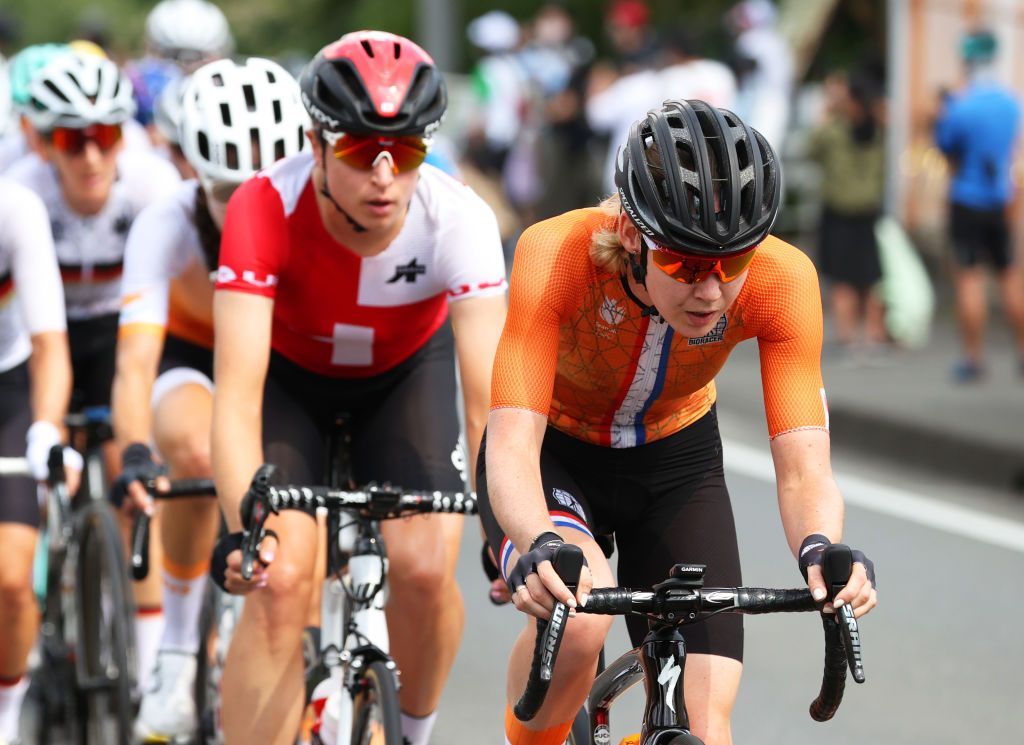
This was the women's road race. It featured a mass start with everyone at once. There were 67 riders at the start, and a small group including the eventual winner attacked at the very start of the race. This occasionally happens in the men's tour, but it is extremely rare for the women because their courses are shorter. It is difficult to keep track of everybody because there are generally multiple attacks that occur over the whole of the event. Also, the riders taking part on the national teams are generally not used to riding together as they are on different teams throughout the rest of the season. This was even more difficult as the Dutch road captain, Anna Van der Bruggen, has an incredible and rare talent for moving through the peleton with extreme ease. She spent a non-trivial amount of the race at the back which makes it harder to monitor the riders at the front.
Normally all profecional road races are for commercial teams. The cyclists can come from all kind of nationalities. Depending on the type of course one or two will be the leaders, where the rest of the team will work for during that race. I depends on the type of race who is the leader of the team, there are sprint specialists, long escape specialists, multi day course specialists etc. And there are always people who's task is to help: getting food and drinks during the race, drive in the first row of the peloton to keep the speed up if needed etc.
During these races radio communication between the team coaches and the riders is allowed. All bikes have GPS tracking, so it is totally clear during the race who is where at any moment. This GPS information is shared openly by the organization.
And there are a few motors from the organization that ride in course and show the time differences between peloton and riders in front to the followers and leaders in course.
There are two races not organized by this principle: The world champion ships and the Olympic race.
Then the teams are formed by nationality and there is a maximum of 4 members per team. That makes things complicated for team tactics. It goes to far to explain it all here.
The commercial teams don't provide their communication systems and other equipment for national teams, so the UCI decided to organize these two courses without radio communication between the coaches and their national teams.
And during the female course 2 things went wrong: The Japanese organization was not always as professional as it should be (logical, Japan has very little experience with organizing pro road cycling) and the pro riders have very little experience with riding without direct communication these days.
A mixture of those two made that Keisenhofer (with all respect a very modest driver, more a time traiist) could stay upfront unnoticed for too long.
The UCI is the governing body for cycling, and sometimes I think their primary goal is to make sure FIFA is not the worst sports federation in the world. The debate over race radios in the Olympics has a long history. For example, in the 2000 Olympics Lance Armstrong whined that they did not realize Jan Ullrich and Alexander Vinokourov were ahead of the peleton, and he complained they were working together because they were on the same professional team. In that case if Armstrong could not keep track of Ullrich then he had no business being on the course that day. This year, though, the race organizers made some big mistakes in how they were communicating with the riders.
One of the arguments for not using radios is the limits on numbers of riders that
Sid mentioned in his post. I believe that the policy on team size and selection is a much bigger issue. Many teams only have one or a couple riders, and if the larger, well organized teams had radios they would have an even bigger advantage. This would be worse for the women's side because the UCI puts such severe limits on participation for the women. For example, France only had one rider which is bizarre. Also, Kiesenhofer is a time trial specialist but could not take part in that event since Austria was not allocated a place in the field for that event. If the larger, better funded teams had radios then the lone rider from Paraguay, for example, would have been in an even worse situation. The UCI's response to this is to continue the farce of treating cycling as an individual sport which is a horrible aberration from what the sport is, and it causes direct harm to the sport itself.
Limiting the teams and not allowing radios may provide unpredictable results, but the racing itself is ugly. Having said that, there has been a great deal of discussion of the tactics and communication within the Dutch team. For example Marianne Vos said she knew that Kiesenhofer was still ahead, and Marlen Reusser (Switzerland) said that she told Anna Van der Bruggen that she thought Kiesenhofer was still up the road. (ETA: It is being reported that Vos did not realize Kiesonhofer was ahead until late in the race.) At the same time the tactics used by the Dutch team made little sense and were a significant departure from their approach in past events. (Kasia Niewiadoma described the Dutch tactics as "weird.") Letting the break go out to 11 minutes was a huge gamble by the Dutch team. I personally like Van der Bruggen and Van Vleuten who are great champions, and wanted to see Van Vleuten do well after her horrible crash in the last Olympics. While watching the replay, though, I found myself cheering for the breakaway and felt the Dutch were arrogant in their approach.
This has been a crazy Olympics for cycling in general. It has been a big disappointment for the Netherlands especially the women's road race and Mathieu van der Poel's nasty crash in the mountain bike event. The French women's mountain bike team also had huge expectations including talk of how the two superstars might end up hurting each other, but both of their riders ended up performing far below expectations. The women's individual time trial, tomorrow, could be interesting with Chloe Dygert being a big mystery as to how she will perform.
Having said all that, Kiesenhofer has a great story, and there is a lot being written about her. To ride out and stay at the front for the entire race is an impressive feat. She gambled that she would be underestimated, and she won.
Edit to add:
The host nation continues to cause problems for Dutch cyclists:
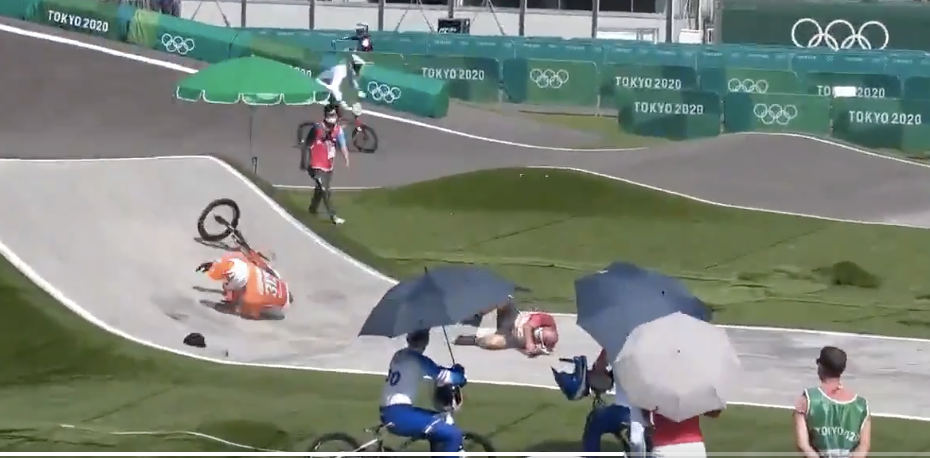
Dutch rider confirms sore knee from crashing into individual trying to cross the BMX course

www.cyclingnews.com
Also, accosting the reigning world champion as she prepares for the time trial is maybe not the most professional way for security to conduct themselves:
Dutchwoman unharmed during incident and fine to race on Wednesday
www.cyclingnews.com