- Joined
- Sep 20, 2018
- Messages
- 23,881
- SLU Posts
- 18459
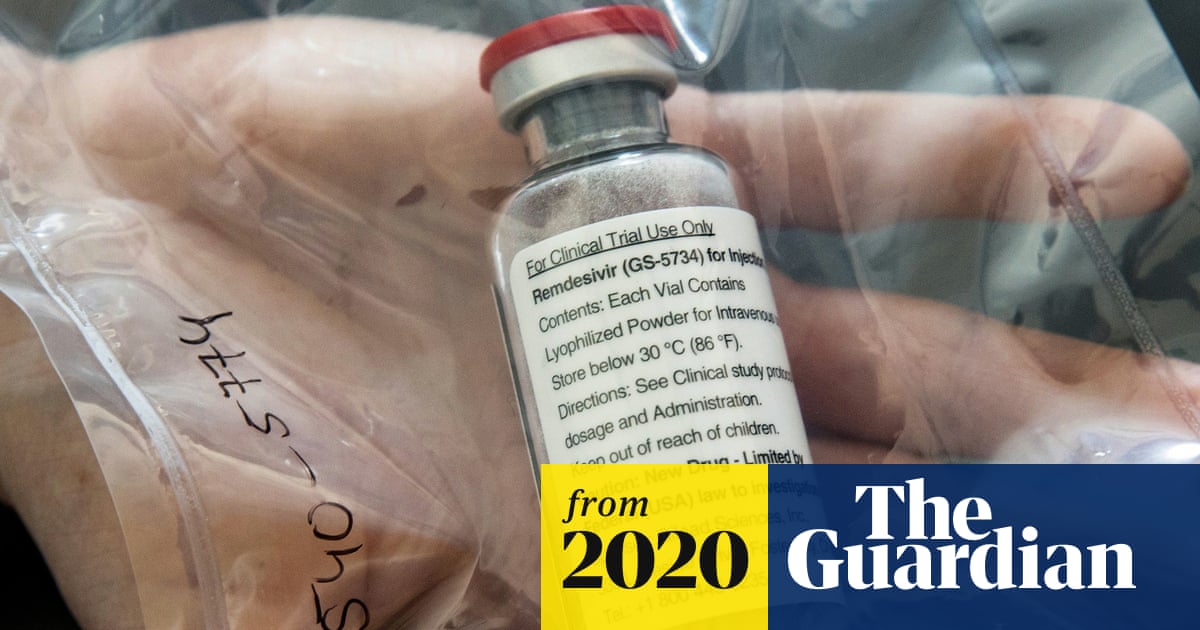
First trial for potential Covid-19 drug shows it has no effect
WHO draft put online states remdesivir does not benefit severe coronavirus patients
I mentioned in another thread that I tried some Fleischman's yeast that was 8 years past it's use by date. Still worked fine.Thanks, we saw that yesterday but that is a huge amount of yeast to use before it expires!
Cool, usually when I found myself with long expired yeast I just bought some more because it was so cheep.I mentioned in another thread that I tried some Fleischman's yeast that was 8 years past it's use by date. Still worked fine.
It'll work. I have a batch on slow-motion burble in my fridge. Once you get it going, you can refrigerate it and just feed it once a week. Take it out the night before you're going to bake with it, and feed it then, too.Started out 'wild' yeast today - though, for some reason spouse used open all-purpose flour instead of the wheat![]()
1) Not all Dr YouTube's are created equal, but I agree that your own doctor should be the best source of information for you.Sorry, but why do I need to watch it?
Serious question -- Oxford University and the Nuffield Foundation think the trial is worth running and the practice where I'm registered thinks it's worth participating in the trials.
That suggests to me that two of the top medical research bodies in the country, if not the world, don't know whether or not hydroxychloroquine works for people suffering from Covid-19, or whether it works for some groups of people or not others, or whether it works but there are various specific contraindications, but they think it worth spending a lot of time and money trying to find out, and my GP's practice thinks it won't do any harm, at least, for me to participate in a proper double-blind trial (meaning neither they nor I know whether I'm getting the hydroxychloroquine or a placebo) under their medical supervision if, God forbid, I fall ill from being infected with the virus.
What else do I need to know from Dr YouTube that I can't find out by asking my GP at the time, should I choose to participate in the study?
What does he know that Oxford University, the Nuffield Foundation and my local medical practice don't?
ETA: I use "Dr YouTube" as shorthand for anyone offering medical advice on their own YouTube channel on their own initiative, rather as when I was being treated for cancer I was warned by everyone involved in my treatment that, if I wanted to know anything, they'd be glad to explain as best they could, and that I shouldn't consult "Dr Google" but, instead, to stick to the NHS site, Cancer Research UK, Macmillan Cancer Relief and other similar bodies.
ETA 2: Don't know if anyone finds this run-down on recent surveys useful
![]()
Hydroxychloroquine and coronavirus: a guide to the scientific studies so far
The drug – now a partisan wedge issue – has fueled hype and hope, but evidence of its effectiveness remains limitedwww.theguardian.com
Yes, but my point is that when you've got proper large-scale double-blind testing going on for therapeutic drugs administered at various stages of the disease, Recovery for drugs to be administered when the patient is in hospital (i.e. 8 days or more after first becoming symptomatic) or Principle for drugs to be administered earlier on, after the patient becomes symptomatic but while still under the care of their GP with PRINCIPLE.1) Not all Dr YouTube's are created equal, but I agree that your own doctor should be the best source of information for you.
2) Seheult provides a valuable service by talking about subjects within his area of expertise (board certified in pulmonology, ICU, sleep, and internal medicine and his current practice includes COVID patients in ICU). The news media does a horrible job in reporting on what he talks about [see the soap opera stories on hydroxychloroquine], not to mention the sensationalist Dr. YouTube's out there.
3) Yes, the medical community is quite interested in what Remdesivir can do--partly because it has already gone through trials proving its safety. That means it could take less time to bring it into mainstream use. They just have to determine if it is effective.
Not sure we are in disagreement or what the topic is. I'll guess.Yes, but my point is that when you've got proper large-scale double-blind testing going on for therapeutic drugs administered at various stages of the disease, Recovery for drugs to be administered when the patient is in hospital (i.e. 8 days or more after first becoming symptomatic) or Principle for drugs to be administered earlier on, after the patient becomes symptomatic but while still under the care of their GP with PRINCIPLE.
I just don't see the point of watching YouTube videos of people proposing their favoured interpretation of the bits and pieces of inconclusive research that are all we have avalable right now when there are, at this moment, large-scale trials going on under the auspices of large and reputable reasearch bodies, which should settle these questions far more definitively than someone on YouTube doing an evidence review that can only lead to "looks potentially promising but more research needed".
Fortunately, more research is going on, very rapidly, in the form of clinical trials large enough to offer confidence in the results, so why not leave the researchers to get on with it, and then discuss their results when they're available?
Could you give me some more details of this chap's "work educating medical professionals," please?Not sure we are in disagreement or what the topic is. I'll guess.
There are news stories reporting on these inconclusive research papers with more zest than they deserve, and it's not just Trump. Seheult just points out something about the VA study that has been overlooked in reporting I have seen.
Hydroxychloroquine and remdesivir won't be the last drugs that get caught up in controversy. Seheult is educating the public on the pitfalls inherent in drug research. It is a natural extension of his work educating medical professionals.
People often have to pay for his videos. He's giving videos about COVID away for free. He has staff helping to get the videos out. He is not some guy in his mother's basement eating fruit loops!
so it's unclear to me why either medical professionals or anyone else would turn to him for advice on medical matters or, indeed, any topic other than their investment portfolio.Chris Martenson, PhD (Duke), MBA (Cornell) is an economic researcher and futurist specializing in energy and resource depletion
The context, you will recall, is that I said my local GP is participating in clinical trials of hydroxychloroquine, which means that, should I become infected and decide to participate in the trials, I'll either be given hydroxychloroquine or a placebo, and neither of us will, at the time, know which it is.You need to watch this video, which debunks the research which showed that hydroxychloroquine doesn't work.
obviously they are too stupid for science - that's most likely the reason why they ended up in politics in the first place...British politicians say they're simply following the science, but the scientists think they're being used as an excuse for political failures
![]()
Scientists criticise UK government's 'following the science' claim
Ministers accused of abdicating political duty to narrow field of opaque expertise on Covid-19www.theguardian.com
I don't think it's stupidity at all.obviously they are too stupid for science - that's most likely the reason why they ended up in politics in the first place...
One example of the right on social media, conservative hashtags. The typical one is about 100 characters long and gets hijacked in a few minutes.Faux News never learn.
The "right" like to say "the left can't meme" (incorrect, of course--they just don't like the memes). But the right for sure can't be funny. Not intentionally, anyway.
If that is so we need to change quite a few things. We are in an emergency state now, not one designed to last years.Thread
Things will change, whether we need them to or not.If that is so we need to change quite a few things. We are in an emergency state now, not one designed to last years.
For example, just our supply chains. Right now half of it (commercial) is used far less than before but half is stretched to the limit. There are also many things out there (like theme parks and movies) that only make sense in current models if you can have a crowd. To say nothing of countless other things where social distancing is not an option.
While some conferences switched to online easily others are still fighting it. While it seems like the change would be easy a big part is the random networking in chance encounters.Things will change, whether we need them to or not.
I'm wondering what the airline business is going to look like, since a lot of the business travel market (which what makes the money, particularly on international flights) isn't going to come back, since people are adapting to holding meetings online when previously they'd have flown to meet face-to-face, the tourist market isn't going to come back for a long time, either, and already at least the budget carriers over here (RyanAir) have said that they won't fly again if they have to impose social distancing, since their business model can't take it.
They will all be trying to survive in this new and very challenging circumstances, having already lost however many weeks' revenue it is.
Many of them won't survive, and that in turn will have significant local effects, not just because of jobs lost with the airlines and lost revenue for the airports, but also on the local economies of the regions served by those carriers (very significant indeed in the case of some of the smaller short-hop budget airlines flying weird routes).