


Isabeau
Merdeuse
- Joined
- Sep 20, 2018
- Messages
- 9,373
- Location
- Montréal

- SL Rez
- 2007
The next Wendy’s post could be about saluting women in science.



 www.sciencealert.com
A meatball made of all the humans. Mathematicians can sure come off like psychopaths.A Mathematician Calculated The Size of a Giant Meatball Made of Every Human
Planet Earth is currently home to around 8.2 billion living human bodies.




with a .2 percent chance overall....via computer models.The article it links to says over the next 4-4.5 billion years.
Not cancelling my weekend plans.


I was thinking more Space:1999.



 www.forkingpaths.co
In a truly disturbing theoretical worst case scenario, billions of pieces of space debris would make it functionally impossible to safely launch anything into space, wiping out space technology—and potentially trapping humans on Earth forever.1
This potential chain reaction, which could make nearby space unusable for humanity, is known as Kessler Syndrome. And it would be debilitating for modern industries that rely on satellites, including navigation, weather forecasting, emergency response, energy grids, banking and financial transactions, broadcasting, and the Internet of Things.
Writing in 1978, Kessler warned that such a tipping point could arrive within three or four decades. That hasn’t happened—yet—but many scientists believe we are getting closer to that catastrophic point of no return.
In 2009, two satellites collided—a defunct Russian satellite called Kosmos 2251 and another called Iridium 33. They were each traveling at 26,000 miles per hour. The collision produced thousands of pieces of debris, including one piece that, in March 2012, came within 390 feet of hitting the International Space Station.
The risks are made even worse by reckless behavior by Elon Musk’s company, Starlink, and by authoritarian state actors—with an enormous surge in the number of objects being launched into space during the last five years.
Thankfully, the United States government invested in a tracking system that could be used to effectively avoid satellite collisions. Think of it like a one-stop Air Traffic Control, but for space. And it’s a bargain, too: it costs only about $50 million a year, which is 0.00074 percent of the US government budget. A no-brainer.
Since it’s obviously a good idea, the Trump administration has proposed a budget that will eliminate the satellite and space debris tracking capability, thereby amplifying the risk of catastrophic collisions. Without it, Kessler Syndrome could eventually lurch from scientific theory to grim impending reality.

 gizmodo.com
 www.bbc.co.uk

Has no one been paying attention these past few years? Obviously Trump is bribe shopping. He's gotten nothing, zilch, from Big Space and he thinks he's due for some gratitude from them for all he's done.The Garden of Forking Paths | Brian Klaas | Substack
Wandering around an infinitely complex, ever-changing world. Click to read The Garden of Forking Paths, by Brian Klaas, a Substack publication.
Evernote Link
Since it’s obviously a good idea, the Trump administration has proposed a budget that will eliminate the satellite and space debris tracking capability, thereby amplifying the risk of catastrophic collisions. Without it, Kessler Syndrome could eventually lurch from scientific theory to grim impending reality.
Ironically, it seems from the article as if the one person most likely to make it impossible in the not too far distant future to leave the earth's atmosphere at all, whether en route to Mars or anywhere else, without a fatal collision with some space junk is Elon Musk.Has no one been paying attention these past few years? Obviously Trump is bribe shopping. He's gotten nothing, zilch, from Big Space and he thinks he's due for some gratitude from them for all he's done.
Yes, it's a shakedown.


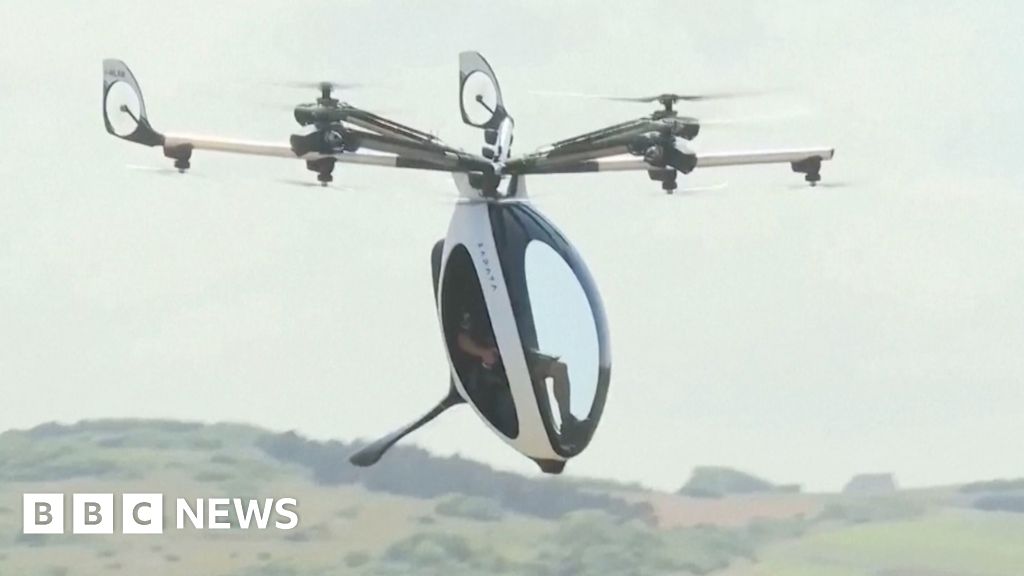
I can't be the only person who immediately thought of this:Moment 'air scooter' fails Channel crossing attempt
The drone-like contraption flew from Sangatte and neared the cliffs of Dover before splashing down.

 www.youtube.com
 arstechnica.com
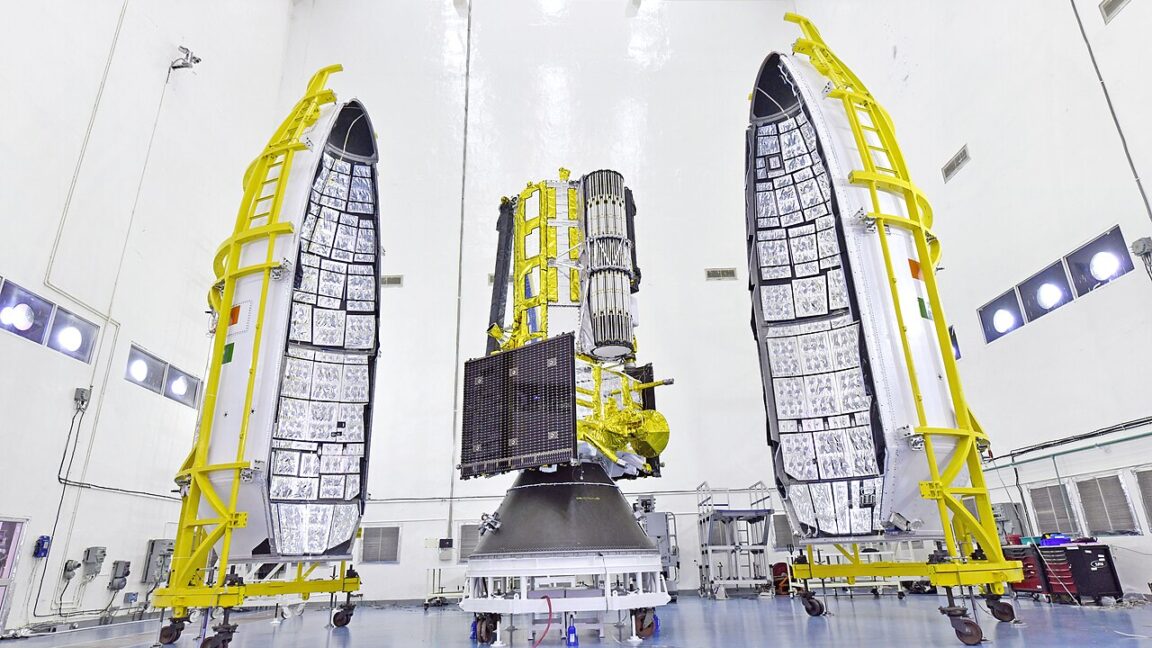
Shoot a few tigers and they are shooting satellites above us.India safely launches a $1.5 billion satellite for NASA
We are at the threshold of fulfilling the immense scientific potential NASA and ISRO envisioned."
Reading that subheading is pretty...jarring, all things considered.

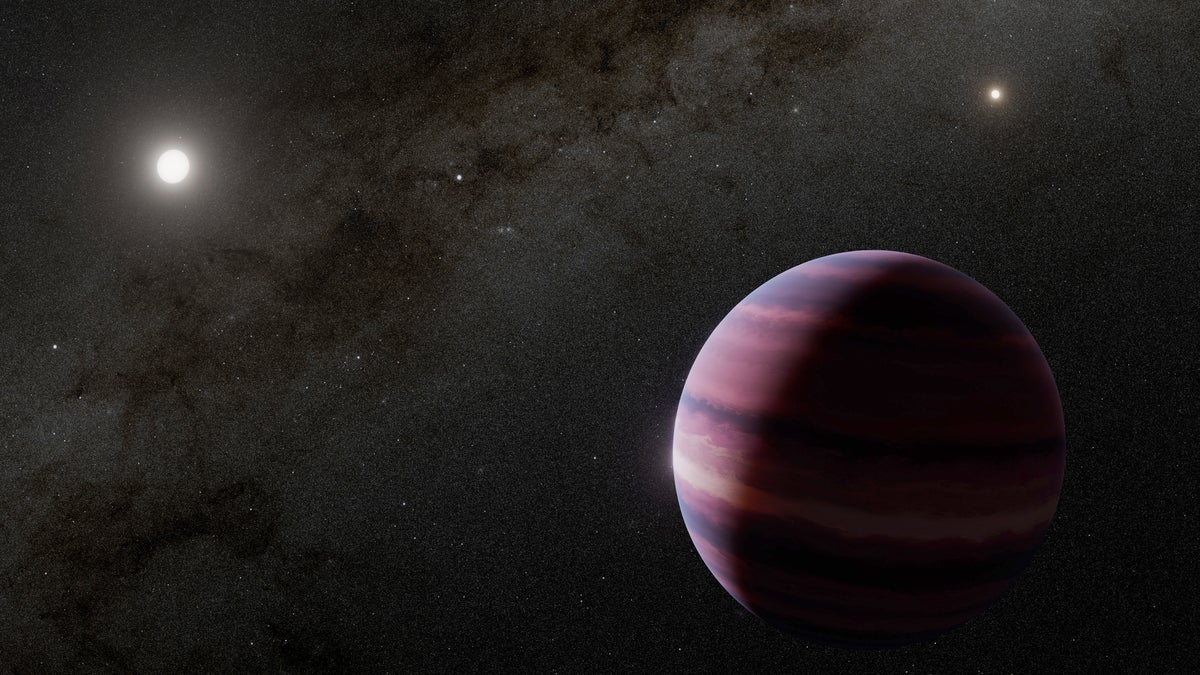
Astronomers have found nearly 6,000 exoplanets orbiting other stars. But for every confirmed detection, there are countless mere hints, inconclusive observations that could just as well be blips of cosmic noise or glitches in a telescope. Most are too tenuous to take seriously, but every so often, one of these candidate planets is so tantalizing and potentially transformative that it can’t be ignore.
That’s certainly the case for one recently spotted by the James Webb Space Telescope (JWST) around a sunlike star called Alpha Centauri A, part of the nearest star system to Earth. If the finding were confirmed to represent a planet—and not instead a clump of dust or some instrumental aberration—it would be a gas giant, akin to a warmer version of our own Saturn. It would orbit within Alpha Centauri A’s habitable zone, the starlight-bathed region where liquid water can persist on a planet’s surface. But the world itself would likely be lifeless, smothered beneath thick layers of gas. Any accompanying moons, however, could have better chances for harboring oceans—and perhaps even life.


