Soldering: What’s the worst that can happen?

Noodles

The sequel will probably be better.
Joined
Sep 20, 2018
Messages
6,134
Location
Illinois
SL Rez
2006
Joined SLU
04-28-2010
SLU Posts
6947
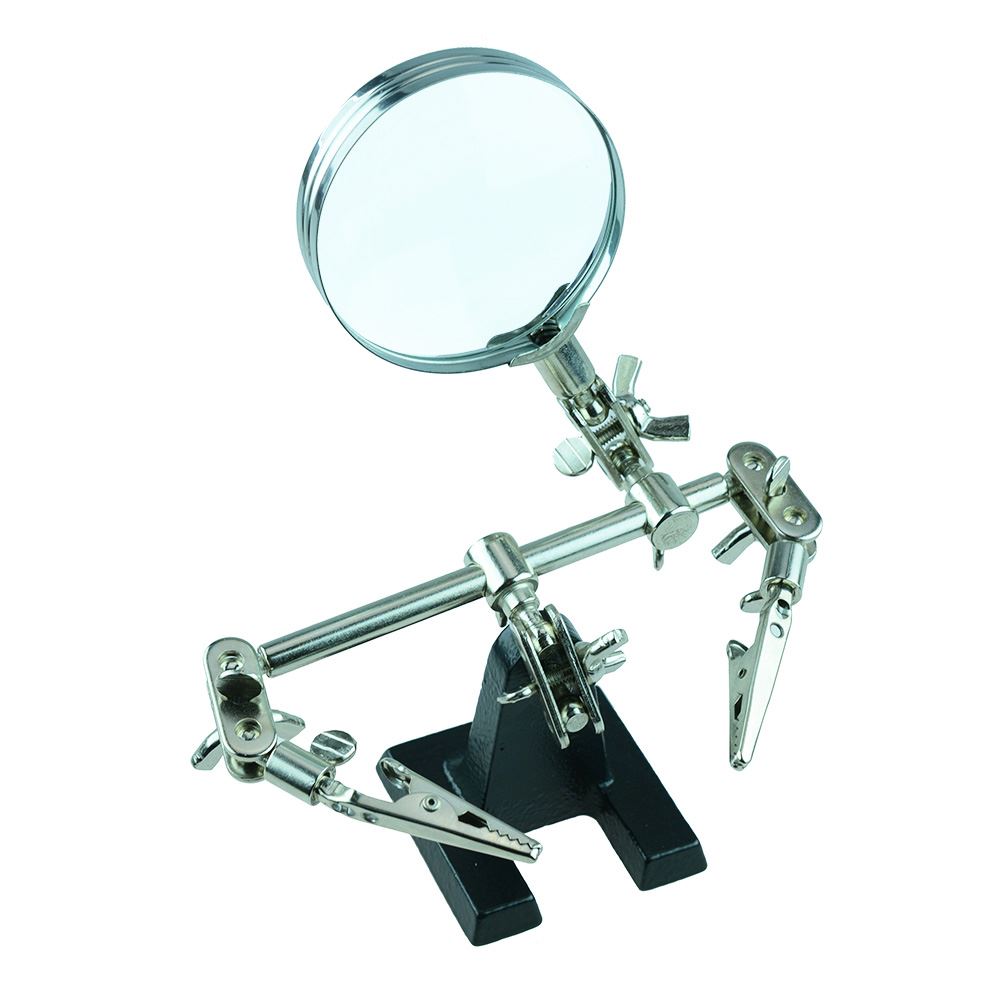
. I also got a…I don’t remember the term, but it’s a platform with tiny Doc Oc arms, rubber grippers, a light, and a magnifier. I’ll check to see if it’s fireproof.
I have always heard them referred to as a "Helping Hands" but I don't know if that's the official name for it.
 

Clara D.

Coffee Squirrel is judging you.
Joined
Dec 24, 2018
Messages
3,540
SL Rez
2006
Joined SLU
Back in the day.
SLU Posts
0
If you accidentally drop your soldering iron, don't try to grab for it in mid-air. I made that mistake once.

You probably shouldn't set up your workspace where the floor is carpeted or covered in linoleum or vinyl flooring.
And pick a desk you don't care if it gets burns in.
 

Clara D.

Coffee Squirrel is judging you.
Joined
Dec 24, 2018
Messages
3,540
SL Rez
2006
Joined SLU
Back in the day.
SLU Posts
0
I have always heard them referred to as a "Helping Hands" but I don't know if that's the official name for it.
the weighted things with the arms and alligator clips, that's what they're called :p

 
Last edited:
  • 1Agree
Reactions: Govi

danielravennest

Well-known member
Joined
Sep 21, 2018
Messages
3,708
SLU Posts
9073
Would anything you mentioned produce harmful fumes; i.e., should I only use this with special ventilation? Also, I will be able to melt glass?! That’s great!
Someone else mentioned the flux core, if the solder has it, will produce fumes. I would use a ventilated area in any type of soldering. The purpose of a flux is to clean the contact spot to help make an electrical connection. You don't need it for jewelry as much. You won't be able to melt glass. It needs to be glowing red hot before it even softens, which requires a flame. I suggested glass (and ceramics) because soldering temperatures won't cause a problem. It's just something easily found you can get a feel for how solder behaves with. Plastics will melt or burn, and "wood burning" (pyrography) is an art technique for drawing on wood with a hot iron. Since you are literally charring the wood, it gives off fumes and should be ventilated.
 
  • 1Thanks
Reactions: Arilynn

danielravennest

Well-known member
Joined
Sep 21, 2018
Messages
3,708
SLU Posts
9073
Never quite done that, but have often had small burns to my fingertips when I was in one job.
There are various kinds of heat-resistant gloves for hot work. What I do for yard work is put knit gloves inside a large pair of leather gloves to better protect my hands and keep them warmer. That combination will also protect your hands from getting burned as long as it is a brief contact. The downside of any kind of gloves is less dexterity and sensitivity, and for fine work you will be using your fingertips, which are the most sensitive part of your hands.
 
  • 1Thanks
Reactions: Arilynn

Casey Pelous

Senior Discount
VVO Supporter 🍦🎈👾❤
Joined
Sep 24, 2018
Messages
3,283
Location
USA, upper left corner
SL Rez
2007
Joined SLU
February, 2011
SLU Posts
10461
Well.

As you can see, Ari, what you propose requires approximately as much technology and safety equipment as the International Space Station.

I have actually caused jewelry to occur, starting with chunks of silver "sheet metal" and wire and finishing with, you know, stuff you can wear. I even made a nice little side income out of it at one point. This process of jewelry making you describe is known as "construction" as opposed to several other methods such as wirework or lost-wax casting. I didn't have much in the way of technology, because I didn't have much in the way of money.

You need:

1) A fireproof pad. In my day, we used asbestos. It didn't hurt me a bit. Didn't hurt me a bit. Didn't hurt me a bit. MAKE THE VOICES STOP SINGING!!!!!

Don't worry they won't sell you an asbestos pad. They'll sell you something that doesn't work as well.

2) Some silver solder. It comes in sheets, not wire, and you snip off little squares of it to place between the pieces you are going to solder. If you use silver solder, you can legally stamp your finished pieces with "SS" for Sterling Silver. If you use other solder, you can stamp them, "I Screwed Up and This Is Worthless Metal Because It Is Permanently Polluted With Ickiness."

3) A torch. I don't know about this electric business -- you want a good ol' Bernz-o-matic propane torch which you can obtain for about $15.95 at the local Ace Hardware.

4) Some plates of silver which you can obtain at your local jewelry makers' supply or, possibly lapidary supply. To cut these into (rough) useful shapes, you need a jeweler's saw and some spare blades. A jeweler's buckskin hammer is pretty much a must to bash things into shape, such as rings or bracelets. A little set of jeweler's files are a really nice thing to have to add that "professional finish" to things. If you have a Dremel tool, great, you can use that for shaping and polishing. Otherwise, you'll be doing lots of work with your new buffing sticks from the jewelry supply.

You are going to be soldering pieces about the size of a quarter. The actual soldering takes less than a minute. You don't need a fume hood, separate building, or whatever. A nice size fireproof pad on your dining room table and you're in business. A puny fireproof pad on your dining room table and you're in the furniture refinishing business, so don't cheap out on the pad. Use a cheap fan to blow away the fumes, but they're not awful. (BTW, the flux in electronic solder is pine rosin -- dude, it's organic.)

You sandwich little chunks of silver solder -- you'll need some nice shears to cut them, ask at the jewelry maker supply place -- between the pieces you wish to join. You'll make little squares about 1/8" x 1/8". Even smaller, sometimes. Add a little flux. (Jewelry supply place.) IT WON'T KILL YOU! You heat up the pieces until the solder melts, then STOP HEATING THEM. If the silver is glowing red, it is hot enough. They whole key to soldering is "heat the piece, not the solder." That way the solder actually sticks the pieces together.

I'm sorry to tell you, but despite my excellent coaching, you will melt some silver. It's still silver. It isn't a tragedy. You'll just make it into something else.

Learn how to harden and soften your pieces with heat. There are books. It's not hard.

While you are getting acquainted with your new best friend at the jewelry maker/lapidary supply place (which, by the way, is where you'll be buying lovely stones to set in your pieces) be sure to get some pickling solution, which will clean all the icky tarnish off your silver instantly after you solder it. If you get real crazy, ask them for some liver of sulfur, which makes silver turn instantly black and smells like farts. You dunk your piece in a solution of that, then polish it, and the sunken parts stay black for contrast. (Or not -- it's an art thing.) You'll also want some "rouge" for your Dremel tool/polishing sticks.

If you're making rings, get a ring mandrel. For bracelets a bracelet mandrel.

There are lots and lots of other cool tools, but you don't need them all. Yet.
 

Clara D.

Coffee Squirrel is judging you.
Joined
Dec 24, 2018
Messages
3,540
SL Rez
2006
Joined SLU
Back in the day.
SLU Posts
0
There are various kinds of heat-resistant gloves for hot work. What I do for yard work is put knit gloves inside a large pair of leather gloves to better protect my hands and keep them warmer. That combination will also protect your hands from getting burned as long as it is a brief contact. The downside of any kind of gloves is less dexterity and sensitivity, and for fine work you will be using your fingertips, which are the most sensitive part of your hands.
Glove are anti-dexterity for most electronics work. At least anything that's not going to just melt.

Instead, there are fingertip protectors.

 
  • 1Interesting
Reactions: danielravennest

Arilynn

Well-known member
Joined
Sep 25, 2018
Messages
344
Well.

As you can see, Ari, what you propose requires approximately as much technology and safety equipment as the International Space Station.

I have actually caused jewelry to occur, starting with chunks of silver "sheet metal" and wire and finishing with, you know, stuff you can wear. I even made a nice little side income out of it at one point. This process of jewelry making you describe is known as "construction" as opposed to several other methods such as wirework or lost-wax casting. I didn't have much in the way of technology, because I didn't have much in the way of money.

You need:

1) A fireproof pad. In my day, we used asbestos. It didn't hurt me a bit. Didn't hurt me a bit. Didn't hurt me a bit. MAKE THE VOICES STOP SINGING!!!!!

Don't worry they won't sell you an asbestos pad. They'll sell you something that doesn't work as well.

2) Some silver solder. It comes in sheets, not wire, and you snip off little squares of it to place between the pieces you are going to solder. If you use silver solder, you can legally stamp your finished pieces with "SS" for Sterling Silver. If you use other solder, you can stamp them, "I Screwed Up and This Is Worthless Metal Because It Is Permanently Polluted With Ickiness."

3) A torch. I don't know about this electric business -- you want a good ol' Bernz-o-matic propane torch which you can obtain for about $15.95 at the local Ace Hardware.

4) Some plates of silver which you can obtain at your local jewelry makers' supply or, possibly lapidary supply. To cut these into (rough) useful shapes, you need a jeweler's saw and some spare blades. A jeweler's buckskin hammer is pretty much a must to bash things into shape, such as rings or bracelets. A little set of jeweler's files are a really nice thing to have to add that "professional finish" to things. If you have a Dremel tool, great, you can use that for shaping and polishing. Otherwise, you'll be doing lots of work with your new buffing sticks from the jewelry supply.

You are going to be soldering pieces about the size of a quarter. The actual soldering takes less than a minute. You don't need a fume hood, separate building, or whatever. A nice size fireproof pad on your dining room table and you're in business. A puny fireproof pad on your dining room table and you're in the furniture refinishing business, so don't cheap out on the pad. Use a cheap fan to blow away the fumes, but they're not awful. (BTW, the flux in electronic solder is pine rosin -- dude, it's organic.)

You sandwich little chunks of silver solder -- you'll need some nice shears to cut them, ask at the jewelry maker supply place -- between the pieces you wish to join. You'll make little squares about 1/8" x 1/8". Even smaller, sometimes. Add a little flux. (Jewelry supply place.) IT WON'T KILL YOU! You heat up the pieces until the solder melts, then STOP HEATING THEM. If the silver is glowing red, it is hot enough. They whole key to soldering is "heat the piece, not the solder." That way the solder actually sticks the pieces together.

I'm sorry to tell you, but despite my excellent coaching, you will melt some silver. It's still silver. It isn't a tragedy. You'll just make it into something else.

Learn how to harden and soften your pieces with heat. There are books. It's not hard.

While you are getting acquainted with your new best friend at the jewelry maker/lapidary supply place (which, by the way, is where you'll be buying lovely stones to set in your pieces) be sure to get some pickling solution, which will clean all the icky tarnish off your silver instantly after you solder it. If you get real crazy, ask them for some liver of sulfur, which makes silver turn instantly black and smells like farts. You dunk your piece in a solution of that, then polish it, and the sunken parts stay black for contrast. (Or not -- it's an art thing.) You'll also want some "rouge" for your Dremel tool/polishing sticks.

If you're making rings, get a ring mandrel. For bracelets a bracelet mandrel.

There are lots and lots of other cool tools, but you don't need them all. Yet.
Funny and informative! :flower:

As silver is an element, can you repeatedly reheat silver after mangling it?

*Warning: Display of total ignorance in 1, 2, 3* I have a supposedly really great butane torch for making all the crème brûlée that I’ve never made. Would it be hot enough to melt silver?

Can you solder copper?

Are burnt fingertips inevitable? I’m very anti-burnt fingers in general.
 

Arilynn

Well-known member
Joined
Sep 25, 2018
Messages
344
You might also want to look into doing stained glass which does a lot of work with solder. We have a stained glass studio that also has classes on the side so you may also have the same situation where you live. A commercial studio would have all the equipment you'd need to rent out, so you can try out the hobby without a large investment. Also, if you get into any sort of decorative hobby you're going to need to get vested in the local art community anyways, so might as well plunge in, look around, and say hi.
Stained glass making would be so cool. But isn’t done with lead?
 

Arilynn

Well-known member
Joined
Sep 25, 2018
Messages
344
Glove are anti-dexterity for most electronics work. At least anything that's not going to just melt.

Instead, there are fingertip protectors.

Have you used those? Was it awful? They look like a good idea that I would find torturous, like a monkey with a bell on its tail. I‘m a really tactile person.
 

Clara D.

Coffee Squirrel is judging you.
Joined
Dec 24, 2018
Messages
3,540
SL Rez
2006
Joined SLU
Back in the day.
SLU Posts
0
Have you used those? Was it awful? They look like a good idea that I would find torturous, like a monkey with a bell on its tail. I‘m a really tactile person.
Very useful for something that you have to hold in place while you solder on it, and they're not that bad -- the leather is thick suede.
 
  • 1Thanks
Reactions: Arilynn

Dakota Tebaldi

Well-known member
VVO Supporter 🍦🎈👾❤
Joined
Sep 19, 2018
Messages
9,875
Location
Ohio
Joined SLU
02-22-2008
SLU Posts
16791
If you accidentally drop your soldering iron, don't try to grab for it in mid-air. I made that mistake once.

You probably shouldn't set up your workspace where the floor is carpeted or covered in linoleum or vinyl flooring.
Did I tell you guys about the time I stepped on a soldering iron? I think I posted about it here not too long ago.

I was like 11 or 12 and I was in the garage trying to solder a jumper wire across a burnt section of a trace on a PCB on a radio. Anyway at some point the soldering iron ended up on the garage floor. I -think- it might have fallen off the workbench and I decided to pick it up after I was done with some thing I was doing right that moment, and then forgot it was down there.

And this wasn't a little soldering iron either. This had been salvaged out of like my great-grandfather's old tools, so it was huge, it had a wooden handle and a cloth cable, and I swear the metal burner-tip was like 8 inches long, and it had this weird fat section in the middle of it, like if a tiny metal snake swallowed a tampon applicator. A BIG one.

Thing was HEAVY too, and the tip was rounded and like half an inch wide. In retrospect it prolly wasn't the best tool for working on a PCB? But it was the only soldering iron I had access to, and also I was a kid and I didn't really know what I was doing anyways, so I was just kind of winging it.

So anyway yeah, I stepped on that thing, while barefoot. Right on the swallowed-tampon part. Lengthwise too, so it got a bite of each of my toes and the whole front of the pad on that foot. I'll be level with you, it really sucked.
 

Casey Pelous

Senior Discount
VVO Supporter 🍦🎈👾❤
Joined
Sep 24, 2018
Messages
3,283
Location
USA, upper left corner
SL Rez
2007
Joined SLU
February, 2011
SLU Posts
10461
Funny and informative! :flower:

As silver is an element, can you repeatedly reheat silver after mangling it?

*Warning: Display of total ignorance in 1, 2, 3* I have a supposedly really great butane torch for making all the crème brûlée that I’ve never made. Would it be hot enough to melt silver?

Can you solder copper?

Are burnt fingertips inevitable? I’m very anti-burnt fingers in general.
You can remelt the silver pretty much indefinitely. You can even melt down all your scraps, filings, "sawdust", etc. and sell it! (Or trade it back to your dealer.) Jewelry isn't made of elemental silver, though. It is sterling silver which is much harder than pure silver (aka ".999 silver") so more durable. It is alloyed with copper and a bit of nickel (?). There's also "coin silver" which is what cheap silver jewelry that doesn't say "SS" on it is made of. I seem to recall (this is, after all, some 40 years ago) trying to construct something of coin silver and finding it very difficult to work with. A ring made of pure silver would very quickly be beaten up, but (again, working from ancient memory here ...) I believe some parts used for setting stones are made of pure silver for the malleability.

I think your cooking torch would probably work just fine. Worth a try, for sure. What's the worst that could happen? It fails and you end up buying a Bernz-o-matic. As I think about it, though, one of those little custard scorchers would probably be an excellent tool for this.

If there are copper pipes in your home, they are soldered. Those happen to be soldered with plumber's solder, which has acid in it and is no good for jewelry (or electronics, for that matter) but you can definitely construct copper pieces with silver solder.

I don't have any scars on my fingertips and don't remember this being a particularly fingertip scorching pastime. You'll probably accumulate a collection of various tongs and tweezers for handling hot things.

I happened across a book that I'm amazed is still in print -- this is The Book of constructed jewelry, or at least it was when I was doing it:


An older edition is available at Thriftbooks for much less .....

 
  • 1Thanks
Reactions: Arilynn
Joined
Sep 19, 2018
Messages
6,769
Location
NJ suburb of Philadelphia
SL Rez
2003
SLU Posts
4494
  • 1Thanks
Reactions: Arilynn

danielravennest

Well-known member
Joined
Sep 21, 2018
Messages
3,708
SLU Posts
9073
I have a supposedly really great butane torch for making all the crème brûlée that I’ve never made. Would it be hot enough to melt silver?

Can you solder copper?
Depends on the flame color. Blue indicates complete combustion, and thus a hotter flame. Orange means glowing soot particles = incomplete combustion = lower temperature. Copper melts at just under 2000F, silver at 1760, gold it depends on how pure it is. 14K gold is only 7/12 gold and melts at 1615F. Copper and silver have nearly the same thermal conductivity (how fast heat will conduct away). So if you have a flame that can easily melt silver, it should also do copper, but with more heating time.

 
  • 1Thanks
Reactions: Arilynn