Isabeau
Merdeuse
- Joined
- Sep 20, 2018
- Messages
- 9,078
- Location
- Montréal
- SL Rez
- 2007
Mummified Baboons in Egypt Point to a Long Lost Land
New discoveries of ancient DNA could help scientists find the land of Punt.
When I read this, I found myself thinking that if there were a different maternal death rate during birth (difficulty between hips and brain case), it may have been that sapiens reproduced more rapidly, too. Of course, if Neanderthal women's hips accomodated the larger brain case, that's not likely.
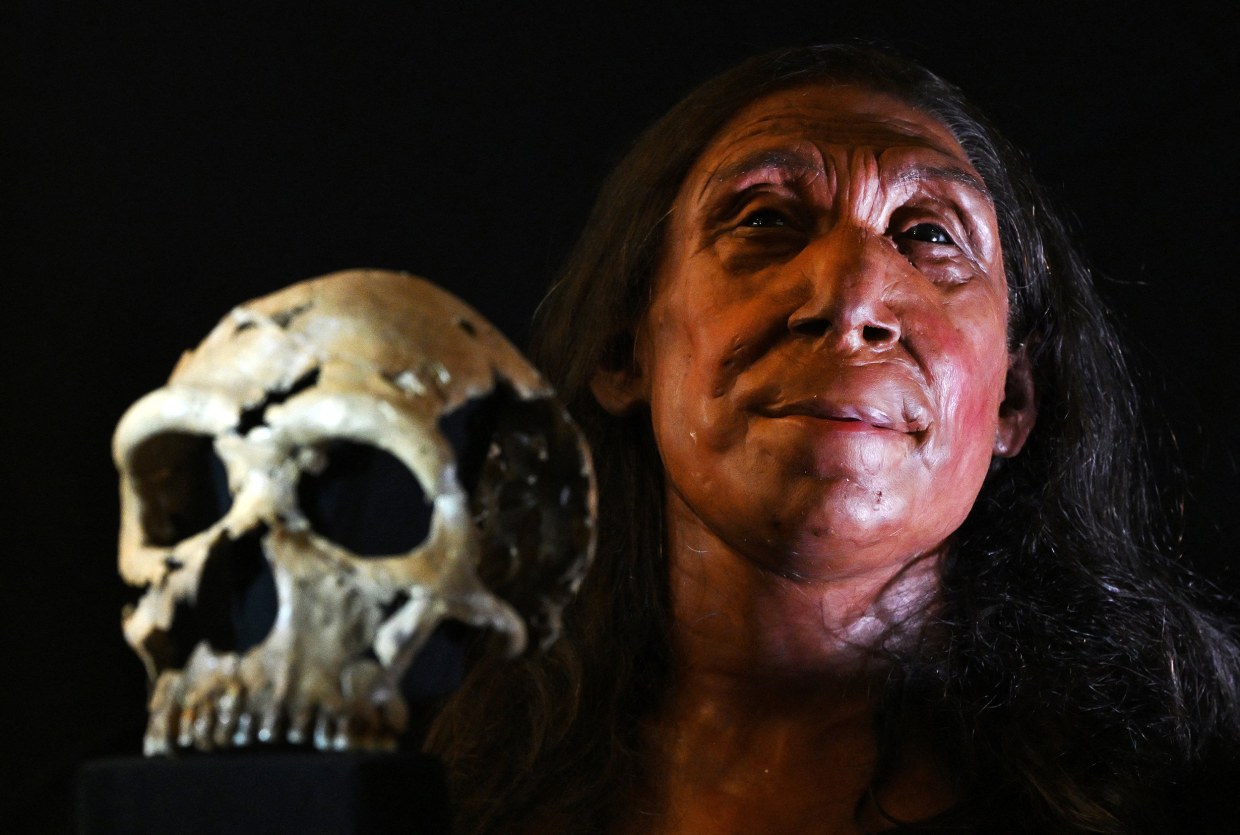
Studies of relatively commonly found fossils of Neanderthal children suggest that newborns had larger brains than sapiens newborns do and that they were growing faster.
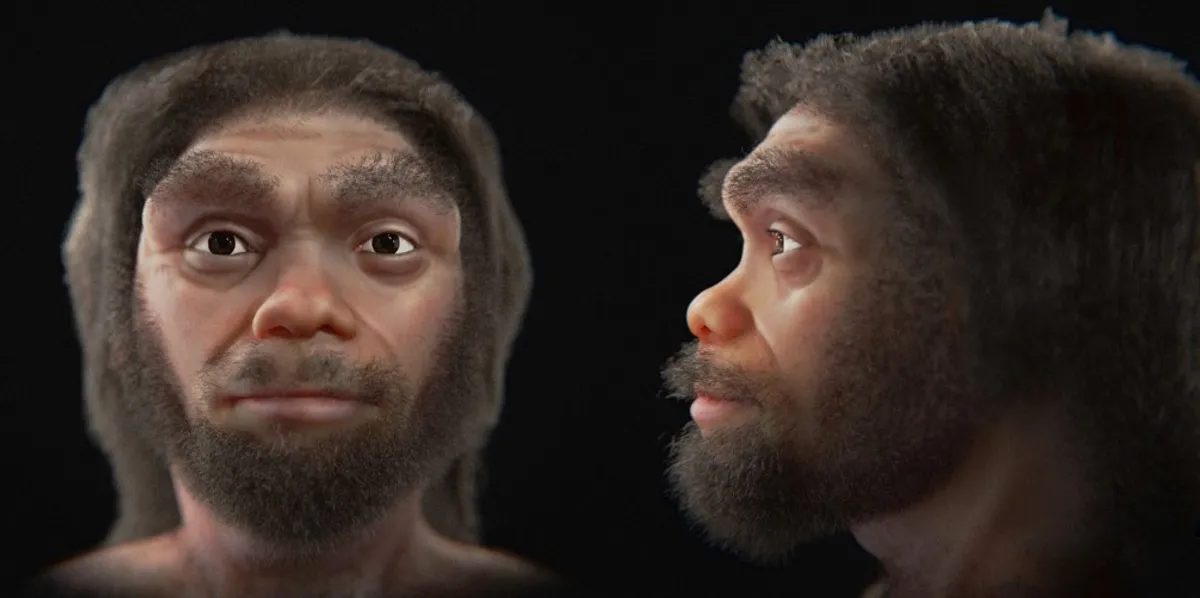
Microscopic fragments of protein and DNA recovered from bones discovered in 8-meter-deep cave dirt have revealed Neanderthals and humans likely lived alongside one another in northern Europe as far back as 45,000 years ago.
The genetic analysis of the fossils, which were found in a cave near the town of Ranis in eastern Germany, suggested that modern humans were the makers of distinctive, leaf-shaped stone tools that archaeologists once believed were crafted by Neanderthals, the heavily built hominins who lived in Europe until about 40,000 years ago.
Modern humans, or homo sapiens, weren’t previously known to have lived as far north as the region where the tools were made.
Human history in one click: For the first time, numerous sites relating to the early history of mankind from 3 million to 20,000 years ago can be accessed in a large-scale database.
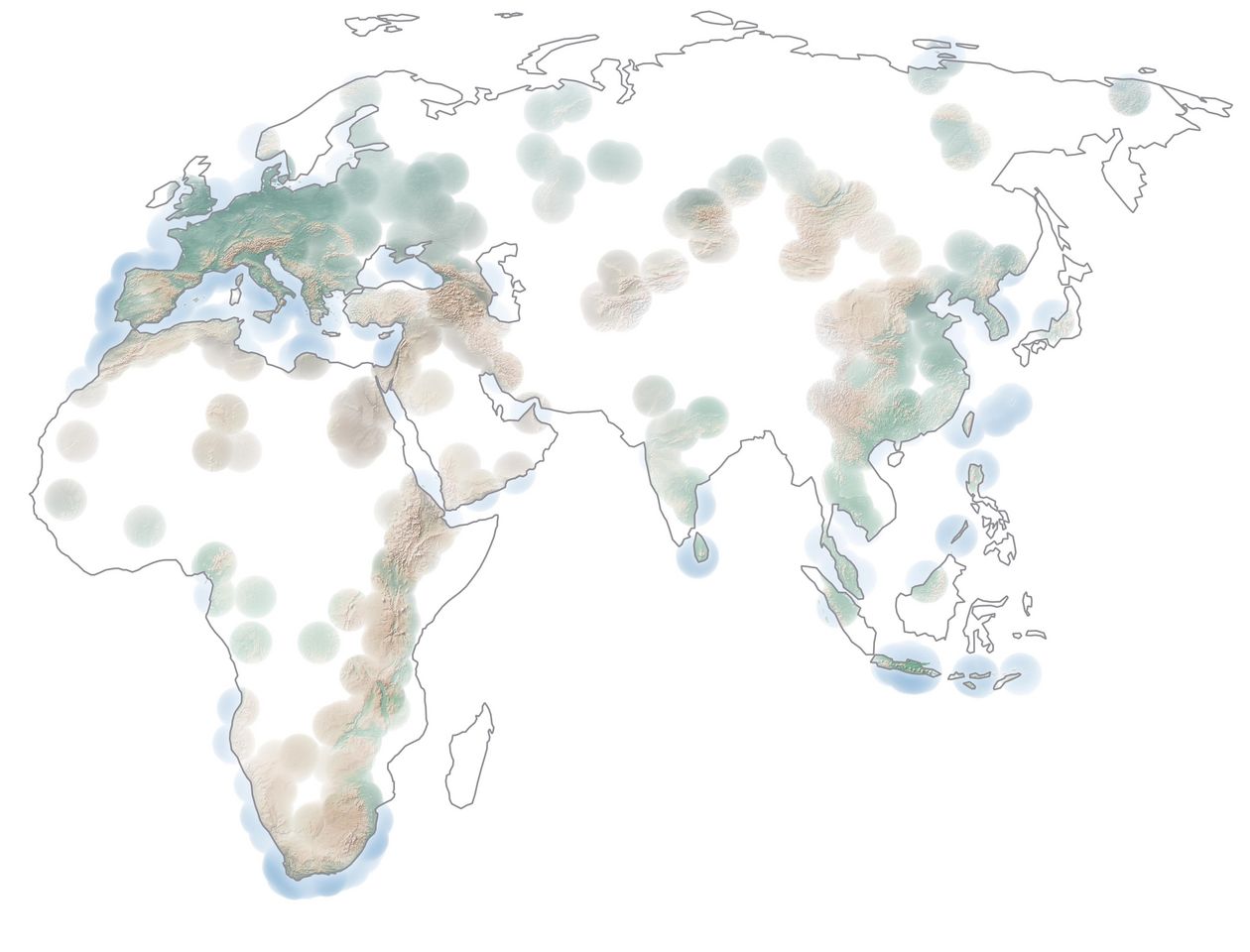
Scientists from the research center ROCEEH (“The Role of Culture in Early Expansions of Humans”) have compiled information on 2,400 prehistoric sites and 24,000 assemblages from more than 100 ancient cultures. The digital data collection is available for free to scientists and amateurs and was recently published in the journal PLoS ONE.
arstechnica.com
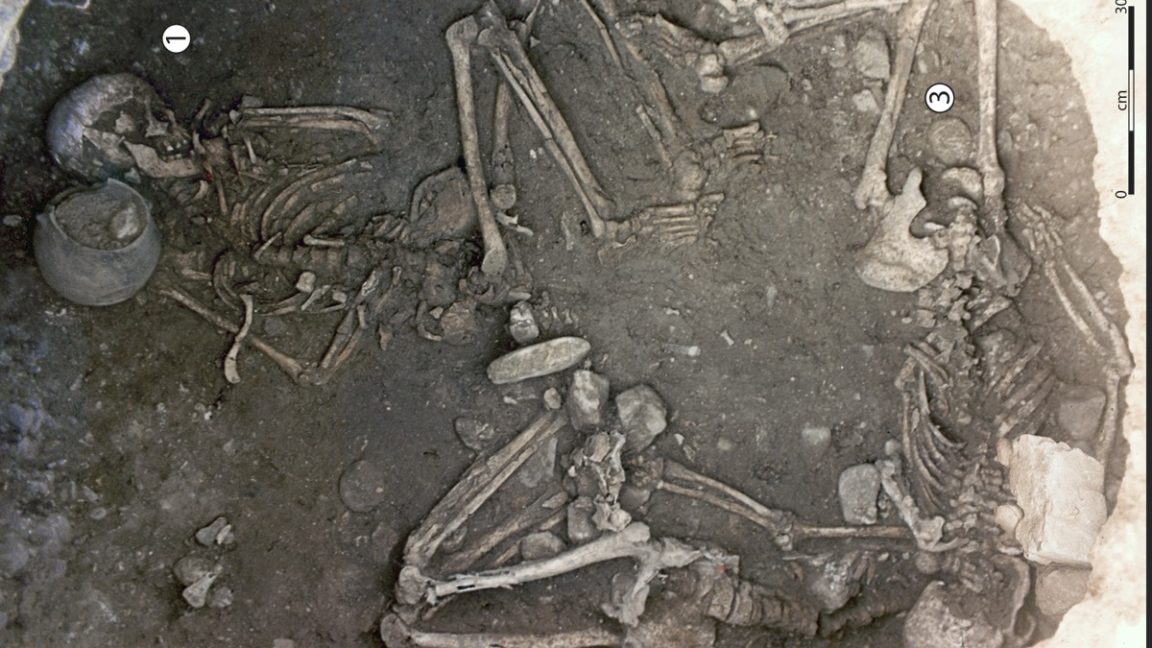
Archaeologists have discovered the remains of two women in a Neolithic tomb in France, with the positioning of the bodies suggesting they may have been ritualistically murdered by asphyxia or self-strangulation, according to a recent paper published in the journal Science Advances.
France's Rhône Valley is home to several archaeological sites dating to the end of the Middle Neolithic period (between 4250 and 3600/3500 BCE in the region); the sites include various storage silos, broken grindstones, imported ceramics, animal remains (both from communal meals and sacrifices), and human remains deposited in sepulchral pits. Saint-Paul-Trois-Châteaux is one such site.
Without clothing, humans would never have reached all seven continents. This technological breakthrough allowed our ancestors to live in Siberia during the height of the Ice Age, and to cross the frigid Bering Sea to the Americas some 20,000 years ago. But no clothing survives from this period. Not a single article of clothing much older than 5,000 years has ever been found, in fact. The hides and sinews and plant fibers worn by our ancestors all rotted away, leaving little physical trace in the archaeological record. Humans had to have worn clothing more than 5,000 years ago, of course. Of course! And in clever, indirect ways, experts have pieced together a surprising number of clues to how much longer ago.
New research has pinpointed the likely time in prehistory when humans first began to speak.
Analysis by British archaeologist Steven Mithen suggests that early humans first developed rudimentary language around 1.6 million years ago – somewhere in eastern or southern Africa.
“Humanity’s development of the ability to speak was without doubt the key which made much of subsequent human physical and cultural evolution possible. That’s why dating the emergence of the earliest forms of language is so important,” Dr Mithen, professor of early prehistory at the University of Reading, told The Independent.
Until recently, most human evolution experts thought humans only started speaking around 200,000 years ago. Professor Mithen’s new research, published this month, suggests that rudimentary human language is at least eight times older. His analysis is based on a detailed study of all the available archaeological, paleo-anatomical, genetic, neurological and linguistic evidence.
Thanks - I immediately watched it after I saw it existed.Premiered today on Netflix. Narrated by Patrick Stewart.
Havent watched it yet.
(It’s referenced in the article Beebo posted, but in case people don’t read it)
![]()
BBC Studios Science Unit produces Secrets of the Neanderthals for Netflix
A fascinating new documentary exploring our closest relatives is coming soonwww.bbc.com
Ruby and her father would later discover that they'd just chanced upon part of the largest marine reptile ever found — a giant ichthyosaur from 202 million years ago, near the end of the Triassic Period.
These animals were once the dominant predators of the world's oceans. Imagine a chunky shark with a long, toothy snout, fins, and four flippers.
"These are reptiles only very, very distantly related to things like crocodiles," says Dean Lomax, a paleontologist at the University of Bristol and the University of Manchester. And they actually resemble whales, which are mammals, in key ways: "They gave birth to live young. They committed entirely to a life at sea — they didn't come onto land."
In research published in PLOS ONE, Lomax, Ruby and Justin Reynolds, and their colleagues describe this new species of ichthyosaur, Ichthyotitan severnensis, as roughly 82 feet long. That's twice the length of a school bus.
In it, he and his colleagues describe finding about 70 squirrel hibernation burrows in the river bank.
"All burrows were found at depths of 20-40m from the present day surface and located in layers containing bones of large mammals such as mammoth, woolly rhinoceros, bison, horse, deer, and other representatives of fauna from the age of mammoths, as well as plant remains," they write.
"The presence of vertical ice wedges demonstrates that it has been continuously frozen and never thawed.
This is one of the bigger questions we can ask about human evolution. How come we’re like this? Animal life had been trucking along on Earth for over half a billion years, without throwing up anything quite like Homo sapiens: a bunch of two-footed apes with small teeth and uniquely chunky brains that enable us to invent new tools and cooperate across huge social groups.
And so here we are, with a narrative about the evolution of humanity that is extremely multi-stranded. Old ideas like the savannah hypothesis have the apparent simplicity of a classic myth, which is both why they’re appealing and why they’re incomplete at best. The story we’re now unfolding looks more like George R. R. Martin’s A Song of Ice and Fire: very long, lots of characters, a growing profusion of subplots and so far, painfully unfinished.