Nobody Cares about Pre-History

Lexxi

meow
Joined
Sep 26, 2018
Messages
1,331
SL Rez
2007
Joined SLU
12-14-2007
SLU Posts
6381
Highlights

  • The Native American lineage D4h3a can trace its ancestry to northern coastal China

  • Radiations of D4h contribute to gene pools of Native Americans and Japanese

  • Coastal radiations of D4h support the coastal route of early Native Americans
Summary
Although it is widely recognized that the ancestors of Native Americans (NAs) primarily came from Siberia, the link between mitochondrial DNA (mtDNA) lineage D4h3a (typical of NAs) and D4h3b (found so far only in East China and Thailand) raises the possibility that the ancestral sources for early NAs were more variegated than hypothesized. Here, we analyze 216 contemporary (including 106 newly sequenced) D4h mitogenomes and 39 previously reported ancient D4h data. The results reveal two radiation events of D4h in northern coastal China, one during the Last Glacial Maximum and the other within the last deglaciation, which facilitated the dispersals of D4h sub-branches to different areas including the Americas and the Japanese archipelago. The coastal distributions of the NA (D4h3a) and Japanese lineages (D4h1a and D4h2), in combination with the Paleolithic archaeological similarities among Northern China, the Americas, and Japan, lend support to the coastal dispersal scenario of early NAs.


The study’s findings indicated two distinct migration events, with the first migration occurring between 19,500 and 26,000 years ago.
That migration coincided with the Last Glacial Maximum, a period of extensive ice sheet coverage and inhospitable climate conditions in northern China.
The second migration took place during the melting period, approximately 19,000 to 11,500 years ago. This event was purportedly triggered by increasing human populations.
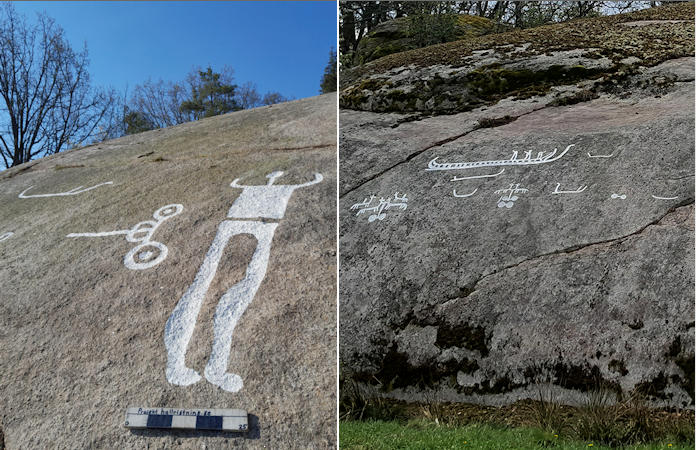
It is suggested that during both migrations, seafaring travelers reached the Americas and traveled along the Pacific coast by boat, as the “inland ice-free corridor” in modern Canada was still inaccessible.
prehistoric-chinese-migration-to-americas-dna-study
 

Soen Eber

Vatican mole
VVO Supporter 🍦🎈👾❤
Joined
Sep 20, 2018
Messages
3,949
Those same people formed a community which fished and hunted seals along Asia's arctic coast. They hunted and traveled in small boats (kayaks?). The ones along the east went down to China and across the Bering sea to America, while the ones around the westerly region migrated to parts of Scandinavia and became the original Scandinavian residents. They were called Sami.

I am part Sami, from Norwegian ancestors. I claim no Indian or Asian or Chinese heritage, however: there really has to be a statute of limitations involved here ;)
 

Beebo Brink

Climate Apocalypse Alarmist
Joined
Sep 20, 2018
Messages
7,046
SL Rez
2006
...the majority of [Native Americans] show closer genetic affinity to Siberians, as manifested by NA founder types, e.g., mitochondrial DNA (mtDNA) haplogroups A2, B2, C1, C4c, D1, etc.....
That's me! 😊
From Wikipedia: Haplogroup A2 is the most common haplogroup among the Inuit, Na-Dene, and many Amerind ethnic groups of North and Central America. Lineages belonging to haplogroup A2 also comprise the majority of the mtDNA pool of the Inuit and their neighbors, the Chukchis, in northeasternmost Siberia.
 

Free

*censored*
VVO Supporter 🍦🎈👾❤
Joined
Sep 22, 2018
Messages
42,217
Location
Moonbase Caligula
SL Rez
2008
Joined SLU
2009
SLU Posts
55565
Caveperson glue.

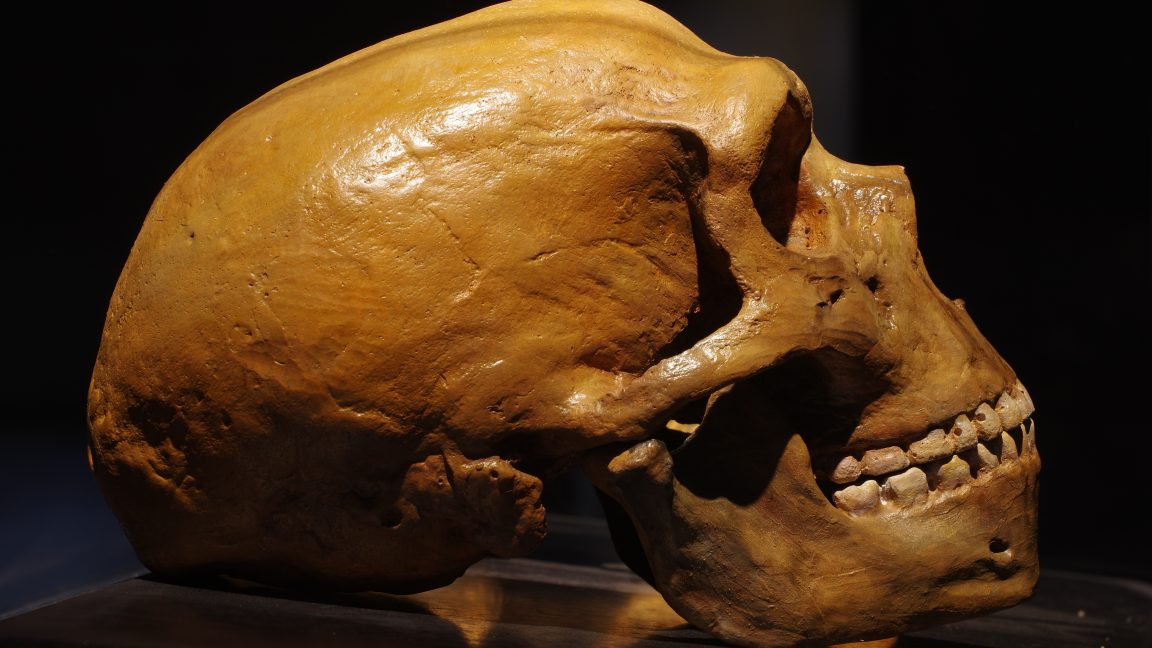
As Homo sapiens, we often consider ourselves to be the most intelligent hominins. But that doesn’t mean our species was the first to discover everything; it appears that Neanderthals found a way to manufacture synthetics long before we ever did.

Neanderthal tools might look relatively simple, but new research shows that Homo neanderthalensis devised a method of generating a glue derived from birch tar to hold them together about 200,000 years ago—and it was tough. This ancient superglue made bone and stone adhere to wood, was waterproof, and didn’t decompose. The tar was also used a hundred thousand years before modern humans came up with anything synthetic.
After studying ancient tools that carry residue from this glue, a team of researchers from the Eberhard Karls University of Tübingen and other institutions in Germany found evidence that this glue wasn’t just the original tar; it had been transformed in some way. This raises the question of what was involved in that transformation.
 

Free

*censored*
VVO Supporter 🍦🎈👾❤
Joined
Sep 22, 2018
Messages
42,217
Location
Moonbase Caligula
SL Rez
2008
Joined SLU
2009
SLU Posts
55565
I'm watching a documentary on Netflix called Unknown: Cave of Bones, which is about Homo Naledi and the Rising Star Cave system.

There's a heavy lean of white guy syndrome with the interviews while they have a lot of black South Africans and women on the digs. For example, I didn't care about the sequence where Lee Berger, anthropologist and older white guy, chooses to descend into the main burial chamber after many years of leading the excavations from a safer location in the caves. (Oh, the faces of the crew when he tells them he's doing this!) But the discussions about the species, how their burial rites and comparisons with early Homo Sapien examples force us to rethink all sorts of notions about ourselves, the beautiful sketch-like animations of Homo Naledi bringing something of their culture to life. It definitely affected me.


Beebo Brink

Climate Apocalypse Alarmist
Joined
Sep 20, 2018
Messages
7,046
SL Rez
2006
300,000-Year-Old Weapons Reveal Early Humans Were Woodworking Master - Ancient Pages
A 300,000-year-old hunting weapon has shone a new light on early humans as woodworking masters, according to a new study.

State-of-the-art analysis of a double-pointed wooden throwing stick, found in Schöningen in Germany three decades ago, shows it was scraped, seasoned and sanded before being used to kill animals. The research indicates early humans' woodworking techniques were more developed and sophisticated than previously understood.
 

Lexxi

meow
Joined
Sep 26, 2018
Messages
1,331
SL Rez
2007
Joined SLU
12-14-2007
SLU Posts
6381
1) Pre-history is interesting to exaimine, learn about, etc., though this (finding sticks, which do not normally preserve well) is one of the reasons I have certain problems when someone says something like 'before year x, humans didn't do y' because maybe they did, but in a format that doesn't preserve well (like how they've found evidence of humoids living on islands that they kind of assumed must have had some kind of land bridge at the time, but then later evidence suggests, no, that island without land bridge . . . they originally assumed land bridge because they assumed the early humoids didn't have boats, which, again, don't preserve well).
2) "found in Schöningen in Germany three decades ago", me - 'wow, that must have been long ago' (looks at article and sees "1994"). Oh. Right. Excuse me while I go lie in a grave as I'm old and tired.
 
  • 1Hug
Reactions: Aribeth Zelin

Beebo Brink

Climate Apocalypse Alarmist
Joined
Sep 20, 2018
Messages
7,046
SL Rez
2006
But the discussions about the species, how their burial rites and comparisons with early Homo Sapien examples force us to rethink all sorts of notions about ourselves, the beautiful sketch-like animations of Homo Naledi bringing something of their culture to life. It definitely affected me.
Mrs. Beebo and I watched this tonight and it was fascinating. The one question that was never even asked, however, was "So what happened to Naledi?" When did they go extinct?

My natural cynicism suspects that Naledi exited stage right when Homo sapiens entered their region. We have a documented history of wiping out other species, coincidentally around the time we meet them.
 
  • 1Agree
Reactions: Free

Beebo Brink

Climate Apocalypse Alarmist
Joined
Sep 20, 2018
Messages
7,046
SL Rez
2006
In a Stone Age Community, Women Moved while Men Stayed with Family - Scientific American
The researchers who investigated remains at Gurgy, led by Maïté Rivollat, then at the University of Bordeaux in France, published their findings in the journal Nature. Among the insights they made was the discovery that men in these Neolithic families lived and married near their home, while women came from communities elsewhere. Although archaeologists have observed that pattern at other sites, the findings at Gurgy present a highly detailed picture of multiple generations in a Stone Age community.
 
  • 1Interesting
Reactions: Kamilah Hauptmann

WolfEyes

Well known member no one knows
Joined
Sep 20, 2018
Messages
4,502
SL Rez
2004
Joined SLU
2009
Men* don't want women to run things because they know we will not only fix everything they fucked up, we'll do make everything better for everyone, without bloodshed or loss of life. Men don't want everyone knowing just how badly they've screwed everything up.

:whistle:


*not all, duh
 

Free

*censored*
VVO Supporter 🍦🎈👾❤
Joined
Sep 22, 2018
Messages
42,217
Location
Moonbase Caligula
SL Rez
2008
Joined SLU
2009
SLU Posts
55565