


Sovereignty
Well-known member
- Joined
- Mar 27, 2020
- Messages
- 754
- SL Rez
- 2007


William A. HaseltineHaseltine said such trials are typically only necessary when a virus is not “raging,” and the coronavirus is currently in widespread circulation.
He added that participants would likely be mainly healthy, young people, so the trials would not yield information about those most at risk for serious illness.
Human challenge trials are “unnecessary, uninformative and unethical,” a former professor at Harvard Medical School said Friday.
Also known as controlled infection trials, human challenge involves the intentional exposure of participants to a virus to allow more rapid assessment of a vaccine’s efficacy.
“Basically, it's treating (people) like laboratory animals,” William Haseltine told CNN.
The United States National Institute of Allergy and Infectious Diseases is working to create a strain of coronavirus that could be used in human challenge trials of a Covid-19 vaccine, although there are no plans to do so, NIAID Director Dr. Anthony Fauci said earlier Friday.
Haseltine said such trials are typically only necessary when a virus is not “raging,” and the coronavirus is currently in widespread circulation.
He added that participants would likely be mainly healthy, young people, so the trials would not yield information about those most at risk for serious illness.
“Are we really ready to infect people with live virus that can kill them?” Haseltine said.


Counterquestion:Human challenge trials are “unnecessary, uninformative and unethical,” a former professor at Harvard Medical School said Friday.
Also known as controlled infection trials, human challenge involves the intentional exposure of participants to a virus to allow more rapid assessment of a vaccine’s efficacy.
“Basically, it's treating (people) like laboratory animals,” William Haseltine told CNN.
<snip>
“Are we really ready to infect people with live virus that can kill them?” Haseltine said.
Although that also might be in part a very cultural thing.A group of more than 200 Japanese pensioners are volunteering to tackle the nuclear crisis at the Fukushima power station.
The Skilled Veterans Corps, as they call themselves, is made up of retired engineers and other professionals, all over the age of 60.
They say they should be facing the dangers of radiation, not the young.

 www.theguardian.com
What's the advantage to Human Challenge trials over the way the trials are being conducted at the moment?Counterquestion:
If it could lead to saving thousands and thousands of lives in the future, *and* the participants are doing so voluntarily and with full knowledge of what they're getting into, then why. The. Fuck. Not?
Also I think he shouldn't underestimate older people willing to take part in such things for the sake of those that still have a whole life ahead of them; The biggest one along those lines I remember from recentish years was Fukoshima:
Although that also might be in part a very cultural thing.
In the end I always love it when 'Ethics' are the reason that more people might suffer in the end. Be it the outlawing of abortion, or denying by law a terminally ill person to end their bedridden world of constant pain to just end it all. Or, like in this case, not wanting to allow trials where people voluntarily get infected so there might be a higher chance to save many more.
Ethics become a double-edged sword that hurts you (or rather, others) if the worse outcome is chosen for others "Because Ethics" instead of rational pros and cons.
.
 edition.cnn.com

Currently we don't need them. Just do the large-scale trials in areas where the virus is currently infecting people, and see if any of the people vaccinated get the disease. Assuming you are doing a double-blind trial, you have an equal population of people in the trial who got a placebo. Comparing how many in each group get sick tells you how good the vaccine is.Under what circumstances might they need Human Challenge tests?


I think the most plausible "why the fuck not" part is that they most likely would not be testing people who need the vaccine the most. The immune systems of young healthy people do not respond the same way as older or less healthy people. It puts you in a situation where you are comparing apples and oranges.Counterquestion:
If it could lead to saving thousands and thousands of lives in the future, *and* the participants are doing so voluntarily and with full knowledge of what they're getting into, then why. The. Fuck. Not?
Also I think he shouldn't underestimate older people willing to take part in such things for the sake of those that still have a whole life ahead of them; The biggest one along those lines I remember from recentish years was Fukoshima:
Although that also might be in part a very cultural thing.
In the end I always love it when 'Ethics' are the reason that more people might suffer in the end. Be it the outlawing of abortion, or denying by law a terminally ill person to end their bedridden world of constant pain to just end it all. Or, like in this case, not wanting to allow trials where people voluntarily get infected so there might be a higher chance to save many more.
Ethics become a double-edged sword that hurts you (or rather, others) if the worse outcome is chosen for others "Because Ethics" instead of rational pros and cons.
.
That is good news, but the test does not scale up the way Michael Mina envisions. You need machines and people to run the machines. You also need reagents to make the test work. See SalivaDirect Results.
The U.S. has never had enough coronavirus tests. Now a group of epidemiologists, economists, and dreamers is plotting a new strategy to defeat the virus, even before a vaccine is found.
Thanks. I understand why they might want to conduct challenge tests in some circumstances, but there seems no need to create a special version of the virus with which to infect people when the regular version is running wild in many parts of the world.Currently we don't need them. Just do the large-scale trials in areas where the virus is currently infecting people, and see if any of the people vaccinated get the disease. Assuming you are doing a double-blind trial, you have an equal population of people in the trial who got a placebo. Comparing how many in each group get sick tells you how good the vaccine is.
You would only need a challenge test for a disease that isn't circulating. Like a new strain of plague (Yersinia Pestis) is found, but only in animals so far. You test a new vaccine against people as a preventive measure. But there is no reason to infect people when COVID-19 is already infecting 250,000 people a day worldwide.
One reason to create a special virus is to have something that can be used in lower security laboratories as a model of the real virus. TWIV.Thanks. I understand why they might want to conduct challenge tests in some circumstances, but there seems no need to create a special version of the virus with which to infect people when the regular version is running wild in many parts of the world.
Herd immunity is typically achieved with vaccination and most scientists estimate at least 70% of the population must have antibodies to prevent an outbreak. But some experts have suggested that even if half the population had immunity, there might be a protective effect.
WHO’s emergencies chief Dr. Michael Ryan largely dismissed that theory at a press briefing on Tuesday, saying we should not live “in hope” of achieving herd immunity.


If you have to infect 70% of people to stop the spread.... you didn't stop the spread.WHO: Herd immunity requires an effective vaccine
www.daily-chronicle.com
 arstechnica.com
 arstechnica.com
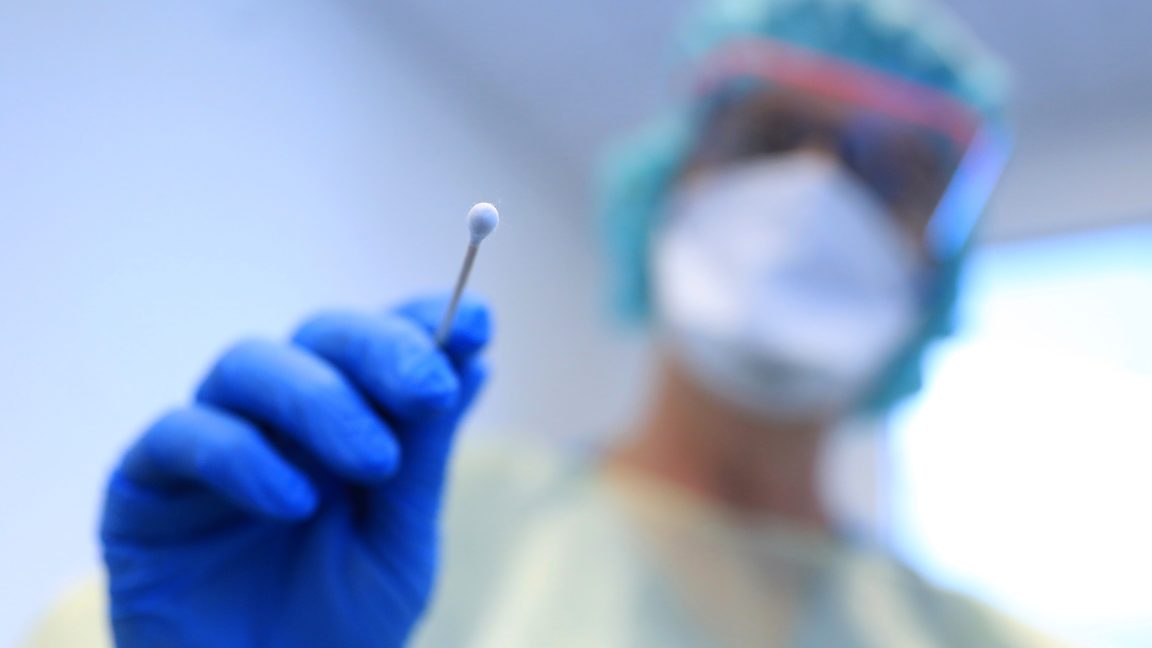
The US Food and Drug Administration this weekend authorized a saliva-based diagnostic test for COVID-19 that costs less than $5, is faster than current laboratory tests, and may dodge supply shortages plaguing the country—without losing much in accuracy, according to early data.
The test, called SalivaDirect, was developed by researchers at Yale University, who have no plans to commercialize the test and have made the test’s protocol completely open and available.
If the protocol becomes widely adopted, it could help improve the country’s COVID-19 testing, which is currently dismal. Some patients face weeks-long waits to get results. With such long delays, contact tracers have no chance of reaching out to those exposed before they have the chance to pass on the infection. The delays stem from the sheer volume of tests coming in, as well as shortages of critical supplies, such as nose swabs and chemical reagents necessary to run the tests. SalivaDirect tries to address both of those problems.
Herd immunity is more usually achieved through vaccination, though -- as I understand it, herd immunity is what happens when sufficient people have become immune to a virus, whether because of prior infection or vaccination, that the virus can no longer spread in a community.If you have to infect 70% of people to stop the spread.... you didn't stop the spread.


