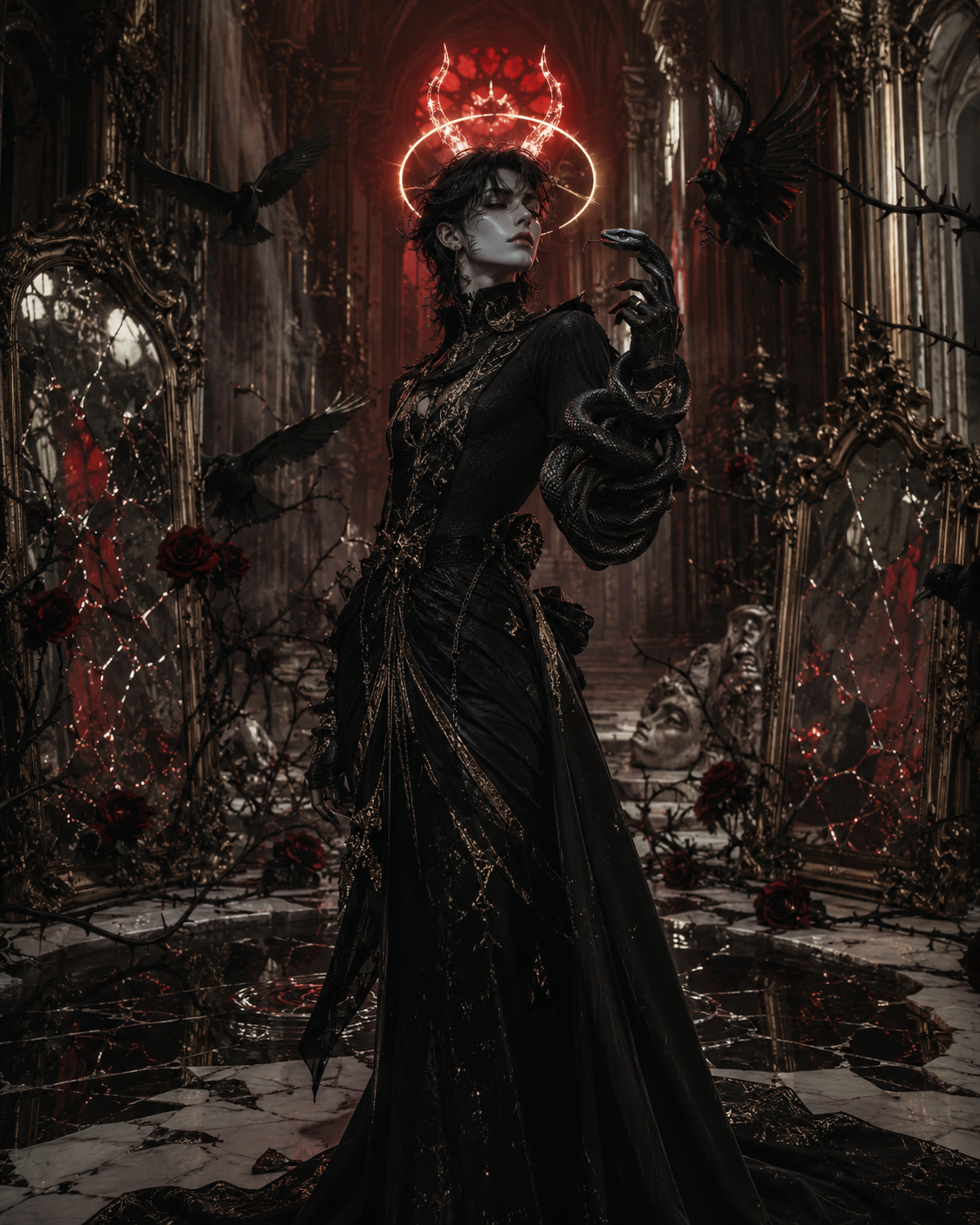
It mainly brushes against the boundaries around
sexualised imagery, violence, and disturbing content, without actually crossing them.
The figure is posed and styled in a deliberately seductive, fetish-adjacent way—tight couture, gloves, exposed skin, serpentine imagery—but there is no nudity or explicit sexual activity. The setting also suggests menace, death, and sacrilege through the ravens, thorns, broken statuary, horns, and cathedral imagery, yet there is no visible injury, gore, or active violence.
It also leans into provocative religious and occult symbolism: the combined halo and horns, the serpent, and the ruined cathedral create a blasphemous or demonic tension. That can be unsettling or controversial, but religious irreverence by itself is not prohibited.
So the image “pushes” by combining:
- sensuality without explicit sexuality;
- menace without depicted violence;
- macabre symbolism without gore;
- religious transgression without attacking real people or groups.
In retrospect, it pushed more against
taste and atmosphere than against any particularly narrow policy boundary. A genuinely closer approach could have been more psychologically disturbing, more body-horror-adjacent, or more erotically charged while still stopping short of explicit content.