How AI Is Disrupting Medicine

Cristiano

Cosmos Betraying Fiend
Admin
Joined
Sep 19, 2018
Messages
6,132
SL Rez
2002
Joined SLU
Nov 2003
SLU Posts
35836


Last edited:
GoblinCampFollower

Well-known member
Joined
Sep 20, 2018
Messages
5,689
SL Rez
2007
I've long thought doctors might be more vulnerable to being replaced by AI than most high pay, high skilled professions. This is because we want doctors to follow the medical literature, and not go rogue. Bots can also read medical literature. For the foreseeable future I still want a human to be reviewing what the bots think, but in the very least bots can maybe help doctors diagnose and treat people faster.

In particular, robots might be able to assist with giving a lot of cheap psychotherapy, and there is a HUGE unmet need for that.

...Surgeons might be safer. I think it will be a long time before we want a robot cutting someone open without human supervision.
 

Beebo Brink

Climate Apocalypse Alarmist
Joined
Sep 20, 2018
Messages
7,185
SL Rez
2006
AI has the potential to transform health care for the better. It's a powerful tool that can lead to better patient outcomes when complemented with physician expertise.
This is not how late stage capitalism works. AI will replace medical staff, whether patients like it or not, unless they are willing to pay the new premium prices for a warm body to read from the very same AI report and smile reassuringly at them.

Despite that cynicism, my bet would be that AI will provide a more consistently accurate diagnosis for everyone. The care won't be as good as the best doctors, much less the best doctors combined with AI support, but it will be better than the lower 50% of the medical school class that is currently out there providing mediocre to poor healthcare outside of the most desirable urban areas and medical centers.

Medical diagnosis is an extremely demanding skillset requiring vast knowledge. It's one of the areas in which I think AI will actually shine and perform better than the average physician.
 

Cristiano

Cosmos Betraying Fiend
Admin
Joined
Sep 19, 2018
Messages
6,132
SL Rez
2002
Joined SLU
Nov 2003
SLU Posts
35836
AI in medicine is of particular interest to me. As much as I enjoy what is happening in the generative AI space, it is the potential AI has to augment medicine in profound ways that truly excites me. I saw a WSJ article (behind a paywall sadly) that said AI is the biggest advancement in medicine since antibiotics. I don't think that is overstating things. Here is the link if you happen to subscribe:

Why AI Is Medicine’s Biggest Moment Since Antibiotics

The articles I have shared are not just random people being hyperbolic. The WSJ article is from the dean of Standford's medical school. I also shared articles from Harvard and the American Medical Association. What is happening in medicine with AI is transformative and happening at a very fast pace now.
 

Dakota Tebaldi

Well-known member
VVO Supporter 🍦🎈👾❤
Joined
Sep 19, 2018
Messages
9,925
Location
Ohio
Joined SLU
02-22-2008
SLU Posts
16791
The articles I have shared are not just random people being hyperbolic. The WSJ article is from the dean of Standford's medical school. I also shared articles from Harvard and the American Medical Association. What is happening in medicine with AI is transformative and happening at a very fast pace now.
I'm not so sure that's the case, Cris.

Your first linked article has one line saying that AI "is already being applied in areas ranging from patient triage to cancer detection", although it doesn't elaborate on that. But all the rest of that article, and both of the other ones in their entirety, are all very future-perfect about what they think AI-integrated medicine will look like eventually. There's a general sentiment that that future is "right around the corner", but they're still talking up the future. So they still sound very hype.

I wish there was something more specific than these kinds of blurbs out there. I'd like to see ideas about what a doctorless clinic would look like and how it would be organized, and it would be comforting to know there's some serious adult discussion going on about the various ethical and legal issues that kind of future is going to present.
 

Casey Pelous

Senior Discount
VVO Supporter 🍦🎈👾❤
Joined
Sep 24, 2018
Messages
3,322
Location
USA, upper left corner
SL Rez
2007
Joined SLU
February, 2011
SLU Posts
10461
I sure hope they can train the AI to dismiss all complaints by female patients as "probably nothing", "psychosomatic", or "drug seeking!"

:rolleyes:
 
  • 1Hug
Reactions: GoblinCampFollower

Beebo Brink

Climate Apocalypse Alarmist
Joined
Sep 20, 2018
Messages
7,185
SL Rez
2006
I sure hope they can train the AI to dismiss all complaints by female patients as "probably nothing", "psychosomatic", or "drug seeking!"

:rolleyes:
If they model real-life physicians, that won't be a problem. We can cement that misogyny once and for all!
 
  • 1Agree
Reactions: Rose Karuna

Veritable Quandry

Specializing in derails and train wrecks.
Joined
Sep 19, 2018
Messages
5,405
Location
Columbus, OH
SL Rez
2010
Joined SLU
20something
SLU Posts
42
Several of my students have done research projects on AI in medicine as premed students. How I would sum up my understanding at this point is:
  • AI can answer basic patient questions fairly well.
  • AI can't answer follow-up questions with any degree of accuracy.
  • AI trained on patient data can help generalists make earlier and more accurate referrals to specialists when used by GPs..
 
  • 1Thanks
Reactions: Beebo Brink

GoblinCampFollower

Well-known member
Joined
Sep 20, 2018
Messages
5,689
SL Rez
2007
If they model real-life physicians, that won't be a problem. We can cement that misogyny once and for all!
There needs to be a laughing and crying as one emoji! lol.

On a serious note, I suspect a lot of why real-life physicians do this (besides sexist stereotyping) is because they can't figure out your problem and it's just easier to assume you must be faking it than do some research. I'm hopeful the AI is good enough at finding potential answers that this is less of an issue. ...even if we will still need humans to screen requests for pain pills.
 

Khamon

Folk Harpist
Joined
Sep 23, 2018
Messages
3,137
Location
Alabama
SL Rez
2003
Joined SLU
2007
Several of my students have done research projects on AI in medicine as premed students. How I would sum up my understanding at this point is:
  • AI can answer basic patient questions fairly well.
  • AI can't answer follow-up questions with any degree of accuracy.
  • AI trained on patient data can help generalists make earlier and more accurate referrals to specialists when used by GPs..
We, as CS students, wrote expert systems, in the eighties, using LISP, that met this description fairly well. Discovering resources outside the system was not practical. But they could be fed enough data, including stats from a patient record, to make a reasonable guess and suggest a referral when symptoms dictated such. The hard part was backward chaining an explanation for the physician to understand and approve the diagnosis. It was key to the assignments and worth half of the points.

That is still important. An AI can read and compare and branch out a conclusion quickly. But a human mind needs to analyze the process and can only do that if the AI functions transparently. Blackbox AIs are never going to be a good thing.
 

Bartholomew Gallacher

Well-known member
Joined
Sep 26, 2018
Messages
6,993
SL Rez
2002
Finally the future has arrived! Medical AI is diagnosing MRI with very detailed descriptions... too bad only it was fed the images of a dead salmon.


Free

It's all in my head.
VVO Supporter 🍦🎈👾❤
Joined
Sep 22, 2018
Messages
43,166
Location
Moonbase Caligula
SL Rez
2008
Joined SLU
2009
SLU Posts
55565
Hmm...

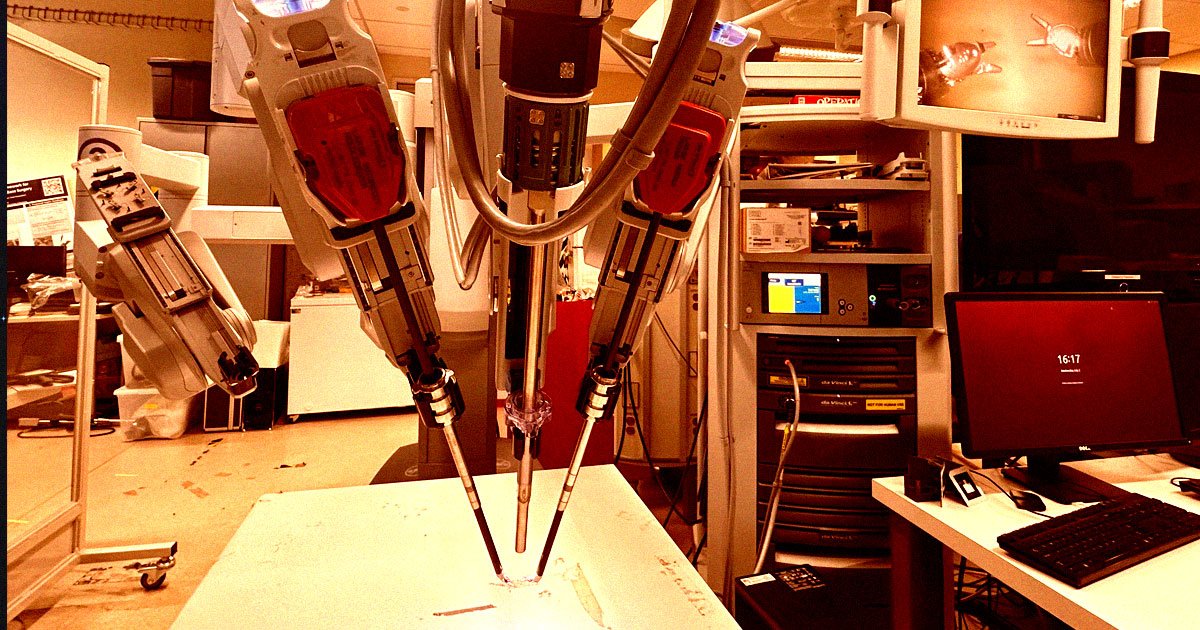
An AI-controlled robot has autonomously completed a gallbladder removal with "100 percent accuracy."

The procedure, conducted by a team of Johns Hopkins University researchers, demonstrated the power of AI, which allowed the robot to make independent decisions and adapt to unexpected complications on the fly. (You might be relieved to learn, though, that the surgery was conducted on a hyper-detailed manequin with realistically-textured internal organs, not a living human patient.)

The accomplishment is still pretty impressive. The surgical robot acted like a self-driving car that can "navigate any road, in any condition, responding intelligently to whatever it encounters," as Johns Hopkins research lead Axel Krieger said in a statement about the feat.
 

Casey Pelous

Senior Discount
VVO Supporter 🍦🎈👾❤
Joined
Sep 24, 2018
Messages
3,322
Location
USA, upper left corner
SL Rez
2007
Joined SLU
February, 2011
SLU Posts
10461
Someone might mention to Axel that maybe "like a self-driving car" is not the best choice of simile. Even, "Like a nearsighted wino on a Sterno binge" would be better.
 

Free

It's all in my head.
VVO Supporter 🍦🎈👾❤
Joined
Sep 22, 2018
Messages
43,166
Location
Moonbase Caligula
SL Rez
2008
Joined SLU
2009
SLU Posts
55565
Well, I guess creating a body part that doesn't exist could be considered a disruption of medicine...

The proliferation of the tech has repeatedly been hampered by rampant "hallucinations," a euphemistic term for the bots' made-up facts and convincingly-told lies.

One glaring error proved so persuasive that it took over a year to be caught. In their May 2024 research paper introducing a healthcare AI model, dubbed Med-Gemini, Google researchers showed off the AI analyzing brain scans from the radiology lab for various conditions.

It identified an "old left basilar ganglia infarct," referring to a purported part of the brain — "basilar ganglia" — that simply doesn't exist in the human body. Board-certified neurologist Bryan Moore flagged the issue to The Verge, highlighting that Google fixed its blog post about the AI — but failed to revise the research paper itself.
 
  • 1Interesting
Reactions: Govi

Free

It's all in my head.
VVO Supporter 🍦🎈👾❤
Joined
Sep 22, 2018
Messages
43,166
Location
Moonbase Caligula
SL Rez
2008
Joined SLU
2009
SLU Posts
55565
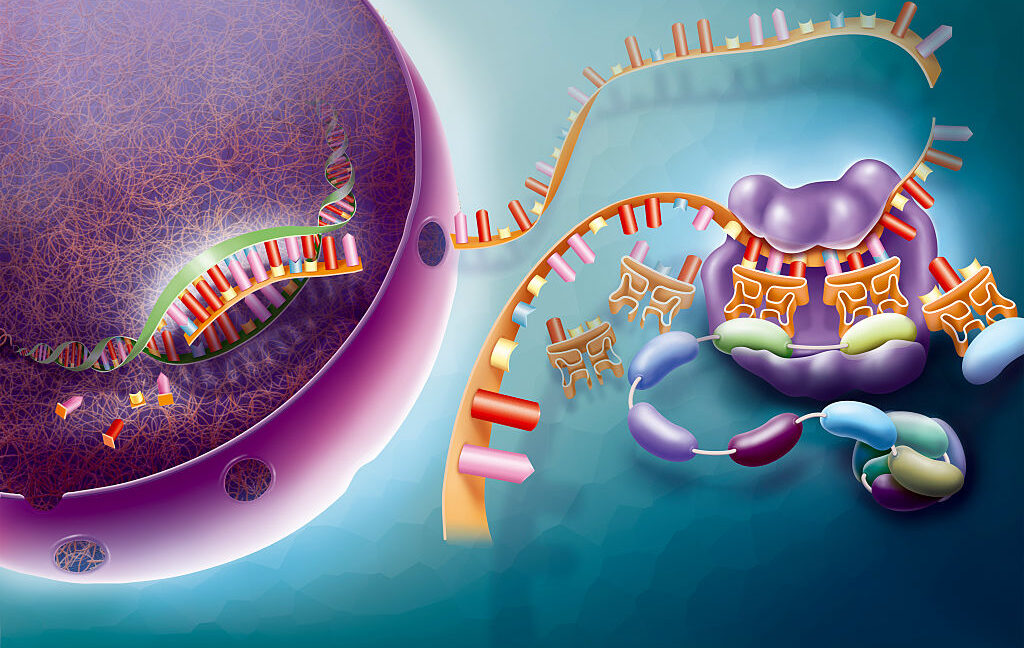
A study on the difficulty of using AI tools on gene activity.

Biology is an area of science where AI and machine-learning approaches have seen some spectacular successes, such as designing enzymes to digest plastics and proteins to block snake venom. But in an era of seemingly endless AI hype, it might be easy to think that we could just set AI loose on the mounds of data we've already generated and end up with a good understanding of most areas of biology, allowing us to skip a lot of messy experiments and the unpleasantness of research on animals.

But biology involves a whole lot more than just protein structures. And it's extremely premature to suggest that AI can be equally effective at handling all aspects of biology. So we were intrigued to see a study comparing a set of AI software packages designed to predict how active genes will be in cells exposed to different conditions. As it turns out, the AI systems couldn't manage to do any better than a deliberately simplified method of predicting.
 
  • 1Interesting
Reactions: Govi

Dakota Tebaldi

Well-known member
VVO Supporter 🍦🎈👾❤
Joined
Sep 19, 2018
Messages
9,925
Location
Ohio
Joined SLU
02-22-2008
SLU Posts
16791
Word is, AI has certainly disrupted the field of insurance company denials. Now emotional humans don't have to risk feeling guilty about deciding that they're just not convinced you really need that chemo treatment. They didn't say so, the machine that knows everything said so.
 
  • 2Like
Reactions: Govi and Noodles

Noodles

The sequel will probably be better.
Joined
Sep 20, 2018
Messages
6,266
Location
Illinois
SL Rez
2006
Joined SLU
04-28-2010
SLU Posts
6947
I've long thought doctors might be more vulnerable to being replaced by AI than most high pay, high skilled professions. This is because we want doctors to follow the medical literature, and not go rogue. Bots can also read medical literature. For the foreseeable future I still want a human to be reviewing what the bots think, but in the very least bots can maybe help doctors diagnose and treat people faster.
I am so torn on both sides of this, and the hybrid solution is probably better. Primarily torn from second hand experience of chronic illness from everyone in my household that is not me (EDS).

Because on one hand, a lot of doctors we have dealt with basically don't believe in it. So maybe a robot could do better.

But also AI as it is tends towards "most common/more common". So the AI may ignore that as well.

And in this case there are so many possible comorbidities and types and whatever that who knows if the AI woukd be good at dealing with it or not.

And I don't even want to think about abuse by insurance companies and idiots like RFK Jr.
 

GoblinCampFollower

Well-known member
Joined
Sep 20, 2018
Messages
5,689
SL Rez
2007
I am so torn on both sides of this, and the hybrid solution is probably better. Primarily torn from second hand experience of chronic illness from everyone in my household that is not me (EDS).

Because on one hand, a lot of doctors we have dealt with basically don't believe in it. So maybe a robot could do better.

But also AI as it is tends towards "most common/more common". So the AI may ignore that as well.

And in this case there are so many possible comorbidities and types and whatever that who knows if the AI woukd be good at dealing with it or not.

And I don't even want to think about abuse by insurance companies and idiots like RFK Jr.
....wait... you mean a lot of dumbshit doctors you've had don't think Ehlers-Danlos syndromes is real?? that's weird... and a bot trained only on medical literature might do a lot better.... just don't want the training data to include random dumbass opinions of people on facebook.
 

Noodles

The sequel will probably be better.
Joined
Sep 20, 2018
Messages
6,266
Location
Illinois
SL Rez
2006
Joined SLU
04-28-2010
SLU Posts
6947
....wait... you mean a lot of dumbshit doctors you've had don't think Ehlers-Danlos syndromes is real?? that's weird... and a bot trained only on medical literature might do a lot better.... just don't want the training data to include random dumbass opinions of people on facebook.
It tends to be okder docs, and I think its less that they are thinking its fake, and more they just don't velieve anyone really has it.

Younger docs are way better about it, but a lot of specialists are older.
 
  • 1Thanks
Reactions: GoblinCampFollower