- Joined
- Sep 22, 2018
- Messages
- 42,258
- Location
- Moonbase Caligula

- SL Rez
- 2008
- Joined SLU
- 2009
- SLU Posts
- 55565
$10B for security cam update.

$10B for security cam update.



 www.cnn.com
Primatologist Jane Goodall gets Barbie doll in her likeness
Toymaker Mattel has unveiled a new Jane Goodall Barbie as part of its Inspiring Women Series, nodding to the British primatologist's groundbreaking studies of chimpanzees and conservation efforts.




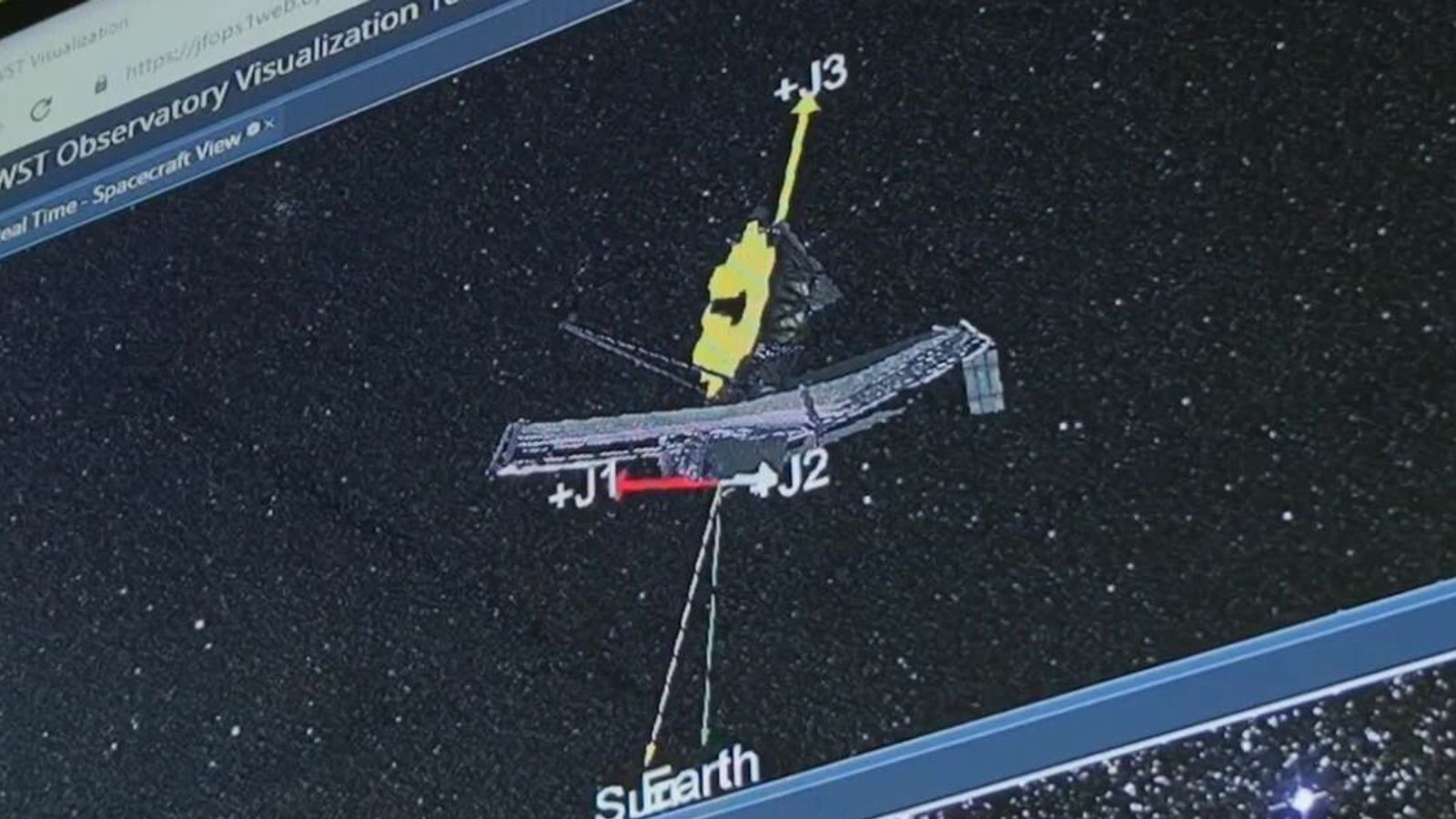
With the James Webb Space Telescope (JWST) now powered up and snapping some spectacular images, you may wonder exactly how it's storing them. Surprisingly enough, it carries a relatively tiny 68GB SSD, according to IEEE Spectrum — enough to handle a day's worth of JWST images, but not a lot more.
While that might sound ludicrously small for a $10 billion satellite, there are multiple reasons NASA chose the system. To start with, the JWST is a million miles from Earth where it gets bombarded by radiation and operates at a temperature of less than 50 degrees above absolute zero (-370 degrees F). So the SSD, like all other parts, must be radiation hardened and survive a grueling certification process.
While not nearly as fast as consumer SSDs, it can still be nearly filled in as little as 120 minutes via the telescope's 48 Mbps command and data handling subsystem (ICDH). At the same time, the JWST can transmit data back to Earth at 28 Mbps via a 25.9 Ghz Ka-band connection to the Deep Space Network.
That means that while it collects far more data than Hubble ever did (57GB compared to 1-2GB per day), it can transfer all that data back to Earth in about 4.5 hours. It does so during two 4-hour contact windows each day, with each allowing the transmission of 28.6GB of science data. In other words, it only needs enough storage to collect a day's worth of images — there's no need to keep them on the telescope itself.

Interestingly, Celsius at first set boiling as zero and freezing as 100, but this was reversed in 1750 by the physicist Martin Strömer, Celsius's successor at Uppsala.



I've never seen a reason in these articles why they couldn't just disconnect them when they see the pulse coming. Maybe that's just stupid for some reason, IDK.Long, but well worth the read. New nightmare material in the last half of the article, so not for the faint of heart.
Here Comes the Sun—to End Civilization
Every so often, our star fires off a plasma bomb in a random direction. Our best hope the next time Earth is in the crosshairs? Capacitors.www.wired.com
What "them" are you referring to? As in disconnect.... satellites... transformers... from what? And did you read the part about having an hour or less warning with no system for broadcasting that warning? That leaves a very small circle of people in the "they" category.I've never seen a reason in these articles why they couldn't just disconnect them when they see the pulse coming. Maybe that's just stupid for some reason, IDK.
I meant the transformers. I'd think an hour would be plenty but what do I know?What "them" are you referring to? As in disconnect.... satellites... transformers... from what? And did you read the part about having an hour or less warning with no system for broadcasting that warning? That leaves a very small circle of people in the "they" category.



What you're describing appears to be about disconnecting the transformers from the grid, to prevent a power surge from racing through and frying everyone's equipment. But based on the article (or at least my understanding of it), the transformers themselves are still vulnerable:There are over 2,100 large power transformers in the continental US, not including the Texas, cycling between tens-of-thousand and hundreds-of-thousand volts. They have to be deactivated from the secondary side to avoid surges in the service that would fry equipment and start fires all over the country. Then the same thing has to happen backward, through the high voltage lines to the supply points, to avoid destroying the power plants. Then the stored power has to be discharged, using arc gates or some such devices, so the grounds don't reverse, during the plasma event, and fry the LPTs. That all couldn't be done in a hour if it was drilled and practiced daily.
So even if the grid itself is undamaged (such a very big if), the transformers are still locked in place and still subject to damage. Replacing them would take years.The largest transformers, numbering around 2,000 in the United States, are firmly anchored into the ground, using Earth’s crust as a sink for excess voltage. But during a geomagnetic storm, that sink becomes a source.
A 2020 investigation by the US Department of Commerce found that the nation imported more than 80 percent of its large transformers and their components. Under normal supply and demand conditions, lead times for these structures can reach two years.