- Joined
- Sep 20, 2018
- Messages
- 23,675

- SLU Posts
- 18459
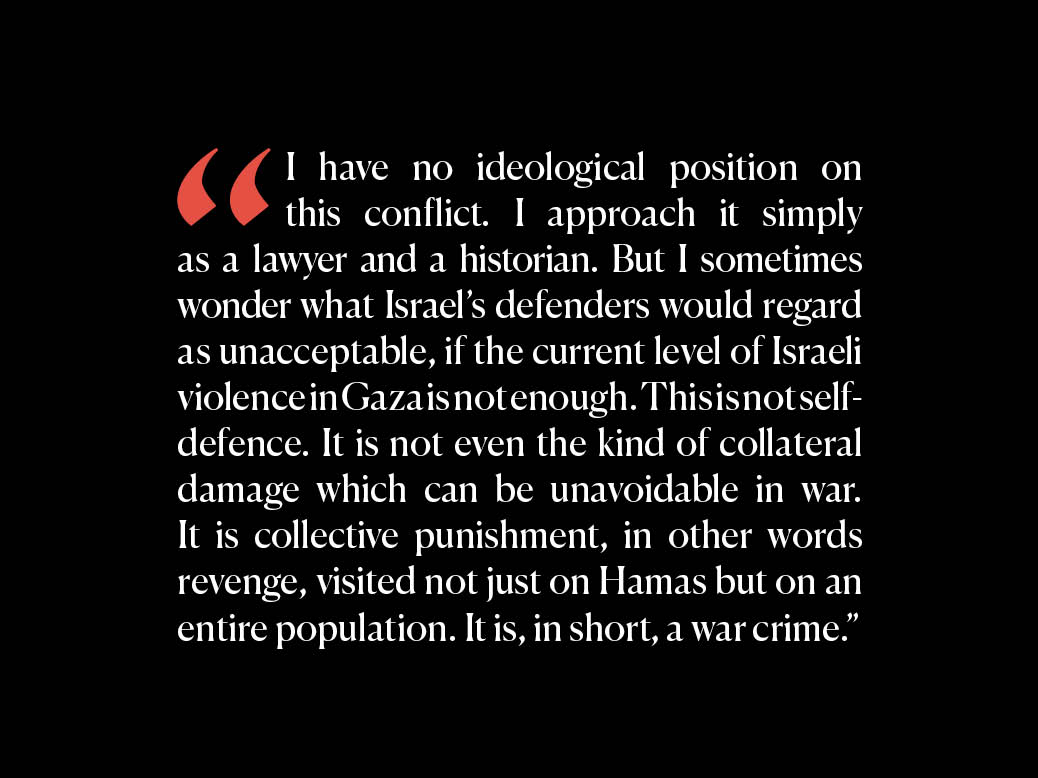
Jonathan Sumption, a former UK Supreme Court judge (our judges have to retire at 75 -- raised from 70 a few years ago) on Israel's war on Gaz, genocide and war crimes. He's normally regarded as a small-c conservative.
Evernote Link
While it's not the main point of the article, I think we need to be cautious when using the term "genocide" in discussions about Israel and Gaza.
First, the term carries profound historical weight. Israel was established in the wake of the Holocaust, a systematic attempt to eradicate Europe’s Jewish population. Labeling Israel’s actions as genocide resonates deeply, not just for Israelis but for Jewish communities worldwide, regardless of the current government’s policies.
Second, genocide has a precise legal definition under international law, requiring clear evidence of intent to destroy, in whole or in part, a specific national, ethnic, racial, or religious group.
This is a high standard to meet, both legally and factually, which explains why few cases are officially recognized as genocide.
Overusing the term "genocide" risks overshadowing other serious violations of international humanitarian law, such as indiscriminate attacks on civilians, disproportionate force, collective punishment, or blocking humanitarian aid. These acts, which can devastate communities through destruction of homes, hospitals, or critical infrastructure, are often easier to document and address as grave war crimes.
Evernote Link
While it's not the main point of the article, I think we need to be cautious when using the term "genocide" in discussions about Israel and Gaza.
First, the term carries profound historical weight. Israel was established in the wake of the Holocaust, a systematic attempt to eradicate Europe’s Jewish population. Labeling Israel’s actions as genocide resonates deeply, not just for Israelis but for Jewish communities worldwide, regardless of the current government’s policies.
Second, genocide has a precise legal definition under international law, requiring clear evidence of intent to destroy, in whole or in part, a specific national, ethnic, racial, or religious group.
This is a high standard to meet, both legally and factually, which explains why few cases are officially recognized as genocide.
Overusing the term "genocide" risks overshadowing other serious violations of international humanitarian law, such as indiscriminate attacks on civilians, disproportionate force, collective punishment, or blocking humanitarian aid. These acts, which can devastate communities through destruction of homes, hospitals, or critical infrastructure, are often easier to document and address as grave war crimes.