Jury Nullification

Innula Zenovka

Nasty Brit
VVO Supporter 🍦🎈👾❤
Joined
Sep 20, 2018
Messages
23,697
SLU Posts
18459
When you are confident you do understand it better, could you please post a brief summary? It sounds interesting but I don't have time to listen to a 50 minute talk on spec.

I've never quite understood what "jury nullification" means in the U.S. In England and Wales, at least, the jury may if it wishes deliver a "perverse verdict" -- that is, even though the judge has correctly directed them that, on the undisputed evidence in the case (typically including the defendant's admissions on oath), the prosecution has made out its case and the only possible verdict is "guilty," the jury may still refuse to convict and return a verdict of "not guilty," whether because it disapproves of the law or it sympathises with the defendant.

It's been argued here in the UK that this is unsatisfactory, since jurors (at least here) swear they will "faithfully try the defendant and give a true verdict according to the evidence," and are therefore in breach of their oath by delivering a "perverse" verdict. The two suggested solutions are either to declare by stature that jurors have no right to ignore the evidence in this way or to change the Oath to allow them to deliver such verdicts.

Perhaps wisely, successive governments have chosen to let sleeping dogs lie, at least in this matter.

There's a brief article about it here: ‘Not only a right, but a duty’: A history of perverse verdicts – The Justice Gap
 

GoblinCampFollower

Well-known member
Joined
Sep 20, 2018
Messages
5,243
SL Rez
2007
It's been argued here in the UK that this is unsatisfactory, since jurors (at least here) swear they will "faithfully try the defendant and give a true verdict according to the evidence," and are therefore in breach of their oath by delivering a "perverse" verdict. The two suggested solutions are either to declare by stature that jurors have no right to ignore the evidence in this way or to change the Oath to allow them to deliver such verdicts.
I think that if anyone wanted to get serious about not allowing nullification or "perverse" verdicts, they should really just get rid of trial by jury all together and have just a judge or maybe law students do it. A jury of random people off the street makes absolutely no sense to begin with if they are supposed to be legal robots.

In the USA, it was my understanding that nullification is an intended feature of juries.
 

Lianne Marten

Cheese Baron
Joined
Sep 23, 2018
Messages
384
Location
WA, USA
SL Rez
2004
Joined SLU
Sept 18 2007
SLU Posts
3367
The weird thing is that any person wanting to get on a Jury with the intent to Nullify will be disqualified by the Prosecution. And if they lie about it to get seated then they will be in contempt of court for perjury.

It's a complicated idea.

CGP Grey did a good video on it years ago.

 
  • 1Thanks
Reactions: Brenda Archer

danielravennest

Well-known member
Joined
Sep 21, 2018
Messages
3,708
SLU Posts
9073
I've never quite understood what "jury nullification" means in the U.S.
In US legal theory, the People are supreme. We hire elected officials to represent us, not to rule us. Criminal cases in the US are titled "The People vs [defendant]" for that reason. A jury, when trying a case *are* the people, in the sense that their verdict should be the same as if the whole people were there in the court room. Being superior to the judge and the legislature (both are paid by our taxes, and thus are our employees), we can decide the law is unjust, and not convict for that reason.

The legal system tries very hard to convince jurors that they "must follow the law as we have explained it to you", placing the judge and legislature above the people. But the original source of powers in the Federal and state constitutions comes from "We the People", as it says in the preamble to the former. If a juror decides to reclaim that power, there's nothing the judge can do about it. They don't have to explain *why* they could not reach a guilty verdict, only the fact that they did not.

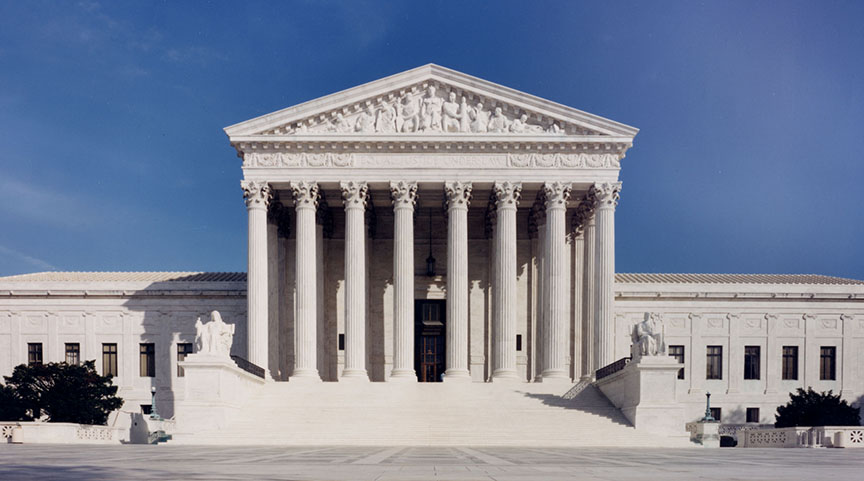
I'm an engineer, not a lawyer, so take that into consideration. But also keep in mind that lawyers have a vested interest in the mythos of the legal system in the same way that priests do of the church. They even use some of the same trappings: impressive buildings, fancy robes, and arcane rituals only understood by its members. It is no coincidence that the Supreme Court building looks like a Greek temple.

 
Last edited:

Innula Zenovka

Nasty Brit
VVO Supporter 🍦🎈👾❤
Joined
Sep 20, 2018
Messages
23,697
SLU Posts
18459
In US legal theory, the People are supreme. We hire elected officials to represent us, not to rule us. Criminal cases in the US are titled "The People vs [defendant]" for that reason. A jury, when trying a case *are* the people, in the sense that their verdict should be the same as if the whole people were there in the court room. Being superior to the judge and the legislature (both are paid by our taxes, and thus are our employees), we can decide the law is unjust, and not convict for that reason.
No one, I think, denies that the jury has the absolute right to return a verdict of not guilty, even though the defendant admits, on oath, to having done the acts alleged in the indictment.

However, it has been argued in the UK, at least, that jurors swear they will "faithfully try the defendant and give a true verdict according to the evidence," which must mean that, if the evidence is such that they're sure the defendant did what the prosecution allege, they should vote to convict. So by voting to acquit (because they sympathise with his motives, perhaps) even though they are persuaded so that they are sure he's guilty, they are in breach of their oath.

What oath do jurors take in the US?

The legal system tries very hard to convince jurors that they "must follow the law as we have explained it to you", placing the judge and legislature above the people. But the original source of powers in the Federal and state constitutions comes from "We the People", as it says in the preamble to the former. If a juror decides to reclaim that power, there's nothing the judge can do about it. They don't have to explain *why* they could not reach a guilty verdict, only the fact that they did not.
I don't really understand your point here. The way the jury system is supposed to work is that the judge is the judge of law in the case, and the jury is the judge of facts.

That is, the judge explains the law to the jury -- burden and standard of proof, elements of the offence that the prosecution must prove, and so on -- and the jury then applies the law, as explained by the judge, to the evidence it has heard in the case to decide whether the defendant is guilty or not.

How do you say it should work?
 

Veritable Quandry

Specializing in derails and train wrecks.
Joined
Sep 19, 2018
Messages
5,272
Location
Columbus, OH
SL Rez
2010
Joined SLU
20something
SLU Posts
42
It's "we the people" not "me the mouthbreather libertarian/Sovereign Citizen with an internet law degree." Yes, jurors must follow the law. Courts of Appeal take up questions of law if there is a dispute. It's funny that I usually hear that "But the people..." bullshit from the same people who defend the necessity of the Electoral College giving the Presidency to the person who lost by 3 million votes because "the people" can't be trusted to select a chief executive. At least not the urban people.
 

Soen Eber

Vatican mole
VVO Supporter 🍦🎈👾❤
Joined
Sep 20, 2018
Messages
3,936
Innula,

You are confused because you believe America is a system of laws, which, for the most part it is. But is also close to the old German system which is a system of customs and expectations, where unwritten norms have an iron grip on those who both follow and don't follow the norms to their own ill benefit. In many cases there is individual discretion. Attorney Generals and governors can selectively choose what laws to enforce, prosecutors can be selective about what charges to bring, contracts may be made on a handshake (less likely now, but still...) and even higher offices, even the presidency, has a lot of informal rules which can be selectively applied. In fact, Nightline back in the 80's did a "nuclear wargame" with retired Americans and Russians playing their former real-life roles, and while the Russians figured out the line of succession in less than a minute, the Americans were quibbling over it for a quarter of an hour.

It's all in the interests of efficiency and to some effect, calming the waters. It's results: generally a stronger economy and, with our history of extermination, slavery, and bringing in a lot of foreigners violently opposed to one another, peace.

It usually works, except when it doesn't, like in 1936. Consider yourself warned.
 
Last edited:

danielravennest

Well-known member
Joined
Sep 21, 2018
Messages
3,708
SLU Posts
9073
The way the jury system is supposed to work is that the judge is the judge of law in the case, and the jury is the judge of facts.
That system reduces the jury to mere robots, beholden to laws and rules imposed from above by the legislature and court system. The concept of jury nullification is based on the people being superior to the legislature and the courts, because they are the source of the powers granted to those bodies. The people are sovereign. Thus they can decide a law is unjust, and decline to hold someone guilty of breaking it.

(I don't necessarily believe in this idea, by the way. I'm trying to explain to you how the people who *do* believe in the idea of jury nullification think.)
 

Innula Zenovka

Nasty Brit
VVO Supporter 🍦🎈👾❤
Joined
Sep 20, 2018
Messages
23,697
SLU Posts
18459
That system reduces the jury to mere robots, beholden to laws and rules imposed from above by the legislature and court system. The concept of jury nullification is based on the people being superior to the legislature and the courts, because they are the source of the powers granted to those bodies. The people are sovereign. Thus they can decide a law is unjust, and decline to hold someone guilty of breaking it.

(I don't necessarily believe in this idea, by the way. I'm trying to explain to you how the people who *do* believe in the idea of jury nullification think.)
It's a crackpot theory, though. The laws and rules imposed by the legislature and court system are what make juries the only body that can return a verdict, which no court can go behind, and no additional theory of the role of juries is needed.

It's like saying that the concept of a free vote in a secret ballot is somehow in opposition to the structures of election law.

If the prosecution or the defence think the judge got the law wrong, then they can appeal to a higher court and have a mistrial declared.

They can't, at least not in the UK, appeal on the grounds the jury got the verdict wrong (in the UK the defence can ask for a conviction to be set aside and mistrial declared if evidence later comes to light which, had it been available to the jury at the time, might have affected their verdict, but that's all).

The system is set up, rightly or wrongly, to allow juries to reach whatever decision they want. This includes verdicts that simply don't make sense -- I've certainly seen cases where the mixture of guilty and not guilty verdicts returned by the jury are impossible to square with any possible interpretation of the events in the case -- as well as ones that are effectively expressions of sympathy with defendant and his motives or expressions of disapproval of the law in question.

The jury's decision is paramount and the courts cannot go behind it. No additional theory is needed.
 
  • 1Thanks
Reactions: Brenda Archer

Veritable Quandry

Specializing in derails and train wrecks.
Joined
Sep 19, 2018
Messages
5,272
Location
Columbus, OH
SL Rez
2010
Joined SLU
20something
SLU Posts
42
The role of the jury is to decide the facts of the case. The jury instructions boil down to a series of questions that connects those findings to the law (Did defendant have the thing in their possession? Did they know that the thing was stolen? If you answer "Yes" to both parts you find the defendant guilty of possession of stolen property).

You can appeal if you have reason to believe that the instructions are wrong (the facts that the jury were asked to determine do not add up to the offense that they based the verdict on) or if the way the trial was conducted was flawed (allowing or diasallowing evidence or testimony that changed how the jury reached that conclusion). What you can not appeal is the jury's finding of fact.

tl:dr You can appeal the law, not the facts.

Jury nullification is the theory that juries can determine that the facts that make up all of the elements of an offense are present but that they don't believe you should be found guilty because reasons. It substitutes the jurors for the entire legislative, executive, and judicial system. It essentially changes our government from a system of carefully designed case and statutory laws with checks and balances into the whims of a few randomly selected people who were not doing anything important enough to get them excused from jury duty. And it is part of the rugged individual macho gun toting fantasy that harkens back to a past that never actually existed.
 

Lianne Marten

Cheese Baron
Joined
Sep 23, 2018
Messages
384
Location
WA, USA
SL Rez
2004
Joined SLU
Sept 18 2007
SLU Posts
3367
To take the examples from CGP Grey's video:

No they should not be guilty because even though the facts show they did these things we think returning fugitive slaves to their masters is wrong.
or
No they should not be guilty because even though the facts show they did these things we think lynching black people is right.


These situations exist. Law is complicated, ethical considerations exist, and if a person is faced with questions like this they might have to come to a conclusion like that. Literally every jury trial ever hold is decided on "the whims of a few randomly selected people who were not doing anything important enough to get them excused from jury duty." Statements like that devalue the entire system more than jury nullification itself does.

May as well just have the prosecution and defense feed their facts into a computer that does an equation and get a verdict spit out the other side if that's all you care about.

The human element is important. That's the entire point of juries.
 

Veritable Quandry

Specializing in derails and train wrecks.
Joined
Sep 19, 2018
Messages
5,272
Location
Columbus, OH
SL Rez
2010
Joined SLU
20something
SLU Posts
42
That's when you refuse to return a verdict.
 

Lianne Marten

Cheese Baron
Joined
Sep 23, 2018
Messages
384
Location
WA, USA
SL Rez
2004
Joined SLU
Sept 18 2007
SLU Posts
3367
Then you're basically asking for the entire structure of the legal system to change.
 
  • 1Disagree
Reactions: Veritable Quandry

Veritable Quandry

Specializing in derails and train wrecks.
Joined
Sep 19, 2018
Messages
5,272
Location
Columbus, OH
SL Rez
2010
Joined SLU
20something
SLU Posts
42
That is the point of civil disobedience. Too change the law. Jury nullification is NOT PART OF THE LEGAL SYSTEM. It is a Sovereign Citizen fantasy that makes the case all about THEM, not the law. The human element is important, but it's role is not to determine the law. That is what the judge is there for, to make legal decisions. They are subject to review, but jury nullification is not. It places jurors ABOVE the law. We have a mechanism in place for making legal decisions and for reviewing the the law for constitutional issues. That system is flawed, but it is far better than substituting one person's opinion for the entire system of law and government.
 

Innula Zenovka

Nasty Brit
VVO Supporter 🍦🎈👾❤
Joined
Sep 20, 2018
Messages
23,697
SLU Posts
18459
To take the examples from CGP Grey's video:

No they should not be guilty because even though the facts show they did these things we think returning fugitive slaves to their masters is wrong.
or
No they should not be guilty because even though the facts show they did these things we think lynching black people is right.


These situations exist. Law is complicated, ethical considerations exist, and if a person is faced with questions like this they might have to come to a conclusion like that. Literally every jury trial ever hold is decided on "the whims of a few randomly selected people who were not doing anything important enough to get them excused from jury duty." Statements like that devalue the entire system more than jury nullification itself does.

May as well just have the prosecution and defense feed their facts into a computer that does an equation and get a verdict spit out the other side if that's all you care about.

The human element is important. That's the entire point of juries.
Certainly juries have the right to return whatever verdict they choose, whatever the judge's instructions. That's well established by precedent in both the UK and the USA.

However, if they do anything other than return a true verdict based on the facts of the case then, at least in the UK, they're in breach of the oath they swear when they're sworn in as jurors, which they shouldn't do.

At least in the UK, juries return "perverse verdicts" very rarely indeed, and only in cases where they clearly don't think the prosecution should have been brought (e.g. the case of Clive Ponting, a British civil servant prosecuted for passing secret papers to a Member of Parliament showing that the government was lying about the sinking of the Argentine warship General Belgrano).

Once, though, I was involved in a case where a man was accused of murdering his daughter's abusive partner. He denied the charge, and the jury acquitted him despite absolutely overwhelming evidence that he was guilty.

The only explanation for the verdict anyone could come up with was the jurors must have thought, "He got what was coming to him, and if anyone treated my daughter like that, I'd do the same."
 
  • 1Thanks
Reactions: Grandma Bates

Bartholomew Gallacher

Well-known member
Joined
Sep 26, 2018
Messages
6,818
SL Rez
2002
AFAIK nobody really likes the jury system in America; the reason why its still there though is that it is part of the constitution, and changing the constitution nowadays is a virtually impossible feat.
 

Lianne Marten

Cheese Baron
Joined
Sep 23, 2018
Messages
384
Location
WA, USA
SL Rez
2004
Joined SLU
Sept 18 2007
SLU Posts
3367
I mean it's a thing that has existed since the creation of the legal system. Juries before the Revolutionary War used it to protest the power the British Government had over the colonies. Freaking John Adams talked about it when they were drafting the sixth amendment.

“it is not only [a juror’s] right, but his duty… to find the verdict according to his own best understanding, judgment, and conscience, though in direct opposition to the direction of the court.”

It's not a new thing. It's not some wacko fringe idea. It's a side effect of how the entire system was set up. The Judge doesn't decide the case. The prosecution doesn't decide the case, neither does the defense. The Jury does. Maybe you disagree with it, fine. But getting rid of it would involve making significant changes that, in my opinion, would push everything for the worse.

Yeah changing the law is a good goal, but that doesn't help the person who has to spend years in jail for that shitty law until that happens.
 
  • 1Agree
Reactions: GoblinCampFollower

Veritable Quandry

Specializing in derails and train wrecks.
Joined
Sep 19, 2018
Messages
5,272
Location
Columbus, OH
SL Rez
2010
Joined SLU
20something
SLU Posts
42
Written at a time when directed verdicts were much more common. I am not arguing against the jury system. It may be flawed but everything else is worse.